American Farmers Grew $739 Million Worth Of Legal Hemp Last Year, New USDA Report Shows
Pennsylvania Governor Pushes Lawmakers To Legalize Marijuana On 4/20
Missouri Officials File Rules To Create New Marijuana Research Licenses
Federal Agencies Would Have To Study State Marijuana Laws Under New Directive From Congressional Committee
Delaware Lawmakers Pass Bill To Allow Medical Marijuana Use In Hospitals For Terminally Ill Patients, Sending It To Governor
Medical Marijuana Helps People Stop Using Opioids, Sleeping Aids And Other Prescription Drugs, Study Shows
Vaporizing Marijuana Reduces Harmful Inhaled Byproducts By 99% Compared To Joint Smoking, New Study Shows
Federally Funded Study Reveals Marijuana Breathalyzer Breakthrough With 3-D Printed Roadside Tool Able To Detect THC
Alcohol And Tobacco Are More Damaging To Users And Society Than Marijuana Is, Government-Funded Study Concludes
High Marijuana Taxes Don’t Effectively Deter Use, Study Shows, Contrary To NYT Editorial Board’s Claim
Politicians And Major Brands Celebrate Cannabis Culture On 4/20
Woody Harrelson And Bill Maher Complain That Marijuana Taxes Are Too High While Smoking Joints At The Dispensary They Own Together
WNBA Offers To End Marijuana Testing For Women’s Basketball Players As Part Of Reported Deal With Union
DEA Promotes Anti-Marijuana PSA Contest Inviting Students To Warn Peers About THC Dangers On 4/20
Largest Entertainment Arena In US Partners With Cannabis Businesses To Sell THC Drinks At Concerts And Live Events
Target Expands Involvement In Hemp THC Drinks Market With 72 New Licenses In Minnesota
Marijuana Sales Are Rising And Alcohol Is On The Decline As Consumer Preferences Evolve, Government Data In Canada Shows
Feds Deny Snoop Dogg Request To Trademark ‘Smoke Weed Everyday’ Because Marijuana Is Illegal And Song Lyric Is Too Popular
Marijuana Kiosks For Seniors Are Coming To Independent Living Communities Across Arizona
Montana Retailers Have Sold More Than $1 Billion Worth Of Recreational Marijuana Since Legalization Took Effect
Congress wants federal study of state cannabis laws (Newsletter: April 21, 2026)
Cannabis is safer than McDonald’s, senator says (Newsletter: April 20, 2026)
Trump is planning a psychedelics executive order (Newsletter: April 17, 2026)
IRS addresses cannabis industry worker tips (Newsletter: April 16, 2026)
Virginia lawmakers push back on governor’s cannabis amendments (Newsletter: April 15, 2026)
Published
on
By
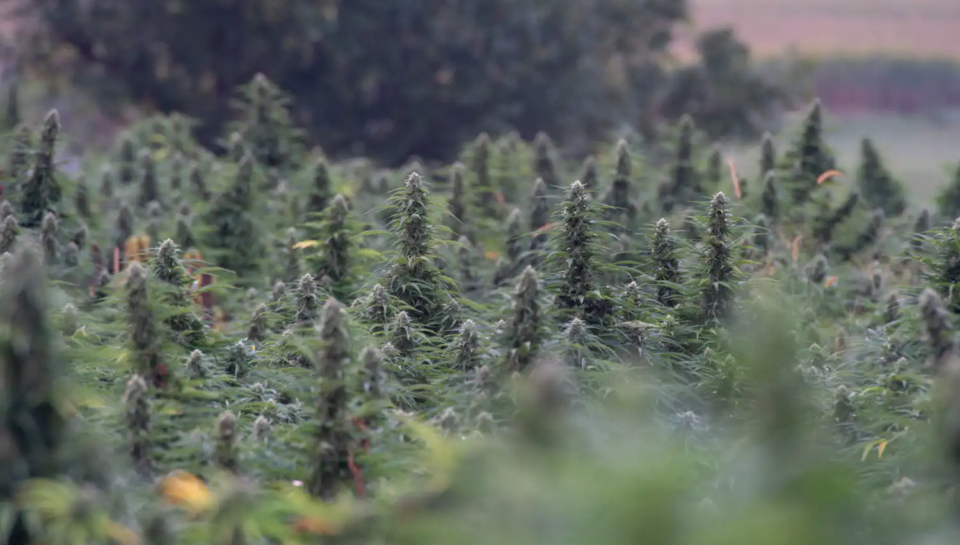
Farmers in the U.S. grew three-quarters of a billion dollars worth of hemp crops in 2025—a 64 percent increase from the prior year—according to a new federal report.
The new annual National Hemp Report from the U.S. Department of Agriculture (USDA) delineates data on how much of the $739 million worth of crops were grown out in the open in fields or cultivated under protection in greenhouses, high tunnels and hoop houses.
The 49,267 acres of hemp grown outdoors in the U.S. last year represents a 9 percent increase from 2024, and its value of $646 million is 53 percent higher than the prior year. Of that, 43,707 acres of crops were actually harvested, a 34 percent annual increase.
There was also 3.99 million square feet of hemp crops grown under protection, a 13 percent rise from 2024. The value of those crops jumped significantly from the prior year’s haul—a 225 percent increase, USDA said.
The results showing the industry’s growth comes amid the pending federal recriminalization of hemp THC products that’s set to take effect in November under a law that President Donald Trump signed late last year, a change that advocates say stands to devastate the sector.
In 2025, the value of hemp production in the open and under protection for the U.S. totaled $739 million, up 64% from 2024. ➡️https://t.co/WfOxNIxfTk
— National Agricultural Statistics Service (@usda_nass) April 16, 2026
In the meantime, the federal agency’s report further breaks down last year’s data into cannabis crops grown for flower, grain, fiber and seed. Total weight and acreage increased year over year in each category for plants grown in the open. While the value of hemp produced for flower, grain and seed increased compared to 2024, fiber crops decreased in value.
The report, which is based on an annual survey USDA sends out to farmers, also found that hemp clones and transplants grown under protection in 2025 1.08 million plants, up 203 percent from the prior year, and that the value of those crops was $1.96 million, a 339 percent annual rise.
The federal report also disaggregates the national totals into state-based data.
Meanwhile, bipartisan lawmakers in Congress are taking steps to reverse or at least delay the pending move to prohibit hemp THC products later this year.
Hemp derivatives with less than 0.3 percent delta-9 THC on a drug-weight basis were federally legalized under the 2018 Farm Bill that President Donald Trump signed during his first term in office. But late last year, Trump signed new legislation containing provisions that will redefine hemp to make it so only products with 0.4 milligrams of total THC per container will remain legal after November 12.
Under the Hemp Safety Enforcement Act—introduced last week by Sens. Rand Paul (R-KY), Amy Klobuchar (D-MN) and Joni Ernst (R-IA)—states and Indian tribes could opt out of the broad federal ban and continue regulating and allowing hemp THC products to be produced and sold in their jurisdictions.
Other lawmakers have introduced legislation to delay the scheduled recriminalization of hemp THC products, but those efforts have not gained traction with congressional leadership.
Meanwhile, the Trump administration this month launched a new initiative to cover up to $500 worth of hemp-derived products each year for eligible Medicare patients. The program being implemented by the Centers for Medicare & Medicaid Services (CMS) focuses largely on CBD but also allows a certain amount of THC in products.
Anti-marijuana organizations filed a lawsuit suit against the Medicare hemp coverage policy, and lawyers for Health and Human Services Sec. Robert F. Kennedy Jr. and CMS Director Mehmet Oz recently filed a brief asking that the case be dismissed.
Meanwhile, the White House Office of Management and Budget has been holding a series of meetings about a Food and Drug Administration (FDA) CBD products enforcement policy.
FDA also issued guidance making clear that it does not intend to interfere with implementation of the Medicare hemp-derived products coverage plan.
CMS separately finalized a rule that will allow coverage of some hemp products as specialized, non-primarily health-related benefits through Medicare Advantage plans.
As hemp products have become more popular with consumers, some large brands are attempting to get in on action.
Major retailer Target, for example, is expanding its participation in the hemp-derived THC beverage market. Last year, the company began a pilot program involving sales of cannabis drinks at 10 select stores in Minnesota. That apparently went well, and now the company has obtained licenses from Minnesota regulators to sell lower-potency hemp edible products—including THC drinks—at all 72 of its stores in the state.
Tom Angell is the editor of Marijuana Moment. A 25-year veteran in the cannabis and drug law reform movement, he covers the policy, politics, science and culture of marijuana, psychedelics and other substances. He previously reported for Forbes, Marijuana.com and MassRoots, and was given the Hunter S. Thompson Media Award by NORML and has been named Journalist of the Year by Americans for Safe Access. As an activist, Tom founded the nonprofit Marijuana Majority and handled media relations, campaigns and lobbying for Law Enforcement Against Prohibition and Students for Sensible Drug Policy.
Add Marijuana Moment as a preferred source on Google.
All the cannabis news you need, all in one place. Copyright © 2017-2026 Marijuana Moment LLC ® and Tom Angell