
Connecticut Lawmakers Pass Bill To Remove Marijuana Product THC Limits
New Congressional Bill Would Let State Agencies Provide Marijuana For Research, Backed By $150 Million In New Funding
Sponsors Of Virginia Marijuana Sales Legalization Bill Ask Colleagues To Reject Governor’s Amendments, Risking A Veto
Rhode Island Marijuana Regulators Discuss Stalled Licensing Process Following Federal Court Ruling
New GOP Bill Would Require Feds To Study Hospital Costs Caused By Marijuana Use
Teen Marijuana Use Is Lower Now Than Before Legalization, Government Study From Minnesota Officials Shows
Medical Marijuana Helps People Stop Using Opioids, Sleeping Aids And Other Prescription Drugs, Study Shows
Vaporizing Marijuana Reduces Harmful Inhaled Byproducts By 99% Compared To Joint Smoking, New Study Shows
Federally Funded Study Reveals Marijuana Breathalyzer Breakthrough With 3-D Printed Roadside Tool Able To Detect THC
Alcohol And Tobacco Are More Damaging To Users And Society Than Marijuana Is, Government-Funded Study Concludes
Politicians And Major Brands Celebrate Cannabis Culture On 4/20
Woody Harrelson And Bill Maher Complain That Marijuana Taxes Are Too High While Smoking Joints At The Dispensary They Own Together
WNBA Offers To End Marijuana Testing For Women’s Basketball Players As Part Of Reported Deal With Union
DEA Promotes Anti-Marijuana PSA Contest Inviting Students To Warn Peers About THC Dangers On 4/20
Largest Entertainment Arena In US Partners With Cannabis Businesses To Sell THC Drinks At Concerts And Live Events
Target Expands Involvement In Hemp THC Drinks Market With 72 New Licenses In Minnesota
Marijuana Sales Are Rising And Alcohol Is On The Decline As Consumer Preferences Evolve, Government Data In Canada Shows
Feds Deny Snoop Dogg Request To Trademark ‘Smoke Weed Everyday’ Because Marijuana Is Illegal And Song Lyric Is Too Popular
Marijuana Kiosks For Seniors Are Coming To Independent Living Communities Across Arizona
Montana Retailers Have Sold More Than $1 Billion Worth Of Recreational Marijuana Since Legalization Took Effect
Federal cannabis reform has “the votes,” top Dem says (Newsletter: April 22, 2026)
Congress wants federal study of state cannabis laws (Newsletter: April 21, 2026)
Cannabis is safer than McDonald’s, senator says (Newsletter: April 20, 2026)
Trump is planning a psychedelics executive order (Newsletter: April 17, 2026)
IRS addresses cannabis industry worker tips (Newsletter: April 16, 2026)
Published
on
By
“What this does is, it modernizes our cannabis and hemp laws to reflect today’s market realities.”
By Emilia Otte, CT Mirror
A bill revamping regulations around the cannabis market passed the House of Representatives Monday night after a debate over what some lawmakers saw as a loosening of important restrictions on cannabis sales, and what others saw as logical modifications to a system that was placing barriers in front of a growing market.
“What this does is, it modernizes our cannabis and hemp laws to reflect today’s market realities,” said Rep. Roland Lemar, D-New Haven, during the debate.
Regulating cannabis in Connecticut has provoked contentious debates since lawmakers narrowly voted to legalize the substance for recreational use in 2021. Since then, the legislature has made several adjustments to the law, regulating the sale of THC-infused beverages and banning promotional sales or discounts, for example, or placing new parameters around the sale of hemp products.
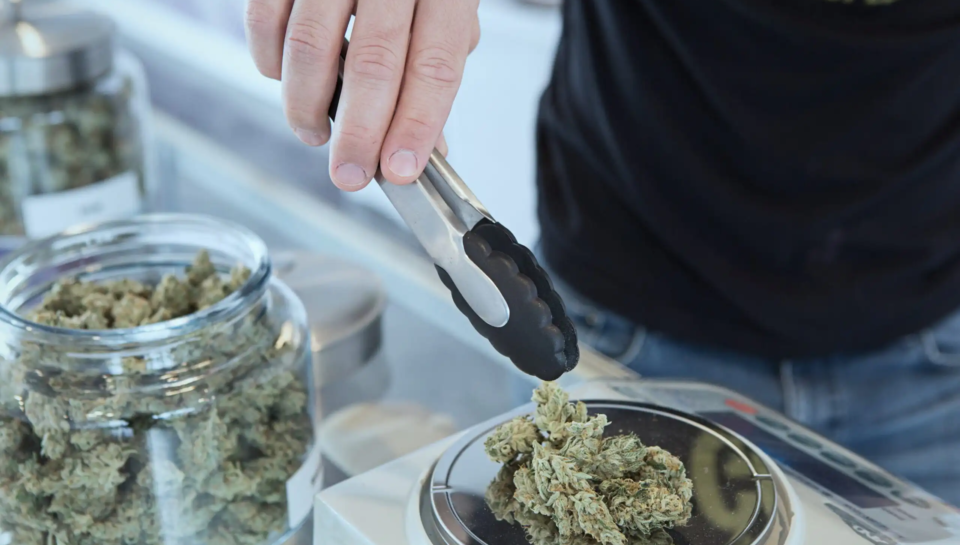
The current bill would raise or eliminate THC limits on certain products, including cannabis flower and infused beverages, and open up the market to new products and to people who live out-of-state.
Lemar said that the bill brings Connecticut in line with regulations in New York, Rhode Island and Massachusetts.
“ This is a burgeoning marketplace here in Connecticut, creating a lot of jobs and a lot of investment. And the federal regulations that were put into place last year restricted the ability for that business to function, to move forward. We’re creating a strong pathway here for an infused beverage marketplace,” said Lemar.
He said the bill cleaned up some of the regulations that made it hard for businesses to function and “restricted business potential.”
According to Lemar, the legal cannabis market has created hundreds of jobs and brought tens of millions of dollars in revenue to the state.
“Make no mistake about it. A Connecticut business in this space is at a severe disadvantage to those that exist in New York, Massachusetts and Rhode Island,” said Lemar. “They cannot compete on an even playing field because we have stacked the deck against them.”
But Rep. David Rutigliano, R-Trumbull, said during a press conference that marijuana had now joined a “capitalist market” being driven by large corporations.
One of the changes that received pushback is the elimination of caps on THC content in cannabis flower, plant material or concentrates. Rutigliano said higher concentrations of THC would make it easier for people to become addicted. He noted that public health professionals who appeared at a public hearing on the bill also brought concerns about THC levels.
“What these medical people were saying, and they said it over and over and over again—‘Whatever you do, don’t raise the limits on THC. That’s what’s getting the kids sick, that’s causing psychosis… That’s causing all the problems that we have right now, is that the stuff is just too strong,’” said Rutigliano.
Lemar said that cannabis plants have their own natural limits on THC concentration, and that “watering down” the cannabis could actually be more dangerous because it involves substances that have not been tested or regulated.
The bill also increases the amount of THC allowed in infused drinks from 3 mg to 5 mg. Drinks sold in dispensaries or retailers can have up to 10 mg of THC.
House Minority Leader Vincent Candelora, R-North Branford, said during a press conference that he was against raising the THC levels in these products.
“We are concerned about the mental health impacts on our children. When we talk about the science, we continue to hear [about] the psychosis and the health conditions that are caused from overuse of marijuana, and our hospitals and really our infrastructure does not have the beds for treatment, and that should be the conversation that we’re having today,” said Candelora.
Rutigliano at one point raised an amendment that would have kept the caps on THC content in cannabis products.
Rep. Chris Aniskovich, R-Clinton, told the story of his stepson, who died of a drug overdose at 26. He said his stepson began smoking cannabis at age 14 and later started using more serious drugs. He said his whole family went through therapy.
“When you sit there and you listen to the therapists that tell you, ‘Marijuana’s not a gateway,’” said Aniskovich. “Nobody knows how a child, when they start smoking marijuana, that is going to affect their brain.”
Rather than focusing on losing money to other states, Aniskovich said, the state should be focusing on keeping cannabis out of the hands of young people and addressing mental health issues.
“This is bad legislation. It’s bad legislation for our state. To put money ahead of our state is a problem,” said Aniskovich.
The amendment failed by six votes.
House Majority Leader Jason Rojas, D-East Hartford, said the concerns he’d heard from Rutigliano about mental health and psychosis were “legitimate” but that other states were selling infused drinks at higher potency levels. He said that, even at 5 milligrams, the potency limit was still conservative compared to other states.
Lemar added that the dangers and concerns about addiction and overdose were being driven not by the legal cannabis market but by the products being sold illegally in bodegas and gas stations. The House is considering a second bill targeting smoke shops and vape shops that sell illegal products. He said that eliminating caps on products like cannabis flower would move people out of the illegal marketplace and into the legal marketplace.
“Allowing our regulated marketplace to sell products that are in demand, that are safe, that are sold in surrounding states, moves people to a much safer product,” said Lemar.
During the debate Monday evening, Rep. Tom O’Dea, R-New Canaan, read from a study done at Massachusetts General Hospital and published in November that found that the number of teenagers presenting at the ER with psychiatric symptoms quadrupled after the state legalized recreational marijuana.
“That is shocking, disturbing, and should cause us all to pause,” said O’Dea.
Lemar noted that many of the incidents of children and teens getting sick involved illegal cannabis products that had skirted the state regulations.
The bill also expands the cannabis marketplace to include topicals, tablets and capsules and allows patients who come from out of state to purchase cannabis for medical reasons.
Rep. Tammy Nuccio, R-Tolland, said she was concerned that this bill would spark a new crisis of addiction by making these “palliative use” products “available to the general public on a whim.”
Lemar countered that these products were some of the most commonly used substances for treating pain and that being able to sell them in Connecticut would stop people from illegally transporting them across state lines.
Rep. Tracy Marra, R-Darien, questioned changes in the bill reducing the number of hours a licensed pharmacist has to be on site. The bill stipulates that retailers must have a pharmacist on site 8 hours per week and available for video consultation for 35 hours weekly. The bill also broadens who can dispense cannabis to include not just pharmacists but technicians and other employees that work at dispensaries.
“We have some of the sickest of the sick patients that go into these facilities and require help,” she said. “The role of a pharmacist goes beyond handing over the cannabis—they are looking at drug interactions that might occur.”
Marra objected to the idea that the Department of Consumer Protection would be responsible for approving products like topicals, tablets and sublingual capsules.
“For the state of Connecticut to take on this role, it’s above and beyond what I think we should be doing here,” she said.
This article first appeared on CT Mirror and is republished here under a Creative Commons Attribution-NoDerivatives 4.0 International License.
Add Marijuana Moment as a preferred source on Google.
All the cannabis news you need, all in one place. Copyright © 2017-2026 Marijuana Moment LLC ® and Tom Angell