How Psychedelics Helped Me Manage Grief From A Career In Law Enforcement (Op-Ed)
California Lawmakers Vote To Allow Drive-Thrus At Marijuana Dispensaries
Virginia Lawmakers Reject Governor’s Amendments To Marijuana Sales Legalization Bill
Trump Administration Ready To Move Ahead On Marijuana Rescheduling, Four Months After President’s Executive Order, Report Says
Six Out Of Ten Americans Support Legalizing Marijuana, New Poll Shows
Teen Marijuana Use Is Lower Now Than Before Legalization, Government Study From Minnesota Officials Shows
Medical Marijuana Helps People Stop Using Opioids, Sleeping Aids And Other Prescription Drugs, Study Shows
Vaporizing Marijuana Reduces Harmful Inhaled Byproducts By 99% Compared To Joint Smoking, New Study Shows
Federally Funded Study Reveals Marijuana Breathalyzer Breakthrough With 3-D Printed Roadside Tool Able To Detect THC
Alcohol And Tobacco Are More Damaging To Users And Society Than Marijuana Is, Government-Funded Study Concludes
Politicians And Major Brands Celebrate Cannabis Culture On 4/20
Woody Harrelson And Bill Maher Complain That Marijuana Taxes Are Too High While Smoking Joints At The Dispensary They Own Together
WNBA Offers To End Marijuana Testing For Women’s Basketball Players As Part Of Reported Deal With Union
DEA Promotes Anti-Marijuana PSA Contest Inviting Students To Warn Peers About THC Dangers On 4/20
Largest Entertainment Arena In US Partners With Cannabis Businesses To Sell THC Drinks At Concerts And Live Events
Target Expands Involvement In Hemp THC Drinks Market With 72 New Licenses In Minnesota
Marijuana Sales Are Rising And Alcohol Is On The Decline As Consumer Preferences Evolve, Government Data In Canada Shows
Feds Deny Snoop Dogg Request To Trademark ‘Smoke Weed Everyday’ Because Marijuana Is Illegal And Song Lyric Is Too Popular
Marijuana Kiosks For Seniors Are Coming To Independent Living Communities Across Arizona
Montana Retailers Have Sold More Than $1 Billion Worth Of Recreational Marijuana Since Legalization Took Effect
Federal cannabis reform has “the votes,” top Dem says (Newsletter: April 22, 2026)
Congress wants federal study of state cannabis laws (Newsletter: April 21, 2026)
Cannabis is safer than McDonald’s, senator says (Newsletter: April 20, 2026)
Trump is planning a psychedelics executive order (Newsletter: April 17, 2026)
IRS addresses cannabis industry worker tips (Newsletter: April 16, 2026)
Published
on
By
“What I experienced with ayahuasca was not an escape from grief, but a direct engagement with it… It was a fundamentally different process than the one I had relied on throughout my career—not control or suppression, but forgiveness, surrender and understanding.”
By: Kemmi Sadler, Law Enforcement Action Partnership
Life has an interesting way of opening your eyes—and your mind. Over the course of my law enforcement career, I built my identity around evidence, discipline and control. And to my surprise, it was that mindset that ultimately led me to reconsider everything I thought I knew about psychedelics.
My story begins with Amel. She was in her sixties and working for the U.S. Embassy in Iraq on her second career when I arrived in 2006 as a bright-eyed young agent with the Diplomatic Security Service. In early 2007, her husband was kidnapped. Determined to save him, she went to deliver the ransom, and was taken herself. Neither of them survived.
For the next 18 years, I lived with the belief that I should have been able to protect her—or at least stop her from going.
That guilt had a way of surfacing at unexpected moments. I could feel how deeply grief had shaped me, even as I kept it buried. But in a profession built around helping others, it’s hard to admit when you need help yourself.
So, I went back to work.
My career spanned investigations into fraud and human trafficking, followed by two years in internal affairs handling sexual assault and crimes against children. I took pride in approaching each case without bias, following the evidence, testing assumptions and letting the facts lead.
That commitment to evidence had taken root early, leading me to question some basic assumptions about law enforcement work. As a young police officer with the St. Augustine Police Department in Florida, I began to notice gaps between what the system was supposed to do and what it actually did. Not everyone feared arrest the way I had expected. Drug users, dealers, sex workers—they often treated it as part of the equation. I got caught this time. Next time, I’ll be more careful.
Those early experiences unearthed a question I couldn’t shake: if consequences were supposed to change behavior, why didn’t they? I saw the same people cycle through the system again and again. One man, well known to our department, would get drunk, call 911 from a payphone and shout “CHICKEN GEORGE COMING AT YA!” until officers arrived. Looking back, I’ve wondered whether the arrest itself offered something he wasn’t getting elsewhere—human interaction, or simply a night off the street.
The same instinct that drove me to reconsider aspects of my work also shaped how I began to confront my own unresolved grief. For years, I had relied on the same framework to get by—control, compartmentalization, pushing forward. But eventually, I began to wonder whether the assumptions I carried about trauma, like the ones I had questioned on the job, were incomplete.
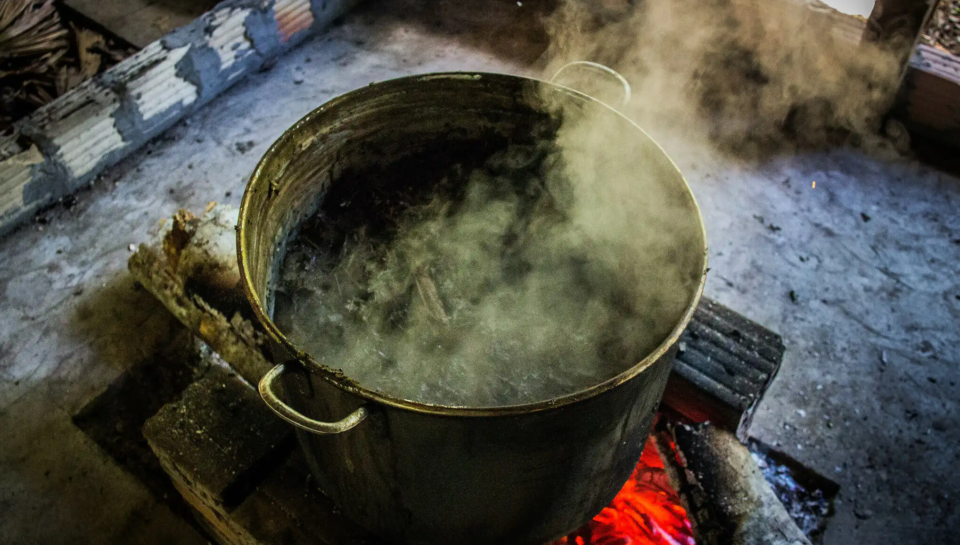
About two years before I retired, I heard about ayahuasca on a podcast. It is a psychedelic brew made from an Amazonian vine and companion plant, used in ceremonial traditions for generations. What struck me was not just what it was, but how it was being discussed: with respect, even reverence.
That challenged a core principle of my law enforcement programming. As a product of the War on Drugs, I believed all illegal drugs were dangerous and destructive.
But after decades of watching cycles of addiction repeat, and after losing my younger brother to heroin, I was forced to ask whether that understanding was too simple.
So I did what I had been trained to do. I investigated.
For more than a year, I immersed myself in research on trauma and psychedelic therapy. I read clinical studies and listened to veterans and others describe profound, and often lasting, healing and relief. At first, I was driven by intellectual curiosity and a commitment to following the evidence, even if the conclusion directly conflicted with what I had been taught. But underneath that curiosity was something more personal: a growing recognition that the tools I had relied on to manage my grief for decades were no longer working for me.
For years, I had treated grief like so many in our field do—mainly by repressing it and soldiering on. Those skills were enough to keep me afloat on the job. But in retirement, they left me stuck, circling the same unresolved loss without a way through.
After careful consideration, I chose to attend an ayahuasca ceremony. At the time, I had never used illicit drugs. My substances were restricted to alcohol and tobacco—both legal, socially acceptable and, in my case, convenient ways to avoid confronting the grief that bubbled below the surface.
What I experienced with ayahuasca was not an escape from grief, but a direct engagement with it. Progress was not immediate, but with intentional work and preparation, I was finally able to sit with the loss of Amel, and with the deaths of my father and brother, without turning away. It was a fundamentally different process than the one I had relied on throughout my career—not control or suppression, but forgiveness, surrender and understanding.
This experience ultimately led me to write From the Badge to the Vine, a memoir about what it took to confront the trauma I had carried for years, and the limits of the tools I once relied on to manage it.
After a career spent investigating other people’s problems, I came to see how rarely first responders are equipped, or willing, to examine their own wounds. The skills that define the profession—control, composure, endurance—can also make it harder to recognize when something deeper needs attention.
Trauma does not disappear simply because it is repressed or managed. For some of us, this reality may not come into focus until after the job ends and the radio goes quiet. For others, the impact shows up much sooner, in strained relationships, harmful behavior or a growing sense that something isn’t right but can’t be easily named.
What I learned through this process is that ignoring these signals comes at a cost. So does assuming that the tools we were given early in our careers are the only ones available to us.
My hope is that others in this profession will give themselves permission to turn their investigative eye inward in an effort to serve themselves. Ask hard questions. Do the research. Follow the evidence wherever it leads. Not all things we were taught to fear are the same—and not all wounds are visible.
Supervisory Special Agent Kemmi Sadler (Ret.) is the founder of Legalize the Divine, which advocates for safe, legal access to ancient traditions of healing. A former St.Augustine, Florida Police Department officer, she is also a speaker for the Law Enforcement Action Partnership, and the author of From the Badge to the Vine: A Federal Agent’s Awakening Through Ayahuasca.
Add Marijuana Moment as a preferred source on Google.
All the cannabis news you need, all in one place. Copyright © 2017-2026 Marijuana Moment LLC ® and Tom Angell