
Color Scheme
Subscriber Actions
Staff Options
Connect With Us
Support Local Journalism
This column reflects the opinion of the writer. Learn about the differences between a news story and an opinion column.
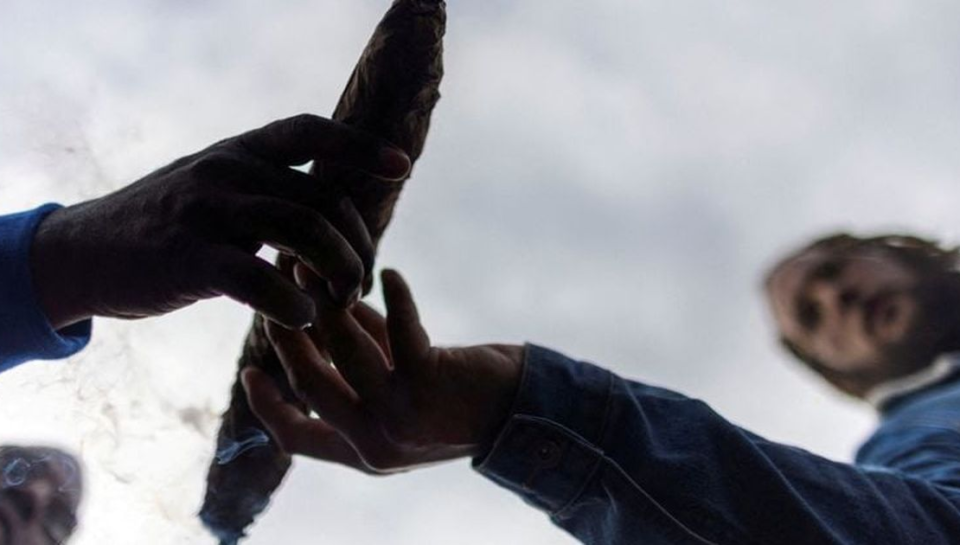
When the federal government announced last week it would take marijuana off the list of drugs like heroin that have no medical purpose, I had two reactions.
One was “It’s about time.” The other, “Thought it would never happen.”
Since 1970, marijuana has been classified as a Schedule 1 drug, along with heroin and LSD. Acting Attorney General Todd Blanche said that it will soon be changed to a Schedule 3 drug, meaning it is still regulated but has some medical purpose, which will make it much easier to research.
I’m a member of the generation who laughed uproariously at midnight movie showings of “Reefer Madness,” a so-called public service movie made in 1936 to illustrate the dangers of devil weed. Three decades later, it was showing its age, and most American teens knew someone who smoked marijuana and did not descend into the levels of crime and insanity that the characters in the movie did.
While we were laughing, however, President Richard Nixon was mounting a War on Drugs. He pushed Congress to pass the Controlled Substance Act that classified various drugs and put marijuana among the most illegal.
That meant most teens in the ’60s and ’70s also probably knew someone who had been arrested for having marijuana in their pocket or their glove compartment and had to pay a significant fine – or worse.
Those teens are now the senior statesmen and -women in the federal government, and one might have guessed this would have happened sooner.
When Bill Clinton, the first president of the baby boomer generation, was elected, I thought federal marijuana law would loosen up a bit. Clinton, after all, reportedly smoked marijuana at Oxford University, if a sign at the nearby Turf Tavern can be believed. (The concrete pad outside the pub is now a spot where the tavern stacks its empty beer kegs.)
It didn’t, possibly because Clinton didn’t inhale. Wink, wink.
Clinton, George W. Bush and Barack Obama all resisted calls to reclassify marijuana to a more realistic schedule, even as states moved first to legalize medical marijuana, and later recreational marijuana. Now 40 states and the District of Columbia allow for the legal purchase of some form of marijuana. That means a majority of members of Congress have businesses in their state that are in conflict with federal law, which means they don’t get some tax breaks other businesses get.
Moving marijuana down to Schedule 3 will loosen restrictions for medical marijuana businesses handling licensed products. There’s talk of relaxing federal restrictions on recreational marijuana, which would give those businesses similar breaks.
It doesn’t mean the drug is legal all over the country. But it does mean that researchers won’t have such a hard time getting permission and the products needed to study marijuana’s effects. There are valid concerns that the high potency of current strains of marijuana, coupled with regular, sustained use, can have more harmful effects than the drug’s legalization advocates imagined.
If that’s true, it would be good to have something better than “Reefer Madness” to back it up.
One of the state’s pre-eminent political journalists, Joel Connelly, passed away earlier this month at 78.
For decades, Connelly covered national and Northwest politics, as well as the environment, for the Seattle Post-Intelligencer and its online successor, Seattle P-I.com. He was the recipient of the Society of Professional Journalist’s lifetime achievement award, and his coverage of the Washington Public Power Supply System’s financial meltdown was a runner-up for a Pulitzer Prize.
An avid outdoorsman, Connelly was both a colleague and a competitor. He was always where politics was at its most active, whether it was snowy New Hampshire before the first presidential primary or on a panel of questioners at a candidate debate.
When Spokane was a regular stop on the presidential campaign trail, it was not unusual to see Connelly get off the plane after the candidate, which meant he already had a collection of exclusive comments from an airborne interview that wouldn’t be in anyone else’s story.
Although he suffered from failing health in recent years, he continued to write. Stories about the race for a U.S. Senate seat in Alaska and a shift in Canadian politics appeared on his website just before he died on April 15.
His dedication, his enthusiasm and his journalism will be missed.
More from this author