
North Carolina Could Legalize Medical Marijuana Now That It’s Been Federally Rescheduled, Senate Leader Says
Indiana GOP Governor Directs State Agencies To Meet With Medical Marijuana Advocates As Federal Rescheduling Takes Effect
Nebraska Supreme Court Holds Hearing In Suit Seeking To Overturn Medical Marijuana Law Passed By Voters
DEA Will Start Accepting Applications From Medical Marijuana Businesses That Want Federal Rescheduling Protections This Week
Tennessee Governor Signs Bill Blocking State Medical Marijuana Legalization Review Following Federal Rescheduling
Chinese Researchers Reveal Ancient Use Of Cannabis As ‘Indispensable’ Crop That Was ‘Deeply Integrated’ Into Daily Life
Teen Marijuana Use Is Lower Now Than Before Legalization, Government Study From Minnesota Officials Shows
Medical Marijuana Helps People Stop Using Opioids, Sleeping Aids And Other Prescription Drugs, Study Shows
Vaporizing Marijuana Reduces Harmful Inhaled Byproducts By 99% Compared To Joint Smoking, New Study Shows
Federally Funded Study Reveals Marijuana Breathalyzer Breakthrough With 3-D Printed Roadside Tool Able To Detect THC
Politicians And Major Brands Celebrate Cannabis Culture On 4/20
Woody Harrelson And Bill Maher Complain That Marijuana Taxes Are Too High While Smoking Joints At The Dispensary They Own Together
WNBA Offers To End Marijuana Testing For Women’s Basketball Players As Part Of Reported Deal With Union
DEA Promotes Anti-Marijuana PSA Contest Inviting Students To Warn Peers About THC Dangers On 4/20
Largest Entertainment Arena In US Partners With Cannabis Businesses To Sell THC Drinks At Concerts And Live Events
Target Expands Involvement In Hemp THC Drinks Market With 72 New Licenses In Minnesota
Marijuana Sales Are Rising And Alcohol Is On The Decline As Consumer Preferences Evolve, Government Data In Canada Shows
Feds Deny Snoop Dogg Request To Trademark ‘Smoke Weed Everyday’ Because Marijuana Is Illegal And Song Lyric Is Too Popular
Marijuana Kiosks For Seniors Are Coming To Independent Living Communities Across Arizona
Montana Retailers Have Sold More Than $1 Billion Worth Of Recreational Marijuana Since Legalization Took Effect
Cannabis businesses can apply for federal protections with DEA this week (Newsletter: April 28, 2026)
Trump pushes Congress for hemp & CBD reforms (Newsletter: April 27, 2026)
Trump talks benefits of medical cannabis after rescheduling announcement (Newsletter: April 24, 2026)
Trump ready to move on cannabis rescheduling (Newsletter: April 23, 2026)
Federal cannabis reform has “the votes,” top Dem says (Newsletter: April 22, 2026)
Published
on
By
China’s agricultural history with cannabis is deeper than previously believed, with a new study placing the staple crop among “the five grains” (alongside rice and barely, for example) that were foundational to the ancient Eurasian economy and “deeply integrated into the daily lives of the inhabitants.”
For the study, published in the Journal of Archaeological Science, researchers at Shandong University conducted phytolith extraction and analysis of 132 samples found in Beitaishang and Qianzhongzitou settlements dating back to the Late Neolithic era. The results showed that, by that point, cannabis had become a “core crop in northern China, primarily used for food or fiber.”
The study authors—who also listed affiliations with the Chinese Ministry of Education, the Institute of Cultural Relics and Archaeology of Shandong Province and other institutions in China—said the samples they analyzed “suggest that cannabis had been systematically integrated into the local agricultural economy, becoming a key component of the core crop assemblage in northern China by at least the Late Neolithic.”
“By the Late Neolithic, cannabis became a core crop in northern China, primarily used for food or fiber.”
Part of the reason the discovery seems to reflect a broader agricultural integration of the crop is because samples were collected from archaeological features such as ash pits, floors and foundations in small- to medium-sized settlements in the Shandong region, which provides “valuable insights into the role of cannabis in the local agricultural economy.”
Finding cannabis in these specific types of ancient features reflects “daily seed processing and consumption activities at the household level,” the study says.
“At the Beitaishang site, cannabis phytoliths were found in 22 out of 32 samples (68.8 percent) in the Longshan period. At the Qianzhongzitou site, cannabis phytoliths were identified in 47 out of 65 samples (72.3 percent) from the Longshan period, and in 16 out of 31 samples (51.6 percent) from the Yueshi period,” it says.
“Our study demonstrates that cannabis had already become one of the ‘five grains’ (rice, millet, barley, soybean, and cannabis) since the Longshan period in Shandong, as evidenced by systematic phytolith analysis. The analysis of the archaeological context further reveals that cannabis processing and consumption were deeply integrated into the daily lives of the inhabitants, making it an indispensable component of their agricultural subsistence. This finding fundamentally challenges the previous underestimation of cannabis’s status based on limited organic remains and reaffirms its significant role in the agricultural economy of prehistoric northern China.”
The study—funded by the National Social Science Foundation of China, which is part of the country’s Ministry of Science and Technology—suggests that “cannabis processing and consumption were deeply integrated into daily life,” the researchers said.
Unlike in other archaeological records indicating that psychoactive cannabis was “typically associated with burial and ritual contexts across Eurasia,” including “psychoactive shoots, infructescences and Teaves of cannabis found in Bronze Age Xinjiang tombs,” these latest findings “reflect clear differences in both unearthed contexts and plant parts, emphasizing the more daily and subsistence-oriented use of cannabis in Shandong.”
“This study focuses on the fibre-type cannabis for experimentation and analysis, as the drug-type cannabis is strictly regulated in most countries due to its psychoactive compounds,” the study concludes. And to that point, one of the study authors, Yong Ge, told Marijuana Moment in an email that the researchers “stand against the abusive use of cannabis as a drug.”
“In this regard, we are fully aligned with China’s stance on drug control,” she said.
China’s strict anti-drug policies have also extended to low-THC hemp and its derivatives like CBD. In 2024, for example, the U.S. Department of Agriculture (USDA) advised stakeholders about a policy change in China that imposed tighter regulations on cannabidiol, though it said at the time that the rules were expected to benefit the industry.
Meanwhile, with respect to the evolution of human relationships with the cannabis plant, a 2023 paper in the European Journal for Chemistry traced the history of the crop through “thousands of years of contact with mankind,” noting the plant’s legacy as a source of fiber, nutrition, medicine, spirituality and pleasure.
An ancient biblical tribe in Israel also likely used marijuana to produce hallucinogenic effects as part of cultic rituals, according to a 2020 study that identified cannabis resin on an alter in a shrine built around 750 BCE.
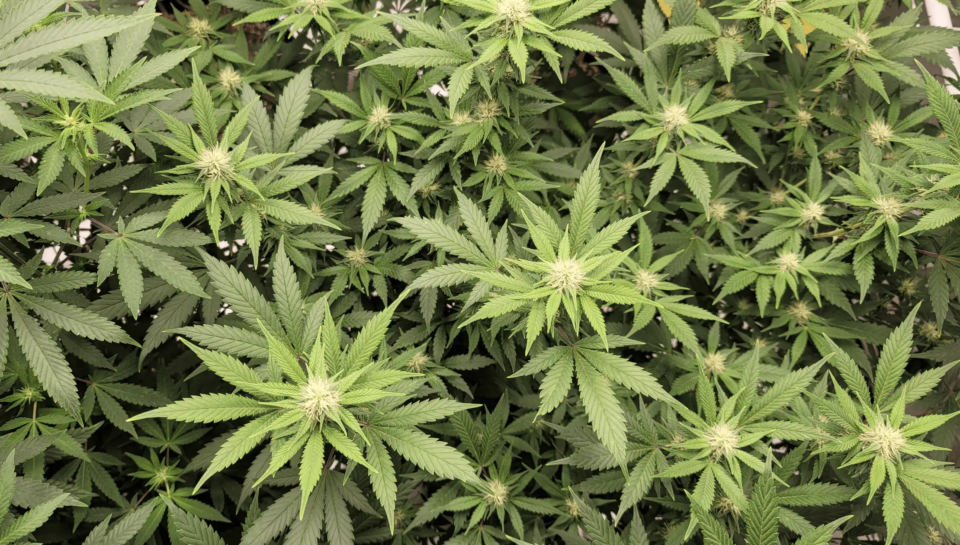
Photo courtesy of Mike Latimer.
Kyle Jaeger is Marijuana Moment’s Sacramento-based managing editor. He’s covered drug policy for more than a decade—specializing in state and federal marijuana and psychedelics issues at publications that also include High Times, VICE and attn. In 2022, Jaeger was named Benzinga’s Cannabis Policy Reporter of the Year.
Add Marijuana Moment as a preferred source on Google.
All the cannabis news you need, all in one place. Copyright © 2017-2026 Marijuana Moment LLC ® and Tom Angell