
South Carolina Patients Could Get Medical Marijuana Access Under State Laws Triggered By Federal Rescheduling
Louisiana Lawmakers Pass Bill To Send People To Jail For Smoking Marijuana Near College Campuses
Indiana Is ‘More Likely’ To Legalize Marijuana Now That It’s Been Federally Rescheduled, Governor Says
Congressional Amendments To Delay Or Speed Up Federal Hemp THC Product Ban Won’t Get Votes
Nebraska Officials React To Federal Marijuana Rescheduling As State Slowly Implements Voter-Approved Legalization
There’s ‘Strong Public Demand’ For Bigger Marijuana Reform Than Trump’s Rescheduling Move, Federally Funded Study Shows
Chinese Researchers Reveal Ancient Use Of Cannabis As ‘Indispensable’ Crop That Was ‘Deeply Integrated’ Into Daily Life
Teen Marijuana Use Is Lower Now Than Before Legalization, Government Study From Minnesota Officials Shows
Medical Marijuana Helps People Stop Using Opioids, Sleeping Aids And Other Prescription Drugs, Study Shows
Vaporizing Marijuana Reduces Harmful Inhaled Byproducts By 99% Compared To Joint Smoking, New Study Shows
Politicians And Major Brands Celebrate Cannabis Culture On 4/20
Woody Harrelson And Bill Maher Complain That Marijuana Taxes Are Too High While Smoking Joints At The Dispensary They Own Together
WNBA Offers To End Marijuana Testing For Women’s Basketball Players As Part Of Reported Deal With Union
DEA Promotes Anti-Marijuana PSA Contest Inviting Students To Warn Peers About THC Dangers On 4/20
Largest Entertainment Arena In US Partners With Cannabis Businesses To Sell THC Drinks At Concerts And Live Events
Target Expands Involvement In Hemp THC Drinks Market With 72 New Licenses In Minnesota
Marijuana Sales Are Rising And Alcohol Is On The Decline As Consumer Preferences Evolve, Government Data In Canada Shows
Feds Deny Snoop Dogg Request To Trademark ‘Smoke Weed Everyday’ Because Marijuana Is Illegal And Song Lyric Is Too Popular
Marijuana Kiosks For Seniors Are Coming To Independent Living Communities Across Arizona
Montana Retailers Have Sold More Than $1 Billion Worth Of Recreational Marijuana Since Legalization Took Effect
Hemp amendments stall in Congress, for now (Newsletter: April 29, 2026)
Cannabis businesses can apply for federal protections with DEA this week (Newsletter: April 28, 2026)
Trump pushes Congress for hemp & CBD reforms (Newsletter: April 27, 2026)
Trump talks benefits of medical cannabis after rescheduling announcement (Newsletter: April 24, 2026)
Trump ready to move on cannabis rescheduling (Newsletter: April 23, 2026)
Published
on
By
The Trump administration’s move to reschedule marijuana is popular, but most people support even broader cannabis reforms, according to a new federally funded study that examines public comments received during the government’s official consideration of the proposal.
The analysis of the 42,913 marijuana rescheduling comments submitted to the Drug Enforcement Administration (DEA) shows that 28.9 percent supported moving cannabis from Schedule I to Schedule III of the Controlled Substances Act (CSA) as proposed and that 63.5 percent wanted further rescheduling or even complete descheduling.
Only 6.7 percent of commenters opposed any reform and wanted to keep marijuana in Schedule I, the most restrictive CSA category that is supposed to be reserved for substances with no accepted medical use and a high potential for abuse.
The Department of Justice announced last week that marijuana products regulated by a state medical cannabis license immediately moved to Schedule III, as did any marijuana products that are approved by the Food and Drug Administration (FDA). An administrative hearing scheduled for his summer will consider broader cannabis rescheduling.
“Public sentiment on Regulations.gov supports the United States Drug Enforcement Administration’s proposal for cannabis rescheduling, though the majority views the proposed Schedule III classification as inadequate and supports further rescheduling or complete de-scheduling of cannabis,” the new study, authored by researchers from Johns Hopkins University and the University of California San Diego and published in the journal Addiction, says.
“The analysis of 42,913 public comments on cannabis rescheduling reveals strong public demand for broader reforms than the proposed Schedule III reclassification.”
The research team used artificial intelligence to analyze the tens of thousands of comments, and then they manually reviewed and coded 200 of the submissions.
Among those that were directly looked at by researchers, the most commonly stated reasons for supporting the move to Schedule III were therapeutic benefits and economic impacts, with those who wanted further reform citing criminal justice issues.
“Comments also frequently highlighted social justice implications, emphasizing the need to address historical inequities from cannabis regulations, such as disproportionate incarceration rates in marginalized communities,” the authors wrote.
“Most public comments on the proposed DEA rule-making to reschedule cannabis from Schedule I to Schedule III supported removing cannabis from Schedule I, but believed that Schedule III was insufficient and favored a lower schedule or removal from the list of controlled substances. Moreover, our analysis reveals clear public priorities: addressing therapeutic needs, promoting social equity and implementing evidence-based safety measures. These insights suggest that effective cannabis policy reform must balance public health protections with broader societal goals of accessibility and justice.”
Study coauthor John W. Ayers said in a press release that “rescheduling is a meaningful first step, but the public record shows Americans want federal policy to go even further.”
The fact that such a strong majority of commenters want to go further than federal officials are currently willing to “suggests a disconnect between federal policy proposals and public expectations, potentially shaped by state-level legalization experiences,” the study, which received federal funding from the National Institute on Drug Abuse, says.
“Many commenters have lived under state legalization for medical or adult use for years already,” study coauthor Johannes Thrul said in the press release. “Their expectation of federal policy reflects that reality.”
Opponents of any change, meanwhile, frequently noted concerns about public health risks, addiction and underage use in their comments, the study found.
While rescheduling doesn’t broadly legalize marijuana under federal law, it does have tax benefits for state-legal cannabis businesses and removes some barriers to conducting research.
“Public enthusiasm for cannabis as medicine needs to be matched by federal and state investment in rigorous cannabis research,” paper coauthor Ryan Vandrey said in the press release.
Vijay M. Tiyyala, another coauthor of the study, said that “Americans showed up with their personal stories about therapy that helped them, businesses they built, consequences of cannabis use, and more.”
It appears that the Trump administration recognizes broad public support for marijuana reform.
White House Press Secretary Karoline Leavitt said last week that “if you do look at the public polling on this issue, it is overwhelmingly popular with the vast majority of Americans.”
“And so the president was willing to take this step to do that at the behest of the American public, who largely support it, and many of his health advisors on his team who he spoke with about it,” she said.
During a press event in the Oval Office last week, Trump himself spoke about the medical benefits of marijuana.
“A lot of people are suffering from big problems, which this seems to be the best answer,” he said. “They’re very happy about it. So the rescheduling is starting, and that’s a big thing, rescheduling.”
The president noted that his administration’s actions on cannabis rescheduling came after his friend Howard Kessler told him about how he used medical marijuana.
“He had some medical difficulties, and he came upon this by accident, in a way,” he said. “He had to go through a lot of different medications, and he said this was the one that was much better than anything else. And so he experienced that. He didn’t benefit by it, other than from the standpoint that he lives a much better life now.”
“So hopefully you don’t need it,” Trump said. “But if you do need it, I hear it’s the best of all the alternatives.”
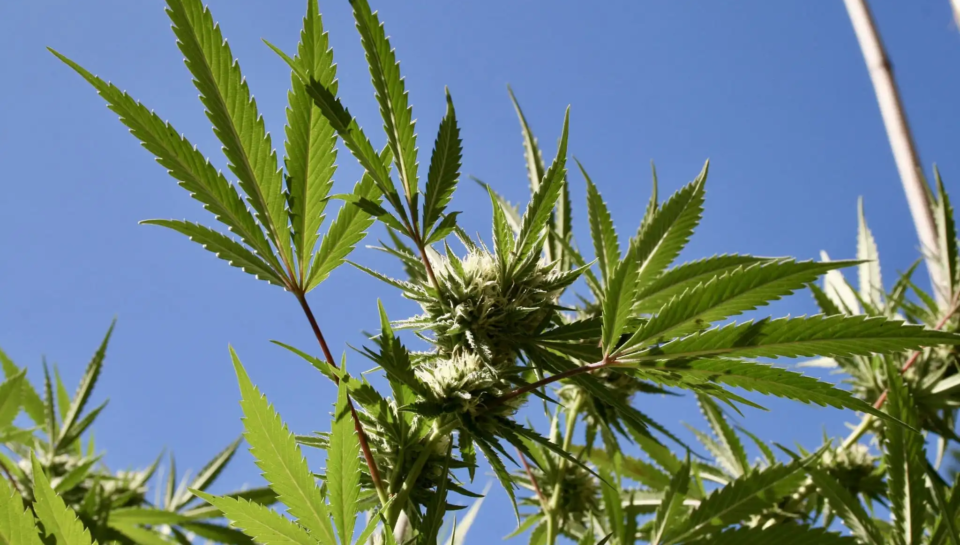
Photo courtesy of Brian Shamblen.
Tom Angell is the editor of Marijuana Moment. A 25-year veteran in the cannabis and drug law reform movement, he covers the policy, politics, science and culture of marijuana, psychedelics and other substances. He previously reported for Forbes, Marijuana.com and MassRoots, and was given the Hunter S. Thompson Media Award by NORML and has been named Journalist of the Year by Americans for Safe Access. As an activist, Tom founded the nonprofit Marijuana Majority and handled media relations, campaigns and lobbying for Law Enforcement Against Prohibition and Students for Sensible Drug Policy.
Add Marijuana Moment as a preferred source on Google.
All the cannabis news you need, all in one place. Copyright © 2017-2026 Marijuana Moment LLC ® and Tom Angell