DEA Clarifies That The Synthetic Cannabis Compound HHC Is Federally Banned, And Doesn’t Count As Legal Hemp
California Officials Make It Easier For Marijuana Businesses To Access Federal Benefits Under Trump’s Rescheduling Move
Maryland Psychedelics Task Force Is Extended Through 2027 With Governor’s Signature
Pennsylvania Governor’s Campaign Calls Out Reelection Opponent For Opposing Marijuana Legalization
Trump’s New Surgeon General Pick Said Using Marijuana Can Give You ‘Man Boobs’
There’s ‘Strong Public Demand’ For Bigger Marijuana Reform Than Trump’s Rescheduling Move, Federally Funded Study Shows
Chinese Researchers Reveal Ancient Use Of Cannabis As ‘Indispensable’ Crop That Was ‘Deeply Integrated’ Into Daily Life
Teen Marijuana Use Is Lower Now Than Before Legalization, Government Study From Minnesota Officials Shows
Medical Marijuana Helps People Stop Using Opioids, Sleeping Aids And Other Prescription Drugs, Study Shows
Vaporizing Marijuana Reduces Harmful Inhaled Byproducts By 99% Compared To Joint Smoking, New Study Shows
Politicians And Major Brands Celebrate Cannabis Culture On 4/20
Woody Harrelson And Bill Maher Complain That Marijuana Taxes Are Too High While Smoking Joints At The Dispensary They Own Together
WNBA Offers To End Marijuana Testing For Women’s Basketball Players As Part Of Reported Deal With Union
DEA Promotes Anti-Marijuana PSA Contest Inviting Students To Warn Peers About THC Dangers On 4/20
Largest Entertainment Arena In US Partners With Cannabis Businesses To Sell THC Drinks At Concerts And Live Events
Target Expands Involvement In Hemp THC Drinks Market With 72 New Licenses In Minnesota
Marijuana Sales Are Rising And Alcohol Is On The Decline As Consumer Preferences Evolve, Government Data In Canada Shows
Feds Deny Snoop Dogg Request To Trademark ‘Smoke Weed Everyday’ Because Marijuana Is Illegal And Song Lyric Is Too Popular
Marijuana Kiosks For Seniors Are Coming To Independent Living Communities Across Arizona
Montana Retailers Have Sold More Than $1 Billion Worth Of Recreational Marijuana Since Legalization Took Effect
DOJ rethinks cannabis & gun prosecutions (Newsletter: May 1, 2026)
GOP lawmakers still trying to block cannabis rescheduling despite Trump (Newsletter: April 30, 2026)
Hemp amendments stall in Congress, for now (Newsletter: April 29, 2026)
Cannabis businesses can apply for federal protections with DEA this week (Newsletter: April 28, 2026)
Trump pushes Congress for hemp & CBD reforms (Newsletter: April 27, 2026)
Published
on
By
Federal drug officials are clarifying that a cannabinoid produced synthetically from components of the cannabis plant is federally illegal.
The Drug Enforcement Administration (DEA) said that while hexahydrocannabinol (HHC) has already been considered a Schedule I illegal substance under the federal Controlled Substances Act (CSA), the agency is now giving the compound its own unique drug code for classification.
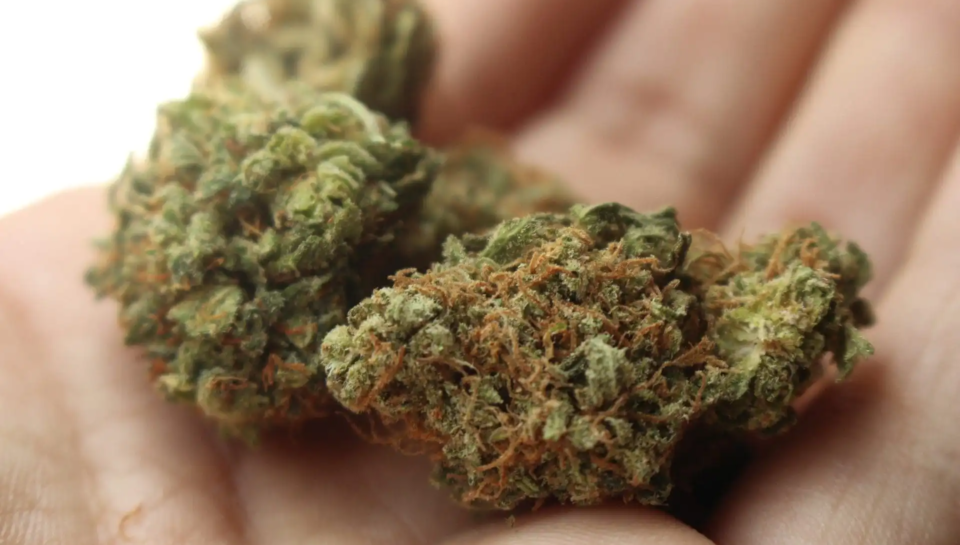
HHC can be found in trace amounts in cannabis plants but is also synthesized by hydrogenating cannabidiol (CBD). It’s sometimes sprayed on cannabis flowers that are low in delta-9 THC, the most well-known psychoactive component of marijuana, and its psychoactive effects are reportedly similar.
While the 2018 Farm Bill federally legalized hemp and its derivatives with less than .3 percent delta-9 THC on a dry-weight basis, DEA says that only applies to naturally occurring, and not synthetic, cannabinoids. As such, it is the agency’s position that HHC does not fall under the definition of legal hemp.
“Only tetrahydrocannabinols in or derived from the cannabis plant—not synthetic tetrahydrocannabinols—are excluded from control as ‘tetrahydrocannabinols in hemp,’” the agency said in a notice set to be published in the Federal Register on Monday. “To clarify further, tetrahydrocannabinols produced through chemical conversion, even when hemp derived are considered synthetically produced for purposes of the CSA, do not qualify as ‘tetrahydrocannabinols in hemp’ under” the 2018 Farm Bill.
This isn’t the first time that DEA is addressing the legal status of HHC.
In a 2023 letter, Terrance Boos, chief of DEA’s Drug and Chemical Evaluation Section, wrote that HHC “does not occur naturally in the cannabis plant and can only be obtained synthetically, and therefore does not fall under the definition of hemp.”
The new Federal Register filing signed by DEA Administrator Terrance Cole says that “this rule does not affect the continuing status of hexahydrocannabinol as a schedule I controlled substance in any way.”
“This action, as an administrative matter, establishes a separate, specific listing for hexahydrocannabinol in schedule I of the CSA and assigns a DEA drug code for this substance,” it says. “This action will allow DEA to establish an aggregate production quota and grant individual manufacturing and procurement quotas to DEA-registered manufacturers of hexahydrocannabinol, who had previously been granted individual quotas for such purposes under the drug code for tetrahydrocannabinols.”
The DEA notice cites a move last year by an international drug control body to add HHC to Schedule II of the United Nations Convention on Psychotropic Substances of 1971—but the document doesn’t note that when the Commission on Narcotic Drugs (CND) took the action, the U.S. was the only country to abstain from the vote.
DEA said that the U.S. Department of Health and Human Services (HHS) “concurs with the direct listing and drug code assignment of hexahydrocannabinol in the CSA.”
Some federal appeals courts, however, have rejected DEA’s interpretation of what constitutes a legal cannabinoid under the Farm Bill.
Meanwhile, under provisions of a large-scale spending bill signed by President Donald Trump late last year, the federal definition of legal hemp is set to change in November. Unless that language is altered or its effective date is delayed, as some lawmakers are pushing for, only hemp products with up to 0.4 milligrams of total THC per container will remain legal after November 12.
The Trump administration last week announced steps to more broadly reschedule marijuana under federal law.
Tom Angell is the editor of Marijuana Moment. A 25-year veteran in the cannabis and drug law reform movement, he covers the policy, politics, science and culture of marijuana, psychedelics and other substances. He previously reported for Forbes, Marijuana.com and MassRoots, and was given the Hunter S. Thompson Media Award by NORML and has been named Journalist of the Year by Americans for Safe Access. As an activist, Tom founded the nonprofit Marijuana Majority and handled media relations, campaigns and lobbying for Law Enforcement Against Prohibition and Students for Sensible Drug Policy.
Add Marijuana Moment as a preferred source on Google.
All the cannabis news you need, all in one place. Copyright © 2017-2026 Marijuana Moment LLC ® and Tom Angell