
Fetterman Praises Trump’s Marijuana And Psychedelics Reform Moves
Virginia Governor Signs Marijuana Resentencing Bill After Lawmakers Rejected Her Amendments
House Votes To Let Military Veterans Get Medical Marijuana Recommendations From VA Doctors
Louisiana Bill To Let Terminally Ill Patients Use Medical Marijuana In Hospitals Advances Toward Final Passage
There’s Been A ‘Striking Increase’ In Support For Psychedelic Therapy And Research In The Last Two Years, Poll Shows
CBD Holds Potential As An ‘Anticancer Agent’ For Dogs, New Scientific Review Concludes
Medical Marijuana Helps Pain Patients Reduce Use Of Opioids, New Study Shows
More Older Adults Are Using Marijuana As An Alternative To Pharmaceuticals, Federally Funded Study From American Medical Association Shows
A Single Dose Of Psilocybin Appears To Safely Treat Cocaine Addiction, New Study Published By American Medical Association Study Shows
Medical Marijuana Can Be A ‘Profoundly Helpful Tool’ For Seniors Dealing With Pain And Other Maladies (Op-Ed)
Politicians And Major Brands Celebrate Cannabis Culture On 4/20
Woody Harrelson And Bill Maher Complain That Marijuana Taxes Are Too High While Smoking Joints At The Dispensary They Own Together
WNBA Offers To End Marijuana Testing For Women’s Basketball Players As Part Of Reported Deal With Union
DEA Promotes Anti-Marijuana PSA Contest Inviting Students To Warn Peers About THC Dangers On 4/20
Largest Entertainment Arena In US Partners With Cannabis Businesses To Sell THC Drinks At Concerts And Live Events
Target Is Launching Hemp THC Drink Sales In Three Of The U.S.’s Most Populous States
Target Expands Involvement In Hemp THC Drinks Market With 72 New Licenses In Minnesota
Marijuana Sales Are Rising And Alcohol Is On The Decline As Consumer Preferences Evolve, Government Data In Canada Shows
Feds Deny Snoop Dogg Request To Trademark ‘Smoke Weed Everyday’ Because Marijuana Is Illegal And Song Lyric Is Too Popular
Marijuana Kiosks For Seniors Are Coming To Independent Living Communities Across Arizona
Amendment to let military vets get medical cannabis approved at VA passes (Newsletter: May 15, 2026)
Lawmakers push cannabis reform on Capitol Hill (Newsletter: May 14, 2026)
Congress wants crackdown on unregulated cannabis products (Newsletter: May 13, 2026)
DEA launching new cannabis business registration applications (Newsletter: May 12, 2026)
White House drug czar says cannabis is “still illegal” after rescheduling (Newsletter: May 11, 2026)
Published
on
By
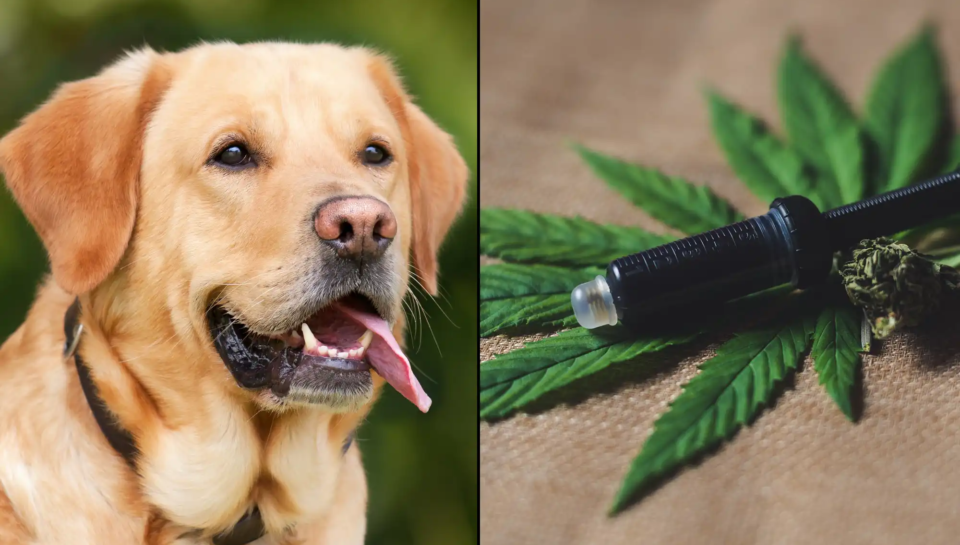
Studies “consistently show” that the non-intoxicating marijuana component CBD is a potential “anticancer agent across different cancer types”—and that effect applies to dogs as well as humans, according to a new systemic review of the scientific literature.
Numerous studies have investigated how cannabis and its constituents may impact the symptoms and progression of cancer. The new paper published in the journal Frontiers in Veterinary Science examined that preclinical research, which generally indicates that CBD may “inhibit cell proliferation and migration, while inducing apoptosis in various human tumor cells.”
How cannabidiol affects canines has been less rigorously studied compared to humans. That’s despite the fact that the cannabinoid “has been shown to be safe and well-tolerated in dogs, supporting its potential clinical use,” the authors, who are affiliated with the University of Chile, said.
They wrote that since 2015, “some studies have been conducted evaluating CBD in different types of canine cancer,” but “no comprehensive review of these findings has been performed.”
“For this reason, we conducted a systematic review to compile the existing evidence on the anticancer effects of CBD in dogs,” they said, adding that their analysis determined that preclinical studies, largely based on cellular models, often focus on “lymphoma, mammary cancer, glioma, prostate cancer, osteosarcoma, and urothelial carcinoma.”
“These studies consistently show that CBD exerts antiproliferative and proapoptotic effects, in some cases by modulating intracellular signaling pathways,” the review said. “Additionally, some studies have evaluated the combination of CBD with other drugs, reporting both synergistic and antagonistic effects.”
“Overall, these findings highlight the potential of CBD as an anticancer agent across different cancer types. However, further studies are required to better elucidate the mechanisms underlying the effects of CBD and to standardize concentrations and formulations, enabling reliable, comparable results and the development of clinical studies evaluating the role of CBD in canine oncology.”
The study review builds upon a sizable body of research on the therapeutic potential of cannabis in cancer treatment.
For example, another recent scientific review found that CBD “holds substantial promise as an anti-tumor agent” in addition to its other anti-inflammatory properties.
Scientists explored CBD’s effect on many types of cancer—including some of the most aggressive ones, such as glioblastoma, which affects the brain. They also noted it can help suppressing the growth and metastasis of other cancers, including breast, lung, colorectal, ovarian and prostate, among others.
In 2025, a paper published in the journal Pharmacology & Therapeutics, assessed a range of clinical and preclinical findings that the efficacy of chemotherapy drugs can be enhanced by medical marijuana.
In a sign of greater acceptance of medical applications of cannabis, President Donald Trump’s choice to serve as the next White House drug czar has called medical marijuana a “fantastic” treatment option for seriously ill patients and said she doesn’t object to legalization, even if she might not personally agree with the policy.
Also last year, a study found that “patients with cancer using cannabis report significant improvements in cancer-related symptoms.”
With respect to canine research, a case study in the journal Veterinary Medicine and Science published last year suggests that very small doses of the psychedelic LSD appeared to ease a dog’s severe separation anxiety, reducing destructive behavior and shortening the duration of vocalizations.
the National Animal Supplement Council (NASC) promoted a study in 2024 that it said shows CBD is “safe for long-term use” in dogs—a significant finding given emerging research that cannabis can effectively treat conditions such as anxiety and certain skin diseases among canines.
Another 2024 case study found that cannabis appears to be a “viable alternative” treatment option for dogs suffering from a common skin disease, especially if they experience adverse side effects from conventional steroid therapies.
Tom Angell is the editor of Marijuana Moment. A 25-year veteran in the cannabis and drug law reform movement, he covers the policy, politics, science and culture of marijuana, psychedelics and other substances. He previously reported for Forbes, Marijuana.com and MassRoots, and was given the Hunter S. Thompson Media Award by NORML and has been named Journalist of the Year by Americans for Safe Access. As an activist, Tom founded the nonprofit Marijuana Majority and handled media relations, campaigns and lobbying for Law Enforcement Against Prohibition and Students for Sensible Drug Policy.
Add Marijuana Moment as a preferred source on Google.
All the cannabis news you need, all in one place. Copyright © 2017-2026 Marijuana Moment LLC ® and Tom Angell