
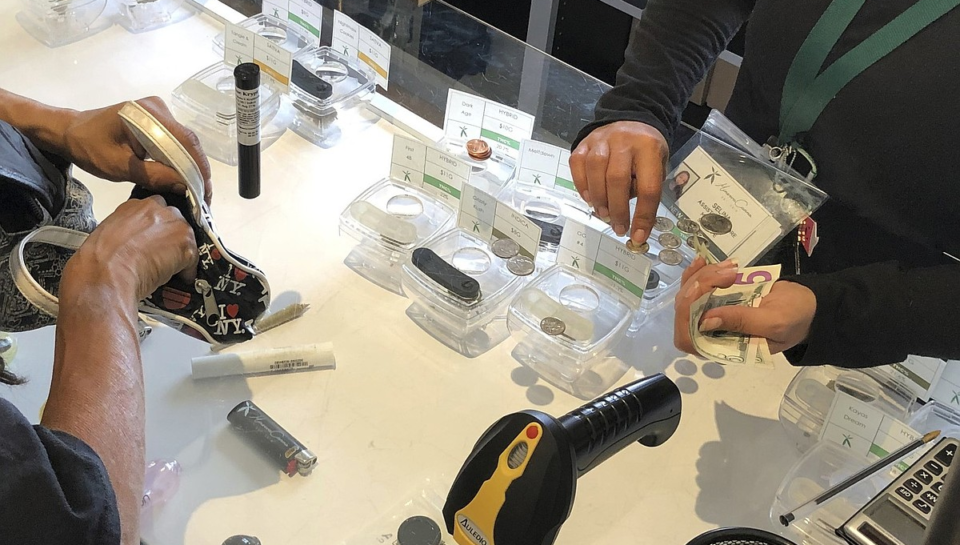
Medical cannabis business in Arkansas came to a sudden halt Wednesday morning after the software the state uses to track marijuana experienced a glitch, causing some dispensaries to turn away patients.
The glitch came during a scheduled update for ARSTEMS, the software state regulators use to track medical marijuana businesses’ inventory, the Arkansas Department of Finance and Administration confirmed.
As of Wednesday evening it was unclear whether the issues had been resolved. Scott Hardin, a department spokesman, said in an email, “There are ancillary issues that we will continue to pursue, but nothing that prohibits (the) normal day-to-day operation.”
Among the problems was the fact that key information about patients and products failed to migrate into the new ARSTEMS 2.0 system after the update took place Wednesday morning relating to connectivity issues the software had with a third party point of sale system, according to the state.
“This was a normal implementation of a totally new program, with questions and concerns addressed throughout the day. ARSTEMS 2.0 will allow for better, more thorough reporting on the industry as we move forward,” Hardin said in an email.
Nate Steel, chief regulatory officer for Good Day Farm, which manages five dispensaries around the state, said on Wednesday morning some patients couldn’t get their medical marijuana.
Specifically, patients had to be turned away as key data about their history and how much medical marijuana they recently purchased didn’t migrate to the updated software.
Arkansas regulations tightly control how much cannabis a patient may buy, limiting their purchases to 2.5 ounces of the drug during a 14-day period. Without knowing how much marijuana has been sold to a patient during the last two weeks, dispensaries cannot sell patients cannabis.
The glitch also meant that companies may have had issues with patient histories, lab expiration dates and results and delivery manifests had trouble moving to the new software, Chip Leibovich, an attorney with the Finance Department, said in a message to cannabis businesses Wednesday.
As for the disruption to deliveries, Steel said the dispensaries that Good Day Farm manages tend to have small vaults, meaning the amount of inventory they can hold is limited and thus the stores have to rely on frequent shipments – typically once to twice a week.
“The timing is really unfortunate because of the weather issues coming this weekend and the potential to have, you know, significant shortages, if not just total lack of access for patients,” Steel said.
Casey Flippo, CEO of Dark Horse Cannabis, said the glitch didn’t hurt his company’s operations too much, but added that the problem could have been a major disruption to patients.
“We have some patients that travel, you know, hours one way to come to our store,” Flippo said. “And you certainly never want to have any situation in which you have to turn people away.”
ARSTEMS is operated by BioTrack, a Florida-based company that specializes in software used to track medical marijuana from “seed to sales.” Last year, the state announced it had awarded BioTrack a seven-year $695,000 contract to continue operating ARSTEMS, extending its operation of the software, which the company has done since 2018.
The update was part of the state’s agreement with BioTrack, which “has been underway for more than a year,” Hardin said, adding that ” licensees were provided live, role specific training and a 30 day testing period. Third-party providers were also granted full access to test and validate their systems.”
Robert deBin, CEO of Natural State Medicinals, said the software update “was a necessary and overdue upgrade,” but praised the quick work of the Department of Finance and BioTrack, the company that operates ARSTEMS, for their responsiveness.
“While the rollout was disruptive to operations and schedules, the issues that prevented dispensaries from opening were resolved relatively quickly, and the downtime could have been far worse,” deBin wrote in an email.
When reached by phone on Wednesday, BioTrack CEO Moe Afaneh said that questions about the software issue should be sent to him via email. The company did not provide a statement by deadline.
BioTrack has come under scrutiny before with cannabis business owners telling legislators during a meeting in 2022 that the software had crashed and mislabeled its inventory.
The former CEO of BioTrack’s parent company Alleaves Inc., Michael Shvartsman, also came into the spotlight after he pleaded guilty to one count of securities fraud for insider trading, a charge linked to linked to a merger between a separate business venture he was involved in with Trump Media and Technology Group, a company founded by President Donald Trump.
Currently, there are 37 operating medical marijuana dispensaries with about 115,000 people having active cards in Arkansas.
Medical marijuana became legal after voters approved Amendment 98 to the state constitution in 2019, allowing those with an approved aliment from the Arkansas Department of Health to purchase the drug.
Neal Earley covers state politics for the Arkansas Democrat-Gazette. He joined the paper in 2020 and is a graduate of Indiana University.
Enjoyed this article?
With your subscription, you can gift free access to this article to a family member, friend or colleague.
Support journalism that digs deeper into topics that matter most to Arkansans. Donate today to preserve the quality and integrity of local journalism.
Copyright © 2026, Arkansas Democrat-Gazette, Inc.
All rights reserved.
This document may not be reprinted without the express written permission of Arkansas Democrat-Gazette, Inc.
Material from the Associated Press is Copyright © 2026, Associated Press and may not be published, broadcast, rewritten, or redistributed. Associated Press text, photo, graphic, audio and/or video material shall not be published, broadcast, rewritten for broadcast or publication or redistributed directly or indirectly in any medium. Neither these AP materials nor any portion thereof may be stored in a computer except for personal and noncommercial use. The AP will not be held liable for any delays, inaccuracies, errors or omissions therefrom or in the transmission or delivery of all or any part thereof or for any damages arising from any of the foregoing. All rights reserved.