
Congressional Committee Votes To Block Medical Marijuana From Being Covered Under Workers’ Comp For Federal Workers
White House Pushes Congress To Keep Hemp CBD Products Legal By Amending Broad Ban That’s Set To Take Effect Later This Year
Connecticut Governor Signs Bill To Expand Psychedelics Pilot Program In Preparation For Federal FDA Approval
Congressional Committee Directs Feds To Keep Testing Truck Drivers For Marijuana, Regardless Of Trump’s Rescheduling Move
Louisiana Will Let Terminally Ill Patients Use Medical Marijuana In Hospitals After Governor Allows Bill To Take Effect Without His Signature
2 In 3 Americans Who Use Marijuana Say It Helps Them Sleep Better, New Survey Shows
Hemp-Based Plastic Shows Promise As Environmentally Friendly Alternative To Traditional Packaging Materials, Study Finds
Marijuana Components Have ‘Consistent’ Anti-Tumor Effects In Glioblastoma And Other Cancers, Scientific Review Shows
Another Study Debunks Lazy Stoner Stereotype, Linking Marijuana Use To An Increase In Some Kinds Of Exercise
VA Launches New Study On MDMA To Treat Veterans With PTSD And Alcohol Use Disorder
WNBA Removes Marijuana From Banned Substances List And Sets Rules For Player Endorsements Of Hemp CBD Products
Americans Say Marijuana Is Less Cool Than Math And Country Music—But Is Cooler Than Guns Or Cryptocurrency, Survey Shows
Politicians And Major Brands Celebrate Cannabis Culture On 4/20
Woody Harrelson And Bill Maher Complain That Marijuana Taxes Are Too High While Smoking Joints At The Dispensary They Own Together
WNBA Offers To End Marijuana Testing For Women’s Basketball Players As Part Of Reported Deal With Union
Federal Labor Decision Inspires More Missouri Marijuana Workers To Seek Unionization
Missouri Marijuana Workers Win Union Vote After Federal Officials Reject Company’s Argument On Blocking Ballots
Target Is Launching Hemp THC Drink Sales In Three Of The U.S.’s Most Populous States
Target Expands Involvement In Hemp THC Drinks Market With 72 New Licenses In Minnesota
Marijuana Sales Are Rising And Alcohol Is On The Decline As Consumer Preferences Evolve, Government Data In Canada Shows
WNBA takes cannabis off banned list & sets player endorsement rules (Newsletter: June 5, 2026)
Wisconsin governor candidates pledge cannabis action if elected (Newsletter: June 4, 2026)
Amendments to save hemp THC from ban are blocked in Congress (Newsletter: June 3, 2026)
Trump sued over cannabis rescheduling (Newsletter: June 2, 2026)
GOP lawmakers push to save hemp from impending federal ban (Newsletter: June 1, 2026)
Published
on
By
The governor of California has vetoed a bill that would have allowed certain marijuana microbusinesses to ship medical cannabis products directly to patients via common carriers like FedEx and UPS, stating that the proposal “would be burdensome and overly complex to administer.”
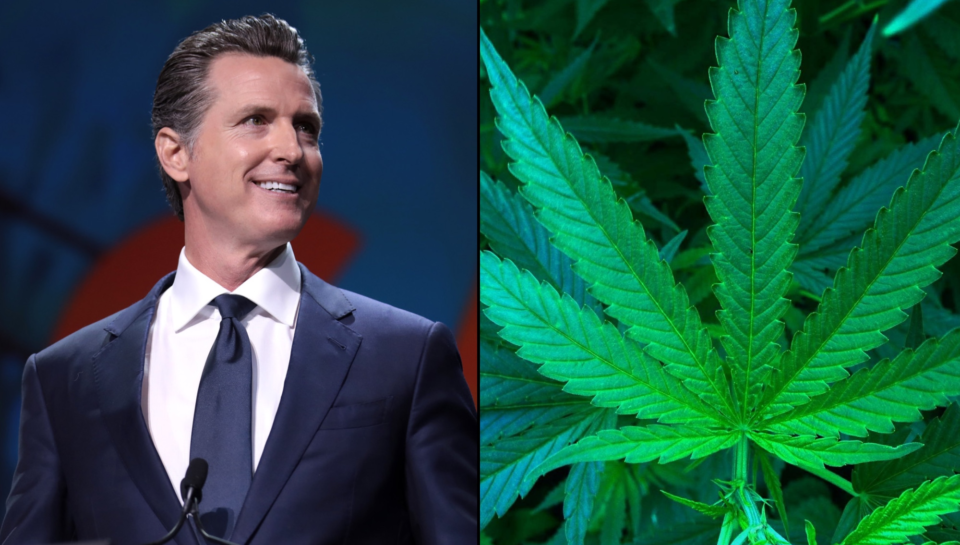
After advancing through the legislature last month, the measure from Assemblymember Patrick Ahrens (D) was rejected by Gov. Gavin Newsom (D) on Saturday.
“This bill would authorize a limited number of cannabis microbusinesses to ship certain medicinal cannabis products directly to patients using a common carrier,” the governor said in a veto message.
An analysis of the legislation says supporters argue that “a small population of patients in California requires specific medicinal products that retailers do not stock, as only a handful of individuals seek them, and these products are perishable.”
“This bill is intended to create flexibility for medical patients and caregivers for whom it is a hardship to travel to purchase medicinal cannabis products. However, prior amendments narrowed the scope of the bill by prohibiting the shipment of medicinal cannabis goods to patients who live within 60 miles of a cannabis retailer or delivery option. It is unclear how many patients currently stand to benefit from this bill.”
The bill sponsor, Ahrens, said in the analysis that “the availability of medical cannabis products has declined significantly due to regulatory burdens, high taxation, and the prioritization of adult-use recreational products over medicinal formulations.”
“As a result, many patients—particularly those with intractable epilepsy, advanced cancers, multiple sclerosis, and neurodegenerative disorders—are struggling to obtain appropriate and effective medical cannabis products,” he said. “California’s vast geography further exacerbates this issue, as many seriously ill patients live in areas where specialized medical cannabis products are not available locally and these patients are not able to travel long distances to dispensaries that carry the products they need.”
The now-vetoed bill would have provided “a narrow, well-regulated solution that allows for direct shipment of medicinal cannabis only to approved patients under medical supervision, ensuring that they receive safe and effective treatment,” he said.
“The bill includes appropriate safeguards, such as requiring verification and documentation of legal medical patient status, ensuring compliance with track-and-trace systems, and mandating adult signatures upon delivery. Additionally, it includes a three-year sunset provision to allow the legislature to evaluate its impact and identify any problems with implementation. By enacting [this bill], California will take a significant step in fulfilling its commitment to protecting the rights and well-being of medical cannabis patients.”
The governor, in his veto message, said that while he appreciates the “goal of expanding patient access to medical cannabis,” the planned “direct-shipping program would be burdensome and overly complex to administer.”
“The Department of Cannabis Control (DCC) will need to revamp the California Cannabis Track-and-Trace System, which will take significant resources and time,” he said. “Moreover, this measure includes numerous restrictions on eligible products—many of which are unclear, overly narrow, or unworkable, adding to the implementation challenge. Given that this measure allows just two businesses to ship medical cannabis directly to patients, the costs of administering this program far outweigh the possible benefits to patients.”
“I remain open to working with the Legislature on strategies to effectively advance equitable access to safe and regulated cannabis,” he said. “However, this measure would not achieve that goal while shifting limited resources away from DCC’s other priorities.”
—
Marijuana Moment is tracking hundreds of cannabis, psychedelics and drug policy bills in state legislatures and Congress this year. Patreon supporters pledging at least $25/month get access to our interactive maps, charts and hearing calendar so they don’t miss any developments.
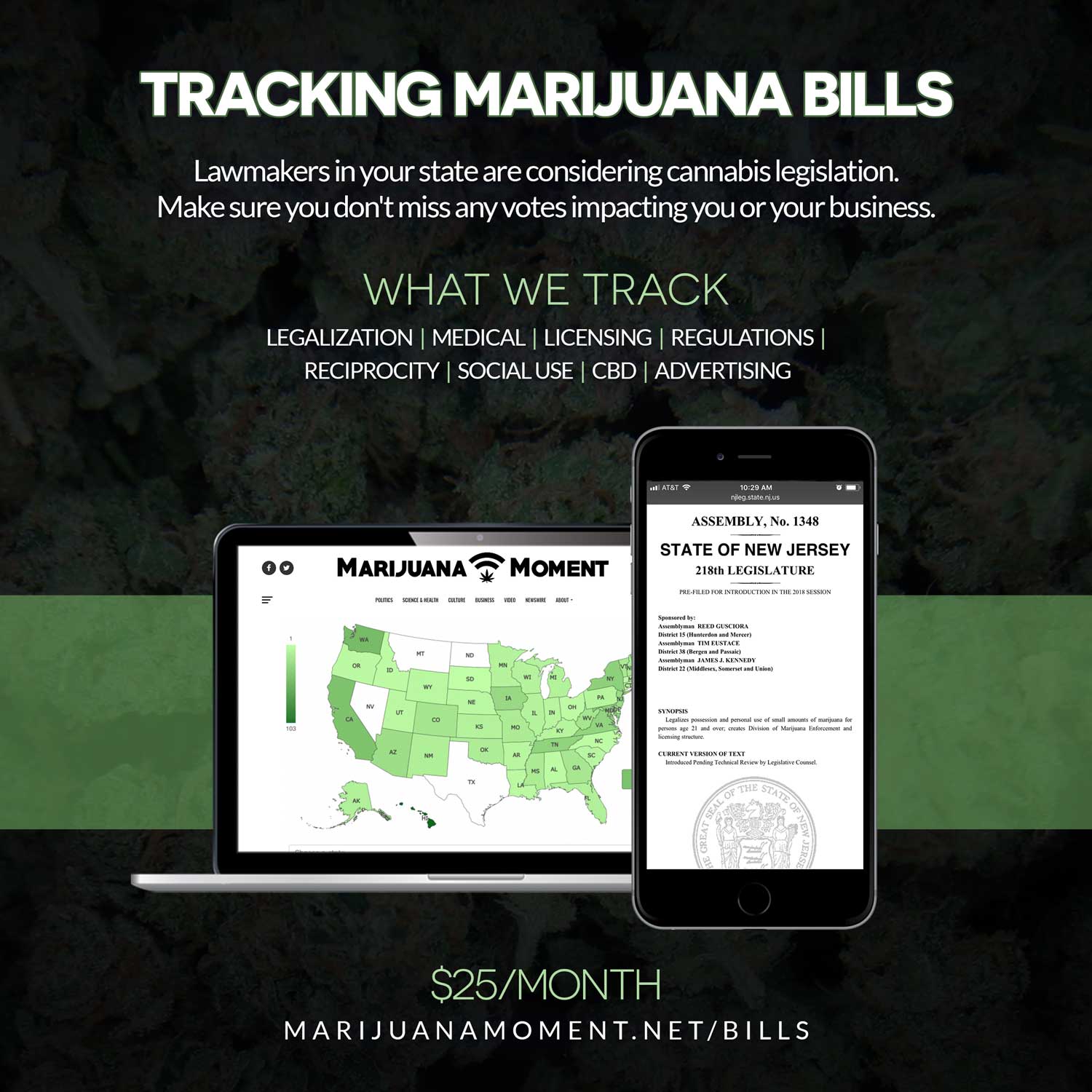
Learn more about our marijuana bill tracker and become a supporter on Patreon to get access.
—
Meanwhile last week, Newsom signed a bill aimed at streamlining research on marijuana and psychedelics.
The governor on Friday gave final approval to the measure that empowers the Research Advisory Panel of California (RAPC) to expedite reviews of study proposals on Schedule I and Schedule II controlled substances, through January 2028.
Last month the governor also signed a bill into law to put a pause on a recently enacted tax hike on marijuana products.
California officials are also inviting research proposals for a second round of grants under a program meant to better educate the public on the state’s marijuana law and help policymakers make informed decisions on the issue.
In June, the Governor’s Office of Business and Economic Development (GO-Biz) announced the recipients of over $52 million in community reinvestment grants to nonprofits and local health departments, also funded by marijuana tax revenue.
That marked the seventh round of cannabis-funded California Community Reinvestment Grants (CalCRG) under the state program.
Legalization in California has created a number of new grant programs aimed at addressing the consequences of marijuana prohibition and attempting to nurture a strong, well-regulated legal industry.
California’s Supreme Court separately delivered a victory for the state’s marijuana program in June, rescinding a lower court ruling in a case that suggested federal prohibition could be used locally to undermine the cannabis market.
The state Supreme Court ruling also came just weeks after California officials unveiled a report on the current status and future of the state’s marijuana market—with independent analysts hired by regulators concluding that the federal prohibition on cannabis that prevents interstate commerce is meaningfully bolstering the illicit market.
The governor did sign a bill in 2022 that would have empowered him to enter into interstate cannabis commerce agreements with other legal states, but that power was incumbent upon federal guidance or an assessment from the state attorney general that sanctioned such activity.
Meanwhile, a California Senate committee recently declined to advance a bipartisan bill that would have created a psilocybin pilot program for military veterans and former first responders.
Image element courtesy of Gage Skidmore.
Kyle Jaeger is Marijuana Moment’s Sacramento-based managing editor. He’s covered drug policy for more than a decade—specializing in state and federal marijuana and psychedelics issues at publications that also include High Times, VICE and attn. In 2022, Jaeger was named Benzinga’s Cannabis Policy Reporter of the Year.
Add Marijuana Moment as a preferred source on Google.
All the cannabis news you need, all in one place. Copyright © 2017-2026 Marijuana Moment LLC ® and Tom Angell