North Carolina House Republicans and Democrats advanced renewed legislation Wednesday that would prohibit anyone under 21 from buying or possessing certain hemp-derived consumable products, such as gummies and intoxicating drinks.
Senate Bill 59, which advanced to the House Rules committee, would also make it unlawful for businesses to knowingly sell or deliver those products to anyone younger than 21 and require retailers to verify a customer’s age when they have reason to believe the purchaser is underage.
Other WRAL Top Stories
The proposed rules would also apply to products prepared from kratom, a leaf native to Southeast Asia, derived from psychoactive ingredients and used in products such as tablets that are commonly found at gas stations and smoke shops. Those products are currently legal for adults 18 and older. According to the U.S. Drug Enforcement Administration, consumption of the ingredients causes both stimulant and sedative effects.
“We’ve got the good sense to put an age limit on these types of products, that is the lowest hanging fruit that there is,” sponsor, state Rep. Jimmy Dixon, Duplin, told the House Agriculture and Environment committee Wednesday.
Violations would be classified as a Class 2 misdemeanor and carry fines ranging from $500 for a first offense to $1,500 for a third or subsequent offense. If approved, the law would take effect Dec. 1, 2026.
If approved by both chambers and signed into law, North Carolina would join a growing number of states that have enacted age restrictions on kratom and hemp-derived THC products while broader debates over cannabis regulation continue.
Lawmakers have considered kratom regulation in separate proposals in recent sessions, though those efforts have not advanced as part of broader debates over regulating emerging psychoactive retail products. Lawmakers on both sides of the aisle, and Democratic Gov. Josh Stein, have also expressed a desire to better regulate hemp-derived consumables. But proposals on how to do it have differed.
A spokesperson for Stein hasn’t immediately responded to requests for comment on the legislation.
“We certainly should prohibit minors, for sure, from buying those things [Delta-8, Delta-9 products] in gas stations,” House Speaker Destin Hall, R-Caldwell, told reporters in April.
The new bill targets products containing no more than 0.3% Delta-9 THC on a dry-weight basis. The federal government legalized hemp production through the 2018 Farm Bill, creating a market for hemp-derived products that can contain intoxicating cannabinoids while technically remaining legal under federal and state hemp laws.
The state bill comes months before similar federal rules go into effect. The hemp industry has raised concerns about the federal rules, warning they could significantly disrupt the current market and force widespread product changes or closures after they go into effect in November.
States would still control retail rules, licensing, enforcement and age requirements for products that remain legal, and federal legislation could be amended or delayed before taking effect. State lawmakers wanted to pursue separate, statewide enforcement tools that could hold up, regardless of federal action.
The new state legislation targets products containing no more than 0.3% Delta-9 THC on a dry-weight basis.
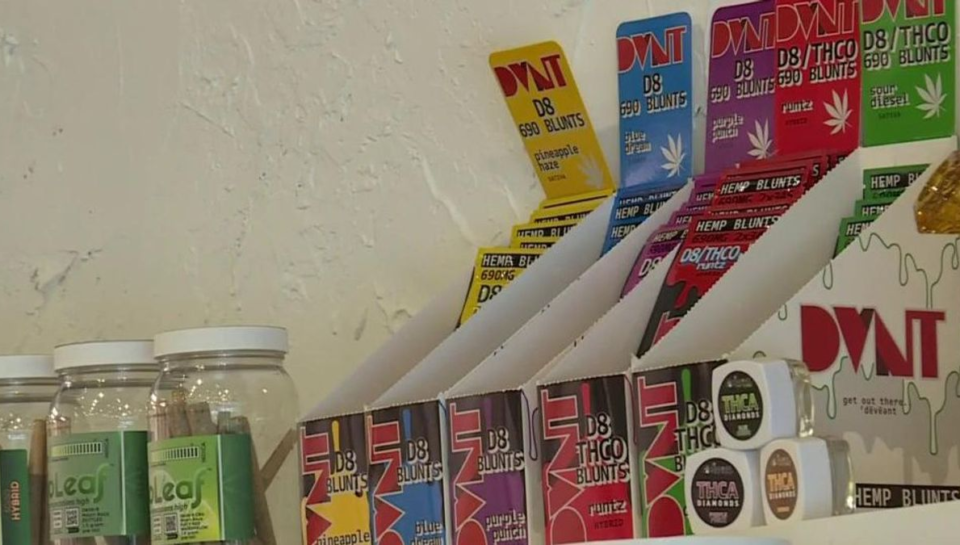
In North Carolina, hemp-derived products including gummies, beverages and other consumable products are widely available in smoke shops, vape stores and specialty retailers.
North Carolina operates with few guardrails and lacks a legal minimum age for purchasing many intoxicating hemp products, something Stein has pushed lawmakers to change.
A state advisory council formed by Stein also recommended creating a regulated cannabis market that protects minors while addressing concerns about product safety, testing and labeling.
The National Hemp Association didn’t immediately respond to requests for comment.
North Carolina currently doesn’t have a statewide law prohibiting people under 21 from possessing hemp-derived consumable products. The state also does not impose a universal minimum age requirement for purchasing many hemp-derived products, though some retailers voluntarily restrict sales.
That has made North Carolina one of the least regulated states when it comes to intoxicating hemp-derived cannabinoids, according to advocates on both sides of the issue.
Lawmakers have spent multiple legislative sessions debating how to regulate hemp-derived THC products.
Last year, state senators advanced broader legislation that would have imposed age restrictions, testing requirements, licensing rules and limits on certain hemp-derived cannabinoids. The proposal received bipartisan support in the Republican-led legislature but did not become law.
The bill’s sponsors pointed to several cases where smoke shop owners are accused of selling THC gummies to minors who later become sick. In some cases, authorities have tested hemp products at more than 60 times the legal THC limit, prompting drug-related charges and seizures at multiple store locations.
Democratic Attorney General Jeff Jackson and other state officials have also said that the state needs stronger safeguards to keep intoxicating products away from children and provide consumers with clearer labeling and testing standards.