Congressional Committee Votes To Block Medical Marijuana From Being Covered Under Workers’ Comp For Federal Workers
White House Pushes Congress To Keep Hemp CBD Products Legal By Amending Broad Ban That’s Set To Take Effect Later This Year
Connecticut Governor Signs Bill To Expand Psychedelics Pilot Program In Preparation For Federal FDA Approval
Congressional Committee Directs Feds To Keep Testing Truck Drivers For Marijuana, Regardless Of Trump’s Rescheduling Move
Louisiana Will Let Terminally Ill Patients Use Medical Marijuana In Hospitals After Governor Allows Bill To Take Effect Without His Signature
2 In 3 Americans Who Use Marijuana Say It Helps Them Sleep Better, New Survey Shows
Hemp-Based Plastic Shows Promise As Environmentally Friendly Alternative To Traditional Packaging Materials, Study Finds
Marijuana Components Have ‘Consistent’ Anti-Tumor Effects In Glioblastoma And Other Cancers, Scientific Review Shows
Another Study Debunks Lazy Stoner Stereotype, Linking Marijuana Use To An Increase In Some Kinds Of Exercise
VA Launches New Study On MDMA To Treat Veterans With PTSD And Alcohol Use Disorder
WNBA Removes Marijuana From Banned Substances List And Sets Rules For Player Endorsements Of Hemp CBD Products
Americans Say Marijuana Is Less Cool Than Math And Country Music—But Is Cooler Than Guns Or Cryptocurrency, Survey Shows
Politicians And Major Brands Celebrate Cannabis Culture On 4/20
Woody Harrelson And Bill Maher Complain That Marijuana Taxes Are Too High While Smoking Joints At The Dispensary They Own Together
WNBA Offers To End Marijuana Testing For Women’s Basketball Players As Part Of Reported Deal With Union
Federal Labor Decision Inspires More Missouri Marijuana Workers To Seek Unionization
Missouri Marijuana Workers Win Union Vote After Federal Officials Reject Company’s Argument On Blocking Ballots
Target Is Launching Hemp THC Drink Sales In Three Of The U.S.’s Most Populous States
Target Expands Involvement In Hemp THC Drinks Market With 72 New Licenses In Minnesota
Marijuana Sales Are Rising And Alcohol Is On The Decline As Consumer Preferences Evolve, Government Data In Canada Shows
WNBA takes cannabis off banned list & sets player endorsement rules (Newsletter: June 5, 2026)
Wisconsin governor candidates pledge cannabis action if elected (Newsletter: June 4, 2026)
Amendments to save hemp THC from ban are blocked in Congress (Newsletter: June 3, 2026)
Trump sued over cannabis rescheduling (Newsletter: June 2, 2026)
GOP lawmakers push to save hemp from impending federal ban (Newsletter: June 1, 2026)
Published
on
By
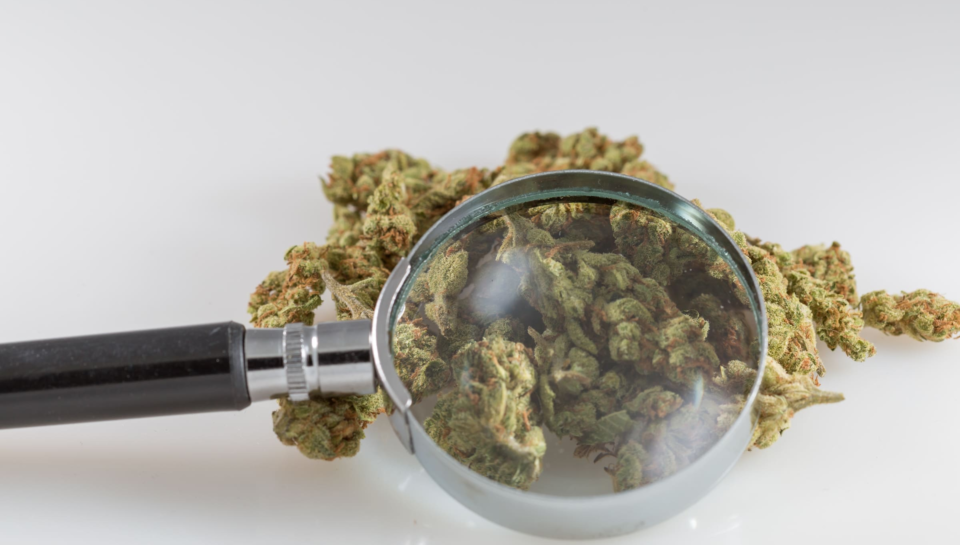
Researchers have conducted the first comprehensive sensory-guided study of the odor-active compounds in dried cannabis flowers, uncovering dozens of previously unknown chemicals that shape the the plant’s distinct fragrance. The findings expand scientific knowledge of marijuana beyond the common understanding of terpenes, CBD and THC.
To unravel the chemistry of smell, the researchers utilized a sensory guided technique that is more familiar in food science than cannabis research. Using a gas chromatography-olfactometry device along with aroma extract dilution analysis, they cataloged the volatile compounds in marijuana and, importantly, explored which ones actually matter to the nose.
“By means of this methodology, it was proven that only a small fraction of the volatiles contributes to the overall aroma perception,” the researchers wrote.
The method worked by diluting the volatile compound mixture and having trained assessors assign each compound a “flavor dilution factor” that reflected its potency. By pairing chemical analysis with human sensory testing, the researchers identified 52 odor-active compounds, including terpenes, esters, sulfur molecules, phenolic compounds, volatile acids and furanones.
Notably, 38 of these odorants had never before been reported in dried marijuana flowers, and six had not been detected in any cannabis material until now.
“The presence of these new odor-active components further supports the idea that certain odorants may be formed or released during drying and curing,” they wrote. “Future research is needed to explore how enzymatic or oxidative pathways contribute to these transformations.”
“The present study provides the first comprehensive sensory-guided investigation into the composition of the odor-active compounds of dried hemp flowers, revealing the intricate interplay between terpenes, esters, sulfur compounds, and previously underexplored odorants such as phenolic compounds, volatile acids, and furanones.”
The work could open the door wider for novel cannabis breeding. Just as wine or coffee tasting hinges on subtle aromatic compounds, marijuana can be described in equally nuanced sensory terms.
For the study, scientists paired odorants with perceived fragrance qualities.
For example, they note that a sweaty smell emanating from cannabis is due to butanoic acid, hexanoic acid and 2-methylbutanoic acid. A popcorn smell is associated with 2-acetylpyrazine. For consumers seeking an earthy, bell pepper-like smell, 3-isobutyl-2-methoxypyrazine is the odorant causing the scent. An oatmeal-like, sweet scent comes from (2E,4E,6Z)-nona-2,4,6-trienal or α-terpineol for floral and citrus notes.
Additional odor qualities included fruity, pine-like, terpene-like, hop-like, mushroom-like, musty and clove-like, among others.
The findings reenforce a key point relevant to cannabis industry professionals that most have long known or suspected. Aroma may be the strongest predictor of consumer appeal, which is why breeders already select cultivars for scent as much as for CBD or THC levels.
In the past, research largely focused on fresh marijuana flowers or THC-rich varieties, leaving dried cannabis under-explored. By adapting tools commonly used in food science that identify which volatiles truly shape aroma perception, the researchers in the current study provided the clearest picture yet of what gives marijuana its unique smell. Scientists used freeze-dried cannabis flowers of six cultivars provided by Puregene AG in Switzerland.
The authors, affiliated with the Zurich University of Applied Sciences and the Technical University of Munich, said their study “lays the first groundwork for understanding the odorant composition of dried marijuana flowers, providing a basis for future validation through quantitation and aroma reconstitution studies,” common methods in food science research.
“By deepening the knowledge of cannabis secondary metabolism, targeted breeding efforts could optimize the production of desirable odorant compounds, catering to distinct market preferences in food, fragrance, and cannabis-based consumer products.”
The paper was published by the American Chemical Society and appears in the September 2025 issue of the Journal of Agriculture and Food Chemistry, a peer-reviewed journal.
The study found that while well-known terpenes such as α-pinene, myrcene, and linalool played major roles, the analysis revealed that sulfur-containing molecules notorious for their pungency also strongly contribute to marijuana’s scent. Compounds like 3-methylbut-2-ene-1-thiol and 4-methyl-4-sulfanylpentan-2-one were detected in dried flowers at a high potency for the first time.
The new paper builds on research related to standardization of cannabis strain identification. In 2022, researchers found that the commonly used marijuana strain labeling system can be highly misleading for consumers. The study analyzed the chemical composition of almost 90,000 cannabis samples across six states.
Research earlier this year on cannabis genetics suggested that incentives in the legal marijuana market—such as the desire for plants to mature faster and produce more cannabinoids for extraction—may be leading to a decline in biodiversity of the plant worldwide.
This paper also builds on a July 2025 scientific review in the journal Molecules that took a deep dive into the flavors and aromas of marijuana, examining how the plant’s genetic makeup, cultivation methods and post-harvest processing affect the various compounds that give cannabis products their distinctive palate.
Aaron Houston is a veteran strategist, journalist and advocate in cannabis and drug policy reform, with more than two decades of experience at the intersection of science, law and politics. He has advised members of Congress, the White House and major medical associations and played a pivotal role in enacting the first federal medical cannabis law in U.S. history. A former director of government relations at the Marijuana Policy Project (MPP), executive director of Students for Sensible Drug Policy and chief strategist at Weedmaps, Aaron has appeared on CNN, NBC’s Today Show and The Colbert Report. He was also featured in the original Showtime documentary In Pot We Trust. During his time at MPP, he served as the in-house expert on the pharmacokinetics, toxicology and metabolism of THC and its impact on driving ability, supervising a grant to study such effects. Aaron has been named a “Rising Star of Politics” and “Influencer 50” by Campaigns and Elections Magazine. Aaron’s passion for harm reduction led him to work in homeless services, where he has personally delivered thousands of doses of the life-saving opioid-reversal drug naloxone.
Add Marijuana Moment as a preferred source on Google.
All the cannabis news you need, all in one place. Copyright © 2017-2026 Marijuana Moment LLC ® and Tom Angell