
Congressional Committee Votes To Block Medical Marijuana From Being Covered Under Workers’ Comp For Federal Employees
White House Pushes Congress To Keep Hemp CBD Products Legal By Amending Broad Ban That’s Set To Take Effect Later This Year
Connecticut Governor Signs Bill To Expand Psychedelics Pilot Program In Preparation For Federal FDA Approval
Congressional Committee Directs Feds To Keep Testing Truck Drivers For Marijuana, Regardless Of Trump’s Rescheduling Move
Louisiana Will Let Terminally Ill Patients Use Medical Marijuana In Hospitals After Governor Allows Bill To Take Effect Without His Signature
2 In 3 Americans Who Use Marijuana Say It Helps Them Sleep Better, New Survey Shows
Hemp-Based Plastic Shows Promise As Environmentally Friendly Alternative To Traditional Packaging Materials, Study Finds
Marijuana Components Have ‘Consistent’ Anti-Tumor Effects In Glioblastoma And Other Cancers, Scientific Review Shows
Another Study Debunks Lazy Stoner Stereotype, Linking Marijuana Use To An Increase In Some Kinds Of Exercise
VA Launches New Study On MDMA To Treat Veterans With PTSD And Alcohol Use Disorder
WNBA Removes Marijuana From Banned Substances List And Sets Rules For Player Endorsements Of Hemp CBD Products
Americans Say Marijuana Is Less Cool Than Math And Country Music—But Is Cooler Than Guns Or Cryptocurrency, Survey Shows
Politicians And Major Brands Celebrate Cannabis Culture On 4/20
Woody Harrelson And Bill Maher Complain That Marijuana Taxes Are Too High While Smoking Joints At The Dispensary They Own Together
WNBA Offers To End Marijuana Testing For Women’s Basketball Players As Part Of Reported Deal With Union
Federal Labor Decision Inspires More Missouri Marijuana Workers To Seek Unionization
Missouri Marijuana Workers Win Union Vote After Federal Officials Reject Company’s Argument On Blocking Ballots
Target Is Launching Hemp THC Drink Sales In Three Of The U.S.’s Most Populous States
Target Expands Involvement In Hemp THC Drinks Market With 72 New Licenses In Minnesota
Marijuana Sales Are Rising And Alcohol Is On The Decline As Consumer Preferences Evolve, Government Data In Canada Shows
WNBA takes cannabis off banned list & sets player endorsement rules (Newsletter: June 5, 2026)
Wisconsin governor candidates pledge cannabis action if elected (Newsletter: June 4, 2026)
Amendments to save hemp THC from ban are blocked in Congress (Newsletter: June 3, 2026)
Trump sued over cannabis rescheduling (Newsletter: June 2, 2026)
GOP lawmakers push to save hemp from impending federal ban (Newsletter: June 1, 2026)
Published
on
By
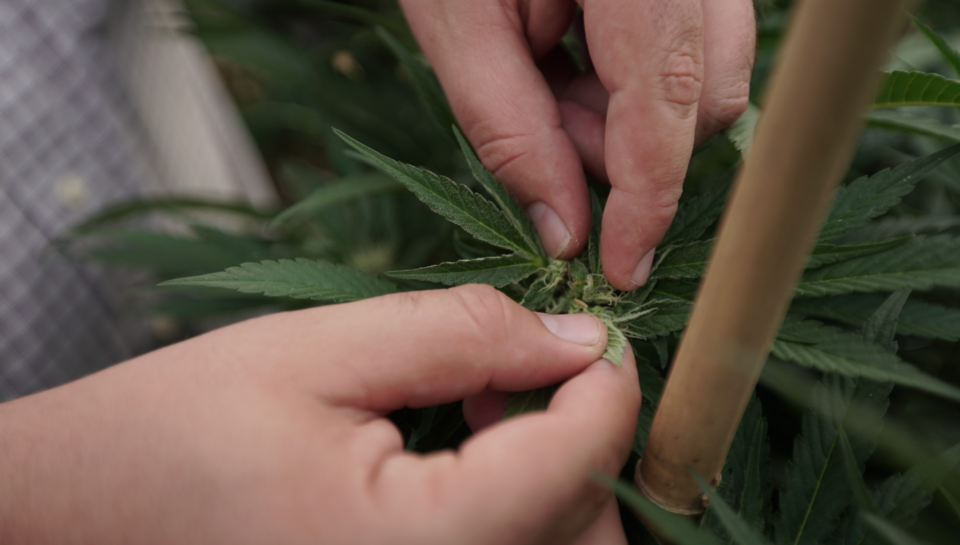
In California, a state-funded effort is underway to analyze the genetic information of various marijuana strains in order to preserve the state’s rich history of cannabis cultivation. It’s part of a project meant not only to acknowledge the past but also protect the future of legacy growing regions such as the Emerald Triangle.
“Having been relegated to the shadows for the past 60 years, the legacy of California’s extraordinary cannabis is finally coming into the light,” said Genine Coleman, executive director of Origins Council, a group that represents rural cannabis growers. “This is a remarkable moment in our journey to full legalization of cannabis agriculture.”
Origins Council is one of a handful of partners on the project—titled, “Legacy Cannabis Genetics: People and Their Plants, a Community-Driven Study”—which also includes academics at California State Polytechnic University, Humboldt, and the University of California, Berkeley; the plant genetics company LeafWorks; and the United CORE Alliance, a nonprofit that works to restore the rights of formerly incarcerated people.
The goal of the project is to answer two questions, according to a presentation held this month at UC Berkeley: “What are California’s cannabis legacy genetics?” and “What are legacy cultivation regions?”
It ultimately aims to “legally protect as intellectual property the individual and collective genetic resources of legacy cannabis breeders and legacy cannabis cultivation communities,” according to a press release.
The work started in 2022, when the state Department of Cannabis Control (DCC) put out a call for proposals that “identify and preserve the history, value and diversity of California legacy cannabis cultivars and the rich experience of its legacy cultivation community, and enable, enhance and guide the understanding and application of cannabis genetics to the greater body of research and science-based public policy development,” the presentation says.
DCC put a $2.7 million toward the initiative, which is set to conclude in late 2026. That money was part of $20 million in state marijuana research funding awarded by DCC last year, using revenue generated by cannabis taxes.
The effort is based in what’s known as community-based participatory research (CBPR) and will involve collaboration with California’s historical cannabis-growing communities.
“A community-based approach to agricultural research is essential to the success of cannabis legacy genetics in California,” the presentation says, “because cultivation communities must have access to science in a way that feels empowering to them versus exclusionary or extractive.”
In addition to genetic sequencing of cannabis strains themselves, the work also entails reaching out to legacy growing communities to encourage broad participation and conducting ethnographic interviews to construct an oral history of legacy marijuana production in California.
“The CBPR model is a partnership approach to research that equitably involves community members, organizational representatives, and academic researchers in all aspects of the research process,” UC Berkeley historian Todd Holmes, one of the researchers on the project, said in a statement. “For a historic project like this, it’s absolutely vital that the community is a partner in the design, implementation and analysis of the research.”
Ultimately, the broad team behind the proposal hopes to collect plant samples, produce data on California cannabis cultivars, record oral histories from community members, publish journal articles and develop research-based policy recommendations.
Researchers also plan to develop educational resources from their findings, including around the intellectual property of cannabis genetics and how to collaborate with “legally marginalized and underserved cannabis farming communities.”
United CORE Alliance president and CEO Khalil Ferguson further explained the equity elements of the project.
“Unfortunately, the persecution of the BIPOC community is also at the heart of the cannabis plant’s historic legacy,” Ferguson said in the team’s press release. “We therefore have an interest in seeing that persecution stop forever. UCA helps those impacted by the enforcement of archaic cannabis laws expunge their records while also helping them learn how to navigate the warren of laws surrounding the plant so that they may participate and benefit from the economic engine that is legal cannabis. This research has the potential to strengthen and magnify that economic benefit for these communities.”
Findings from the project could also help lay the groundwork for California’s ambitious Cannabis Appellations Program, a representative for the team said. That program, which is still in the rulemaking phase, aims to identify and protect legacy historical regions akin to how France regulates regional wines.
It’s possible the research could also help better distinguish different marijuana strains. Critics have noted for years that retail cannabis strain labeling can be misleading. (Not to mention, calling them “strains” at all is somewhat imprecise.)
Meanwhile in California, state senators earlier this month advanced an Assembly-passed bill that would allow small marijuana growers to sell their products directly to consumers at state-organized farmers markets and other temporary events. Adults would also be able to consume cannabis on-site at approved events under the proposal.
Separately, a plan from Gov. Gavin Newsom (D) that would have ushered in sweeping changes to the state’s marijuana and hemp markets died earlier this month after a Senate committee did not call the bill for a vote ahead of a key legislative deadline.
—
Marijuana Moment is tracking more than 1,500 cannabis, psychedelics and drug policy bills in state legislatures and Congress this year. Patreon supporters pledging at least $25/month get access to our interactive maps, charts and hearing calendar so they don’t miss any developments.
Learn more about our marijuana bill tracker and become a supporter on Patreon to get access.
—
The measure would have folded hemp-derived cannabinoid products into the state’s regulated marijuana system and opened the door to out-of-state hemp producers to sell products into California’s cannabis market. It was an attempt to rein in largely unregulated hemp-derived cannabinoid products and smokable hemp flower, but it received sharp pushback from industry groups including Origins Council as well as some medical patients who said they rely on hemp-derived CBD.
Last month Origins sent a letter opposing the measure to Newsom and the bill’s sponsor, Assemblymember Cecilia Aguiar-Curry (D), asserting the changes would “fundamentally reshape California’s cannabis market by removing the requirement that high-THC products sold in the cannabis supply chain are sourced from licensed cannabis cultivators.”
Somewhat similar discussions about how to regulate hemp derivatives are playing out at the federal level, as congressional lawmakers consider legislative provisions to impose a general ban on hemp-derived cannabinoids such as delta-8 THC.
Marijuana Use Is Becoming More Commonly Accepted In Sports, Study Funded By NFL Shows
Photo courtesy of Chris Wallis // Side Pocket Images.
Ben Adlin, a senior editor at Marijuana Moment, has been covering cannabis and other drug policy issues professionally since 2011, specializing in politics, state legislation, litigation, science and health. He was previously the senior news editor at Leafly, where he co-led news coverage and co-hosted a critically acclaimed weekly podcast; an associate editor at The Los Angeles Daily Journal, where he covered federal courts and municipal law; and a Coro Fellow in Public Affairs. He’s a graduate of Occidental College in Los Angeles and currently lives in Washington State.
Add Marijuana Moment as a preferred source on Google.
All the cannabis news you need, all in one place. Copyright © 2017-2026 Marijuana Moment LLC ® and Tom Angell