
New Bill In Congress Would Let States Force Federal Reclassification Of Drugs Like Marijuana And Psychedelics
Ukraine’s First Legal Medical Cannabis Products Have Been Dispensed To Military Veterans And A Woman With MS
Trump’s Marijuana Rescheduling Move Opens The Door To Interstate Cannabis Commerce, Top Reform Group Says
Kentucky Governor Slams GOP Lawmaker For ‘Lack Of Humanity’ Over Push For Medical Marijuana Prosecutions
Massachusetts Anti-Marijuana Campaign Fires Signature Gatherer Amid Accusations Of Misleading Voters
Marijuana Extracts ‘Meaningfully’ Improve Cancer Patients’ Symptoms Such As Sleep Trouble And Anxiety, Study Shows
2 In 3 Americans Who Use Marijuana Say It Helps Them Sleep Better, New Survey Shows
Hemp-Based Plastic Shows Promise As Environmentally Friendly Alternative To Traditional Packaging Materials, Study Finds
Marijuana Components Have ‘Consistent’ Anti-Tumor Effects In Glioblastoma And Other Cancers, Scientific Review Shows
Another Study Debunks Lazy Stoner Stereotype, Linking Marijuana Use To An Increase In Some Kinds Of Exercise
State Marijuana Officials Educate World Cup Fans About How To Celebrate Legally And Responsibly While Visiting
WNBA Removes Marijuana From Banned Substances List And Sets Rules For Player Endorsements Of Hemp CBD Products
Americans Say Marijuana Is Less Cool Than Math And Country Music—But Is Cooler Than Guns Or Cryptocurrency, Survey Shows
Politicians And Major Brands Celebrate Cannabis Culture On 4/20
Woody Harrelson And Bill Maher Complain That Marijuana Taxes Are Too High While Smoking Joints At The Dispensary They Own Together
Federal Labor Decision Inspires More Missouri Marijuana Workers To Seek Unionization
Missouri Marijuana Workers Win Union Vote After Federal Officials Reject Company’s Argument On Blocking Ballots
Target Is Launching Hemp THC Drink Sales In Three Of The U.S.’s Most Populous States
Target Expands Involvement In Hemp THC Drinks Market With 72 New Licenses In Minnesota
Marijuana Sales Are Rising And Alcohol Is On The Decline As Consumer Preferences Evolve, Government Data In Canada Shows
Drug testing industry tries to block cannabis rescheduling (Newsletter: June 12, 2026)
Anti-cannabis campaigns’ questionable tactics (Newsletter: June 11, 2026)
VA gov has “productive” cannabis legalization conversations with lawmakers (Newsletter: June 10, 2026)
State cannabis officials work to educate World Cup visitors (Newsletter: June 9, 2026)
White House pushes Congress to keep some hemp products legal (Newsletter: June 8, 2026)
Published
on
By
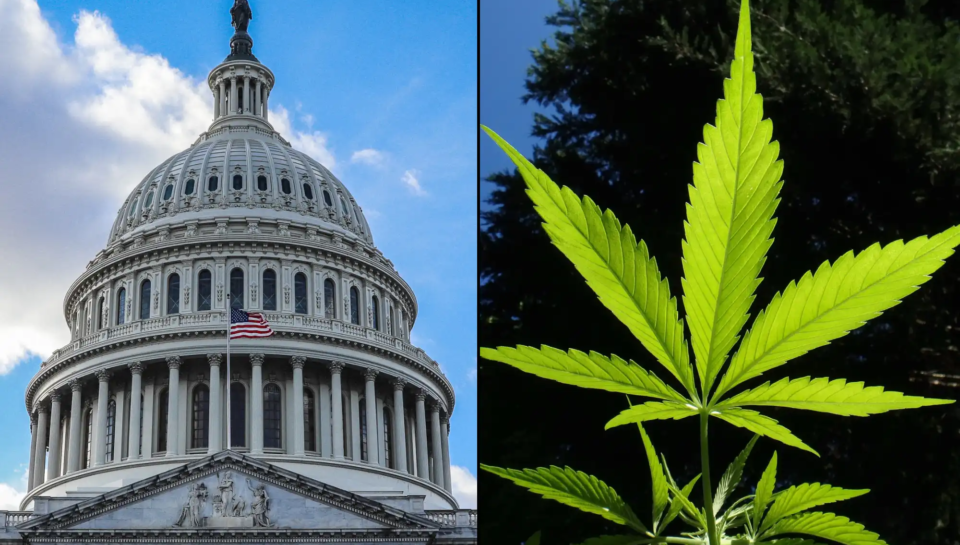
A Democratic congressman has filed a new bill that would drastically overhaul how drugs are classified under the Controlled Substances Act (CSA), including by letting states effectively force federal rescheduling by changing their own local laws.
Under current law, federal officials conduct a multi-part analysis to determine which, if any of CSA’s five schedules to place drugs in—depending on factors such as their medical use, potential for abuse and safety or dependence liability.
But advocates have complained that those criteria are ambiguous and that the Drug Enforcement Administration (DEA) often refuses to acknowledge widely accepted medical value of substances—pointing out that it has taken more than half a century to begin moving marijuana out of Schedule I, the most restrictive category—a process that is now underway due to a review initiated during the Biden administration and that is advancing under President Donald Trump.
The new Controlled Substances Act Clarification in Sciences Act, filed this week by Rep. Steven Cohen (D-TN), would more clearly define in statute some of the criteria that officials with DEA and federal health agencies use to determine drugs’ scheduling status.
A major change under the bill would define “accepted medical use” to include any use where “a jurisdiction has authorized the drug or substance for medical use,” “the drug or substance is widely used in such jurisdiction by health care practitioners” and “such legitimate medical use is recognized by the entities that regulate the practice of medicine in such jurisdiction through evidence-based scientific evaluation that employs rigorous and generally accepted methodologies.”
Because drugs that have a currently accepted medical use cannot be classified under Schedule I, the reform contemplated by the bill would effectively mean that jurisdictions within the U.S., could force federal rescheduling of a drug by legalizing it for widespread medical use and having it recognized by local regulators.
When the Department of Health and Human Services (HHS) conducted its analysis of marijuana rescheduling under the Biden administration, it attributed significant value to the fact that medical cannabis is so widely used under a growing number of state laws. Legalization opponents criticized that move and suggested it was an improper change in how scheduling status has historically been analyzed, but the new bill would effectively codify it.
“Accuracy in federal drug policy will ensure both fairness and safety. Much has changed since 1970 when the Controlled Substances Act was enacted,” Cohen said in a press release. “My bill will clarify and update the CSA so that the evaluation of controlled substances is made on the best scientific evidence of today, not decades-old processes and outdated knowledge.”
This week I introduced the Controlled Substances Act (CSA) Clarification in Sciences Act — legislation to ensure that decisions about controlled substances are based on today’s best scientific evidence, not outdated standards.
For too long, the law has boxed promising treatments… pic.twitter.com/oYK7wmsGWz
— Steve Cohen (@RepCohen) June 12, 2026
The legislation, H.R. 9186, would also define terms such as “physical dependence,” “potential for abuse,” “lack of accepted safety for use of the drug or other substance under medical supervision” and “potential benefits to society,” among others.
It would additionally add a provision to the CSA clarifying that the attorney general must “defer to” the health and human services secretary’s “scientific and medical evaluation of a drug or other substance.”
The official could “add or transfer a drug or other substance to a schedule only if such schedule best corresponds to controls reasonably tailored to protect public health and safety (including the potential for abuse and dependence liability of the drug or substance) while preserving access for accepted medical uses, and recognizing the potential benefits to society, of the drug or substance,” the bill says.
A summary of the legislation from Cohen’s office says the bill will help address what it calls a “Schedule I ‘trap’” under which DEA has argued that drugs need Food and Drug Administration (FDA) approval in order to have a currently accepted medical use, but that Schedule I status has limited the very research that is needed to demonstrate such value.
“This circular policy can trap substances in Schedule I, driving researchers from the field and reduce the number of FDA-approved medicines, especially those for mental health disorders,” it says.
—
Marijuana Moment is tracking hundreds of cannabis, psychedelics and drug policy bills in state legislatures and Congress this year. Patreon supporters pledging at least $25/month get access to our interactive maps, charts and hearing calendar so they don’t miss any developments.
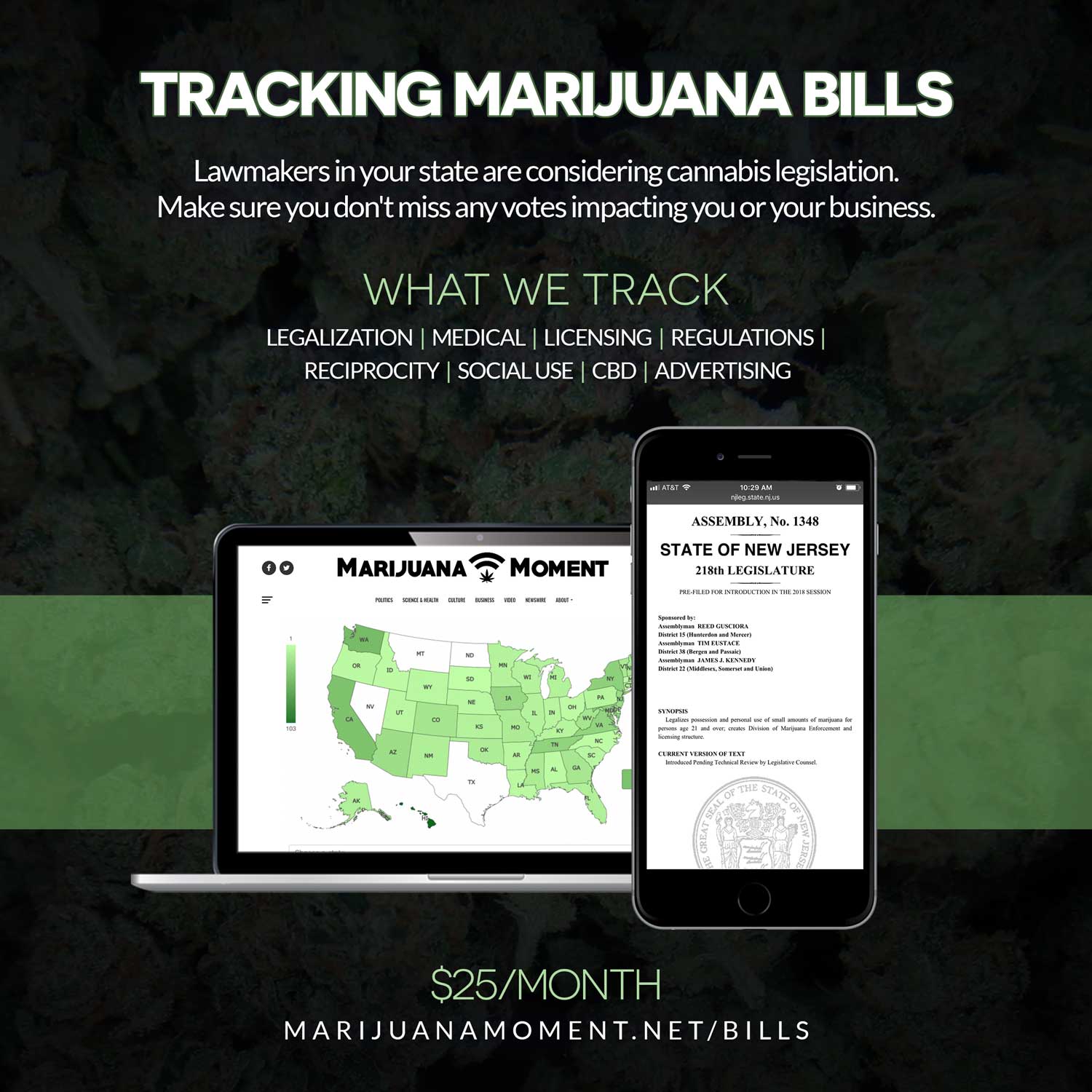
Learn more about our marijuana bill tracker and become a supporter on Patreon to get access.
—
Cohen said he “worked diligently with the nation’s leading scientific professional societies to ensure the bill’s approach reflects the gold standards in biomedical research and contemporary healthcare.”
The legislation is endorsed by scientific societies such as the American College of Neuropsychopharmacology, American Society of Clinical Psychopharmacology, American Society for Pharmacology and Experimental Therapeutics and Society of Biological Psychiatry.
“Therapeutic progress depends directly on the ability of physicians and researchers to study substances of interest,” the congressman said. “The current law’s imprecise approach to scheduling substances has created a system that is arbitrary and largely ignores the modern practice of medicine and public health, and has substantially hindered scientific progress.”
Deanna Barch, president of the American College of Neuropsychopharmacology, said the measure “takes a long-needed step to enhance clarity and strengthen the scientific basis on which substances are reviewed for scheduling.”
“By adding and updating critical definitions that the statute has lacked, it gives the administering agencies a sounder evidentiary foundation for their evaluations,” she said. “The scheduling framework these terms support has stood since the Controlled Substances Act was enacted in 1970, and bringing its core definitions into line with current science is an important and welcome advance.”
Randy Hall, president of the American Society for Pharmacology and Experimental Therapeutics, added that the bill “addresses a barrier the research community has faced in studying controlled substances.”
“In many cases, the constraints of scheduling status prevent scientists from understanding whether a substance may, in fact, have medical utility,” he said. “These updates will facilitate the investigation of the use of many substances in a variety of therapeutic areas.”
Society of Biological Psychiatry President Dost Öngür noted that “for too long, the law has trapped promising treatments in a circular standard that blocks the very research needed to prove their value.”
“By insisting that drug scheduling rest on evidence, this legislation reopens the door to discovery for the millions of Americans living with depression, PTSD, and other serious psychiatric conditions,” he said.
Brooke Shockey Sanders, director of network relations for Students for Sensible Drug Policy (SSDP), said that “as a Neuroscience PhD researcher studying Schedule I drugs, the Controlled Substances Act (CSA) has shown to be the biggest barrier in my scientific advancement.”
“Representative Cohen’s clarification of the CSA would allow for scientists, like myself, to conduct more cost effective, timely and accurate medical research of drugs currently confined by legal barriers,” she said. “This revision is promising for the future of medical advancement, allowing for development of novel therapeutic for diseases with large global prevalence rates.”
Tom Angell is the editor of Marijuana Moment. A 25-year veteran in the cannabis and drug law reform movement, he covers the policy, politics, science and culture of marijuana, psychedelics and other substances. He previously reported for Forbes, Marijuana.com and MassRoots, and was given the Hunter S. Thompson Media Award by NORML and has been named Journalist of the Year by Americans for Safe Access. As an activist, Tom founded the nonprofit Marijuana Majority and handled media relations, campaigns and lobbying for Law Enforcement Against Prohibition and Students for Sensible Drug Policy.
Add Marijuana Moment as a preferred source on Google.
All the cannabis news you need, all in one place. Copyright © 2017-2026 Marijuana Moment LLC ® and Tom Angell