
Last week, Trulieve Cannabis (TCNNF +0.00%) (NYSE:TRLV) became the first U.S. cannabis operator to list on the New York Stock Exchange. The stock is now trading under the symbol "TRLV."
Although a publicly traded company moving up to the NYSE is not uncommon, it is in the cannabis industry.
You see, until now, major U.S. cannabis companies were largely shut out of the NYSE and Nasdaq Stock Market because marijuana remained federally illegal and was deemed a Schedule I drug, a classification reserved for the most addictive and dangerous drugs. As a result, many of these companies traded on Canadian exchanges or less stringently regulated over-the-counter (OTC) markets. That limited visibility and reduced liquidity kept most institutional investors on the sidelines.
But things are changing.
Trulieve's NYSE debut became possible after the U.S. government moved state-licensed medical marijuana businesses into Schedule III designation, which is reserved for drugs with possible therapeutical uses. This change creates a pathway for federal registration of medical cannabis operators.
To qualify, Trulieve restructured its business so that the company listed on the exchange consists entirely of medical marijuana operations.
Trulieve didn't, however, abandon the recreational cannabis market. That business still exists and can continue generating revenue, but it's not included in the NYSE-listed entity's financial structure. In other words, Trulieve created a corporate structure that satisfies exchange requirements while preserving its economic exposure to the broader cannabis market.
If other operators can follow a similar path, the entire industry's investor base could expand dramatically.
The truth is, institutional investors, pension funds, mutual funds, and large wealth managers either cann't or won't invest in OTC-listed securities. Major exchange listings remove one of those barriers. And greater institutional participation generally leads to higher trading volume, more liquidity, greater analyst coverage, and easier access to capital.
To be sure, those factors don't guarantee higher stock prices, but they can improve market efficiency and reduce some of the structural disadvantages cannabis companies have faced for years.
None of this means cannabis stocks suddenly become low-risk investments, though.
Plenty of operators still carry substantial debt that they accumulated during the industry's early expansion phase.
Because federal restrictions limited access to traditional banking and capital markets, many companies relied on expensive debt financing to fund acquisitions, cultivation facilities, dispensary openings, and market expansion efforts. And as interest rates have risen during the past several years, servicing that debt has become extremely difficult.
At the same time, falling prices amid market saturation remains a persistent problem in a number of markets.
In states such as California, Colorado, and Michigan, increased competition and oversupply have driven wholesale cannabis prices lower, squeezing margins and making profitability more difficult to achieve.
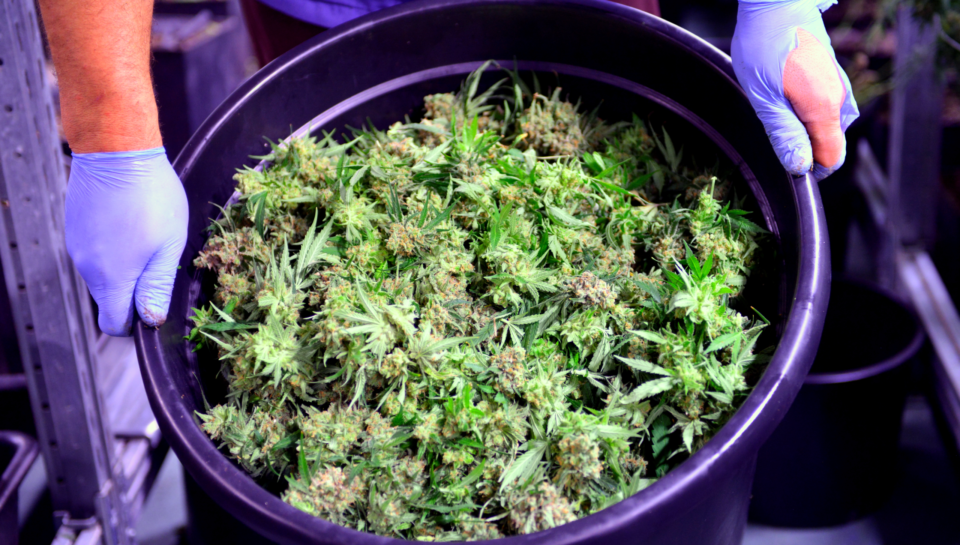
Image source: Getty Images.
Regulatory uncertainty is another persistent concern.
Although the government's reclassification to Schedule III represented a major shift in federal policy, the industry still operates under a patchwork of state and federal rules.
Banking reform remains unresolved, interstate commerce is largely prohibited, and future administrations could take a different approach to cannabis regulation. Meanwhile, state-level licensing rules, taxation policies, and market structures continue to evolve, creating additional doubts for operators.
In other words, the industry's long-term growth opportunity remains intact, but cannabis companies are still navigating financial, competitive, and regulatory challenges that you just can't ignore.
That's why you should view Trulieve's NYSE listing as an important development, but not a reason to blindly buy every major cannabis stock right now.
Trulieve's NYSE debut won't fix the cannabis industry overnight.
What it does provide, however, is proof that major U.S. cannabis operators may finally be gaining access to the same capital markets available to most other industries. And that's not a trivial development.
For years, cannabis investors have been waiting for signs that the sector was moving toward financial normalization. This may be the clearest one yet.
Jeff Siegel has no position in any of the stocks mentioned. The Motley Fool has no position in any of the stocks mentioned. The Motley Fool has a disclosure policy.
*Average returns of all recommendations since inception. Cost basis and return based on previous market day close.
Invest better with The Motley Fool. Get stock recommendations, portfolio guidance, and more from The Motley Fool's premium services.
Making the world smarter, happier, and richer.
© 1995 – 2026 The Motley Fool. All rights reserved.
Market data powered by Xignite and Polygon.io.
About The Motley Fool
Our Services
Around the Globe
Free Tools
Affiliates & Friends
A major barrier for cannabis stocks just fell.