Congressional Committee Votes To Block Medical Marijuana From Being Covered Under Workers’ Comp For Federal Employees
White House Pushes Congress To Keep Hemp CBD Products Legal By Amending Broad Ban That’s Set To Take Effect Later This Year
Connecticut Governor Signs Bill To Expand Psychedelics Pilot Program In Preparation For Federal FDA Approval
Congressional Committee Directs Feds To Keep Testing Truck Drivers For Marijuana, Regardless Of Trump’s Rescheduling Move
Louisiana Will Let Terminally Ill Patients Use Medical Marijuana In Hospitals After Governor Allows Bill To Take Effect Without His Signature
2 In 3 Americans Who Use Marijuana Say It Helps Them Sleep Better, New Survey Shows
Hemp-Based Plastic Shows Promise As Environmentally Friendly Alternative To Traditional Packaging Materials, Study Finds
Marijuana Components Have ‘Consistent’ Anti-Tumor Effects In Glioblastoma And Other Cancers, Scientific Review Shows
Another Study Debunks Lazy Stoner Stereotype, Linking Marijuana Use To An Increase In Some Kinds Of Exercise
VA Launches New Study On MDMA To Treat Veterans With PTSD And Alcohol Use Disorder
WNBA Removes Marijuana From Banned Substances List And Sets Rules For Player Endorsements Of Hemp CBD Products
Americans Say Marijuana Is Less Cool Than Math And Country Music—But Is Cooler Than Guns Or Cryptocurrency, Survey Shows
Politicians And Major Brands Celebrate Cannabis Culture On 4/20
Woody Harrelson And Bill Maher Complain That Marijuana Taxes Are Too High While Smoking Joints At The Dispensary They Own Together
WNBA Offers To End Marijuana Testing For Women’s Basketball Players As Part Of Reported Deal With Union
Federal Labor Decision Inspires More Missouri Marijuana Workers To Seek Unionization
Missouri Marijuana Workers Win Union Vote After Federal Officials Reject Company’s Argument On Blocking Ballots
Target Is Launching Hemp THC Drink Sales In Three Of The U.S.’s Most Populous States
Target Expands Involvement In Hemp THC Drinks Market With 72 New Licenses In Minnesota
Marijuana Sales Are Rising And Alcohol Is On The Decline As Consumer Preferences Evolve, Government Data In Canada Shows
WNBA takes cannabis off banned list & sets player endorsement rules (Newsletter: June 5, 2026)
Wisconsin governor candidates pledge cannabis action if elected (Newsletter: June 4, 2026)
Amendments to save hemp THC from ban are blocked in Congress (Newsletter: June 3, 2026)
Trump sued over cannabis rescheduling (Newsletter: June 2, 2026)
GOP lawmakers push to save hemp from impending federal ban (Newsletter: June 1, 2026)
Published
on
By
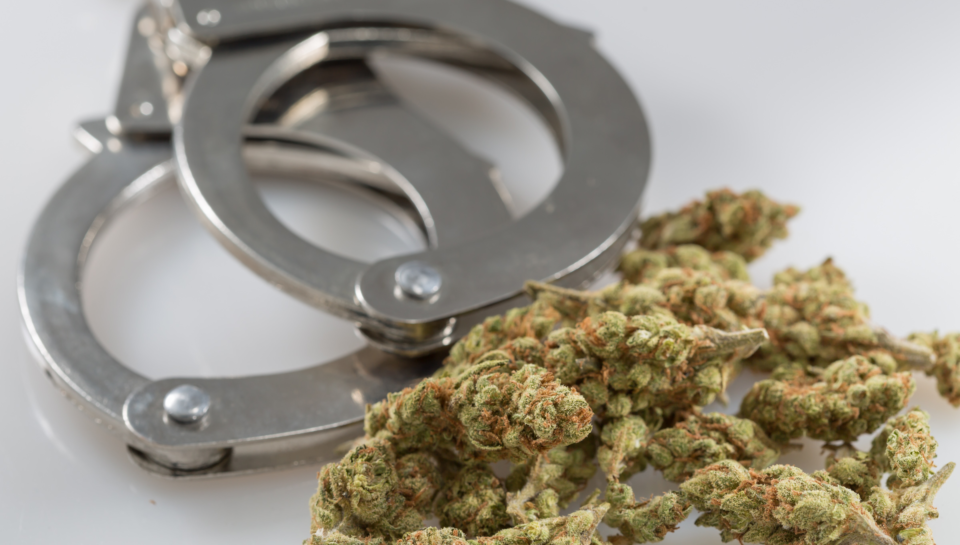
A legislative proposal now before a Florida conference committee threatens to revoke medical marijuana registrations for people convicted of certain drug crimes—including simply purchasing more than 10 grams of cannabis.
The provision, which would affect both registered patients and caregivers, was agreed to on Tuesday by House lawmakers. It was a part of SB 2514 when the legislation was filed and later passed by the Senate, while the House approved an entirely different version of the bill and sent the disagreement to be ironed out in the conference committee, formed earlier this month.
As first reported by Florida Politics, House lawmakers have now signed off on the Senate medical marijuana language, offering to accept that provision. Though the offer hasn’t been finalized, it’s reportedly “very likely” the restriction will be included.
The Senate language would require the state Department of Health (DOH) “to revoke the registration” of a qualified patient or caregiver if that person “entered a plea of guilty or nolo contendere or was found guilty” of a covered drug offense.
Patients’ or caregivers’ registrations would be suspended immediately upon charges being filed, and the suspensions would last until “final disposition of the alleged offense.”
It’s not clear from the plain language of the proposal whether it would impact only future criminal cases involving medical marijuana patients and caregivers or whether DOH would need to review the records of existing program registrants and revoke registrations of an untold number of Floridians with past drug convictions.
Florida Politics wrote of the bill that “for those who found the medical marijuana program as a way to escape the black market, the new language may complicate their legal status.”
The provision would impact people charged under the state Drug Abuse Prevention and Control Act and reportedly covers cases involving the purchase of more than 10 grams” of any illicit substance or the delivery “without consideration, [of] 20 grams or less of cannabis.”
Lawmakers defeated several proposals to expand the medical cannabis program during this year’s regular legislation session—including by allowing home cultivation, adding new qualifying conditions, protecting employment and parental rights of patients and letting military veterans register for free.
Meanwhile in Florida, advocates are working toward putting a new adult-use marijuana legalization measure on the 2026 state ballot following the failure of Amendment 3 at the polls last November.
After filing the measure and launching a signature drive earlier this year, the campaign Smart & Safe Florida has collected 377,832 valid signatures—about 150,000 more than required to kick off the review process, according to Division of Elections numbers from earlier this month.
The state is now statutorily obligated to conduct a judicial and financial review of the measure that will determine its legal eligibility and inform the electorate about its potential economic impact.
Smart & Safe Florida is hoping the revised version will succeed in 2026. The campaign—which in the last election cycle received tens of millions of dollars from cannabis industry stakeholders, principally the multi-state operator Trulieve—incorporated certain changes into the new version that seem responsive to criticism opponents raised during the 2024 push.
For example, it now specifically states that the “smoking and vaping of marijuana in any public place is prohibited.”Another section asserts that the legislature would need to approve rules dealing with the “regulation of the time, place, and manner of the public consumption of marijuana.”
Gov. Ron DeSantis (R) had repeatedly condemned the 2024 initiative over that issue, claiming there were not parameters to prevent public smoking, while expressing his distaste for the smell of cannabis.
The governor said in February that the newest measure is in “big time trouble” with the state Supreme Court, predicting it will be blocked from going before voters next year.
Last year, the governor accurately predicted that the 2024 cannabis measure from the campaign would survive a legal challenge from the state attorney general. It’s not entirely clear why he feels this version would face a different outcome.
While there’s uncertainty around how the state’s highest court will navigate the measure, a poll released in February showed overwhelming bipartisan voter support for the reform—with 67 percent of Florida voters backing legalization, including 82 percent of Democrats, 66 percent of independents and 55 percent of Republicans.
However, the results conflict with another recent poll from the Florida Chamber of Commerce, a proactive opponent of legalization, that found majority support for the reform among likely voter (53 percent) but not enough to be enacted under the 60 percent requirement.
In the background of the campaign’s signature development, DeSantis signed a GOP-led bill last month to impose significant restrictions on the ability to put initiatives on the ballot—a plan that could impair efforts to let voters decide on marijuana legalization next year.
Separately, a Florida GOP senator claimed recently that the legalization campaign “tricked” Trump into supporting the 2024 measure by misleading him and the general public about key provisions.
Ahead of the election, Trump said in September that he felt Amendment 3 was “going to be very good” for the state.
Before making the comments, Trump met with the CEO of Trulieve, Kim Rivers, as well as with a GOP state senator who is in favor of the reform.
While Trump endorsed the Florida cannabis initiative—as well as federal rescheduling and industry banking access—he has since been silent on cannabis issues. And his cabinet choices have mixed records on marijuana policy.
Mike Tyson Promotes His Marijuana Brand During DEA Lab Visit Following Meetup With Trump
Ben Adlin, a senior editor at Marijuana Moment, has been covering cannabis and other drug policy issues professionally since 2011, specializing in politics, state legislation, litigation, science and health. He was previously the senior news editor at Leafly, where he co-led news coverage and co-hosted a critically acclaimed weekly podcast; an associate editor at The Los Angeles Daily Journal, where he covered federal courts and municipal law; and a Coro Fellow in Public Affairs. He’s a graduate of Occidental College in Los Angeles and currently lives in Washington State.
Add Marijuana Moment as a preferred source on Google.
All the cannabis news you need, all in one place. Copyright © 2017-2026 Marijuana Moment LLC ® and Tom Angell