California GOP Senator Suggests Putting Marijuana Back On The Ballot To ‘Reverse’ Legalization
Rhode Island Senate Confirms New Top Marijuana Regulator
Federal Science Agency Adds New Cannabis Compounds To Its Library Of ‘Chemical Fingerprints’
More Than 100 Alabama Patients Bought Medical Marijuana In First Week Of Legal Sales
North Carolina Lawmakers Advance Bill To Set A Minimum Age Limit For Hemp And Kratom Products
Our New Study Shows That The Science Of Cannabis And Sleep Extends Beyond THC (Op-Ed)
Marijuana Extracts ‘Meaningfully’ Improve Cancer Patients’ Symptoms Such As Sleep Trouble And Anxiety, Study Shows
2 In 3 Americans Who Use Marijuana Say It Helps Them Sleep Better, New Survey Shows
Hemp-Based Plastic Shows Promise As Environmentally Friendly Alternative To Traditional Packaging Materials, Study Finds
Marijuana Components Have ‘Consistent’ Anti-Tumor Effects In Glioblastoma And Other Cancers, Scientific Review Shows
State Marijuana Officials Educate World Cup Fans About How To Celebrate Legally And Responsibly While Visiting
WNBA Removes Marijuana From Banned Substances List And Sets Rules For Player Endorsements Of Hemp CBD Products
Americans Say Marijuana Is Less Cool Than Math And Country Music—But Is Cooler Than Guns Or Cryptocurrency, Survey Shows
Politicians And Major Brands Celebrate Cannabis Culture On 4/20
Woody Harrelson And Bill Maher Complain That Marijuana Taxes Are Too High While Smoking Joints At The Dispensary They Own Together
Federal Labor Decision Inspires More Missouri Marijuana Workers To Seek Unionization
Missouri Marijuana Workers Win Union Vote After Federal Officials Reject Company’s Argument On Blocking Ballots
Target Is Launching Hemp THC Drink Sales In Three Of The U.S.’s Most Populous States
Target Expands Involvement In Hemp THC Drinks Market With 72 New Licenses In Minnesota
Marijuana Sales Are Rising And Alcohol Is On The Decline As Consumer Preferences Evolve, Government Data In Canada Shows
Virginia cannabis sales legalization deal reached (Newsletter: June 15, 2026)
Drug testing industry tries to block cannabis rescheduling (Newsletter: June 12, 2026)
Anti-cannabis campaigns’ questionable tactics (Newsletter: June 11, 2026)
VA gov has “productive” cannabis legalization conversations with lawmakers (Newsletter: June 10, 2026)
State cannabis officials work to educate World Cup visitors (Newsletter: June 9, 2026)
Published
on
By
“We found that the strongest evidence for improving sleep was associated with cannabidiol (CBD), cannabinol (CBN) and combinations of the two—but not primarily THC.”
By Andrea Efre, University of South Florida College of Nursing
The cannabis sleep market represents a shift away from traditional pharmaceuticals toward a natural alternative. Historically, cannabis products marketed for sleep have largely focused on THC because of its sedating qualities. Dispensary recommendations, product marketing and consumer assumptions have reinforced the belief that THC is the cannabinoid most responsible for helping people sleep.
But our new research, recently published in the Journal of the American Association of Nurse Practitioners, suggests it may be time to rethink that assumption.
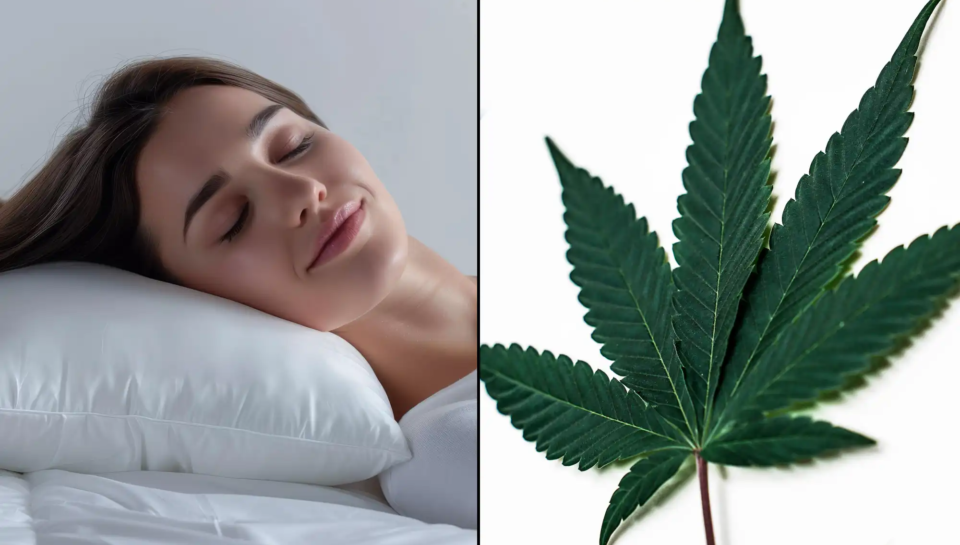
After conducting a systematic review and meta-analysis of medical cannabis for insomnia, we found that the strongest evidence for improving sleep was associated with cannabidiol (CBD), cannabinol (CBN) and combinations of the two—but not primarily THC. Across the available evidence, medical cannabis was associated with reduced sleep disturbance, increased total sleep time and less daytime sleepiness.
Yet THC-containing formulations did not demonstrate significant improvements in sleep outcomes and were associated with higher rates of adverse effects.
This finding matters because nearly one in four Americans reports using cannabis to improve sleep, while more than one-third of adults fail to obtain adequate sleep on a regular basis. Faced with insomnia, limited access to behavioral therapies and concerns about conventional sleep medications, millions of consumers are turning to cannabis and often relying on marketing claims, online forums and anecdotal experiences rather than clinical evidence to guide their decisions.
To better understand what the science actually shows, we reviewed nearly 4,600 studies and identified 18 that met rigorous inclusion criteria, with seven eligible for meta-analysis. These studies evaluated CBD, CBN, THC and cannabinoid combinations administered as capsules, oils, tinctures and sublingual preparations.
Compared with placebo, medical cannabis was associated with meaningful improvements in sleep disturbance, total sleep time and daytime sleepiness. Adverse effects were generally mild to moderate and most commonly included drowsiness, dry mouth, dizziness and gastrointestinal symptoms.
CBD and CBN consistently demonstrated the most promising results. CBD doses ranging from 50 to 300 milligrams and CBN doses ranging from 20 to 100 milligrams were associated with the most consistent improvements in sleep quality and duration. Lower-dose CBD products, particularly those containing less than 50 milligrams, generally showed little benefit unless combined with CBN.
This finding raises an uncomfortable question for the rapidly expanding sleep-products marketplace. Many commercially available CBD sleep products contain doses substantially lower than those evaluated in clinical studies. Consumers may assume that because a product contains CBD and is marketed for sleep, it reflects the available evidence. In many cases, that assumption may be wrong.
THC performed differently. Despite its reputation as the cannabinoid most associated with sleep, THC-containing formulations produced mixed results and were associated with higher rates of adverse effects, while CBD- and CBN-focused formulations demonstrated more consistent benefits across studies. This does not mean THC has no role in sleep management, but it does suggest that its reputation as the primary sleep-promoting cannabinoid may be stronger than the evidence supporting it.
For decades, the public conversation surrounding cannabis and sleep has focused primarily on THC. Meanwhile, CBD and CBN—two cannabinoids that showed greater promise in the available evidence—have received comparatively less attention. If clinicians, researchers, manufacturers and consumers are genuinely interested in improving sleep outcomes, future conversations should be driven by evidence rather than assumptions.
The evidence suggests cannabinoids are generally well tolerated when appropriately dosed and monitored, but informed use still matters. Like many therapeutic agents, cannabinoids can interact with prescription medications and potentially alter drug concentrations. People taking blood thinners, cardiovascular medications, psychiatric medications or multiple prescription drugs should talk with their healthcare provider about potential interactions before adding cannabinoid products to their routine.
More research is needed, particularly larger and longer-term clinical trials using standardized formulations and dosing protocols. Yet the evidence is already strong enough to challenge one of the most common assumptions in cannabis medicine. For years, consumers have been told that THC is the cannabinoid most closely linked to sleep. Our review suggests the science is telling a different story.
If the goal is truly evidence-based cannabis medicine, the future of sleep therapy may depend not on asking whether cannabis works, but on identifying which cannabinoids work best.
Dr. Andrea Efre is an associate professor at the University of South Florida College of Nursing and a nurse practitioner with over a decade of experience speaking to nurses and healthcare professionals about cannabis. She and her colleagues recently completed a systematic review and meta-analysis examining the impact of medical cannabis on insomnia. From their work they developed a clinical resource for healthcare providers and are sharing their work throughout health communities.
Add Marijuana Moment as a preferred source on Google.
All the cannabis news you need, all in one place. Copyright © 2017-2026 Marijuana Moment LLC ® and Tom Angell