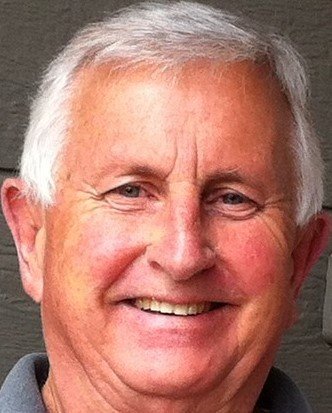
Jim Hartman
By Jim Hartman
Saturday, January 10, 2026
On Dec. 18, President Trump signed an executive order that would reschedule marijuana as a less-dangerous drug under the Controlled Substances Act.
Marijuana is currently a schedule 1 drug, meaning it has “no currently accepted medical use and a high potential for abuse.”
Trump’s order would change it to schedule 3, the class that includes anabolic steroids and Tylenol with codeine, indicating it has some legitimate medical uses and “a moderate to low potential for physical or psychological dependence.”
While reclassifying marijuana doesn’t legalize the drug under federal law, it does ease tax burdens on marijuana companies and sends the signal to young people that marijuana isn’t all that harmful, despite mounting evidence that it is.
A recent review of 15 years of research found the evidence of marijuana’s medical benefits to be weak or inconclusive.
Far stronger evidence points to its potential harm.
Marijuana today is four to five times more potent than in the 1990s. The drug’s dangers and risks of dependency increase with potency. The Centers for Disease Control and Prevention estimates that three in 10 people who use marijuana will develop an addiction.
A growing mountain of evidence shows that marijuana’s easy availability in two dozen states, including Nevada, has made young people sicker and dumber. The psychoactive compound THC binds to brain receptors, and regular users show marked deterioration in executive function, decision-making, coordination, memory and emotion.
Studies show marijuana increases anxiety and depression. Teenage brains are especially vulnerable to the drug’s ill effects, which include a much higher incidence of psychosis.
Doctors at Mass General Brigham hospital found the share of adolescents with psychiatric emergencies who tested positive for THC jumped four-fold after marijuana was legalized for commercial sale in Massachusetts in 2016.
Cannabis users under 50 are six times as likely to suffer a heart attack as nonusers. Pregnant women who use marijuana are at higher risk of miscarriages and premature births.
Employers in industries like construction, manufacturing and trucking say they can’t find workers who can pass a drug test, with marijuana use being the top reason.
Rescheduling pot sends the wrong message to vulnerable young brains and runs counter to Trump and RFK Jr.’s professed concern about health. It’s the antithesis of MAGA. Marijuana is sapping American economic and cultural vitality.
In 2016, I actively campaigned against Nevada Question 2, warning about the dangers of the marijuana industry-drafted initiative. Question 2 passed 54.5% to 45.5%.
Nine years later, opponents have been proven right. The corporate marijuana promoters promised an education funding bonanza from cannabis excise tax revenue. It was an illusion.
The Kenny Guinn Center for Policy warns both the wholesale (15%) and retail (10%) excise taxes placed on the sale of recreational marijuana have proven “volatile and challenging to project.” They have declined each year since their 2021 peak, falling last year to $108 million.
Although a big number, the cannabis tax revenue is a drop in the bucket. This amounts to about 2 percent of the $12.9 billion budgeted for K-12 education for the next two years. It doesn’t move the needle on education.
Another fallacious claim was that legalization would nearly eliminate illegal marijuana sales. Nevada’s illicit pot market is estimated to exceed $3.7 billion, more than four times the size of the legal market.
The black market persists because legal products burdened with taxes (sales and excise) plus compliance costs simply can’t compete.
Meanwhile, public safety costs mount.
In 2021, Nevada recorded 38 fatal crashes involving drivers testing positive exclusively for marijuana, nearly double the number in 2016, a year prior to recreational marijuana’s legalization. THC was present in 70 other fatal crashes where drivers also used alcohol or other drugs.
Big Marijuana has extracted hundreds of millions in profits from Nevada – with Nevadans paying a high human and financial cost.
E-mail Jim Hartman at [email protected].
All materials contained on this site are protected by United States copyright law and may not be reproduced, distributed, transmitted, displayed, published or broadcast without the prior written permission of Eagle Valley Publishing.
Please review our Terms and Conditions and Privacy Policy