Baltimore Sun eNewspaper
Sign up for email newsletters
Sign up for email newsletters
Baltimore Sun eNewspaper
Don't miss:
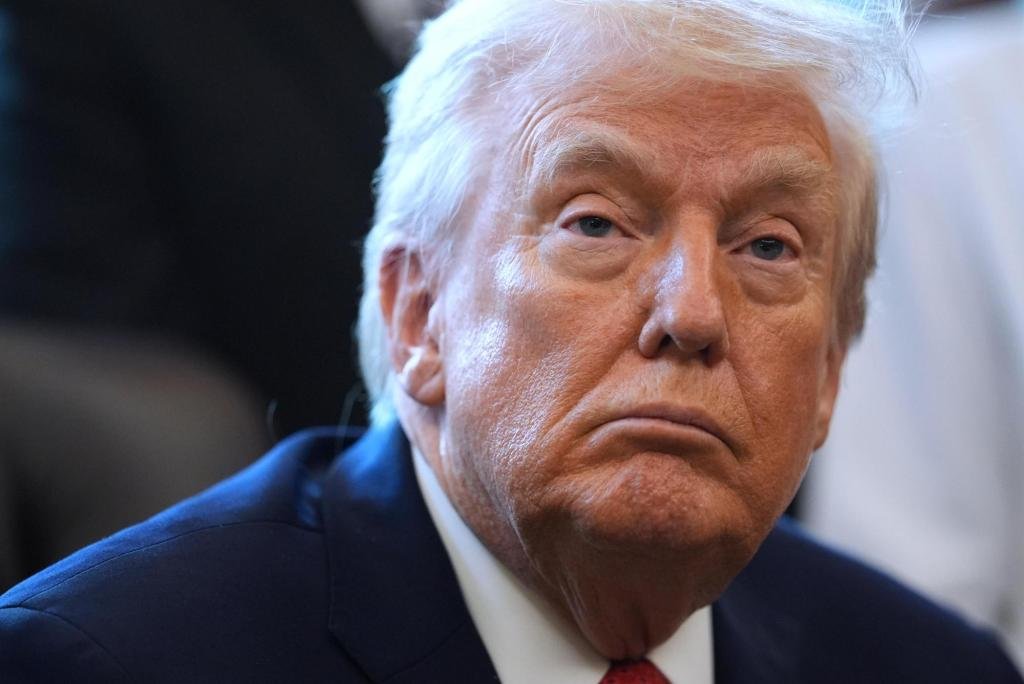
President Donald Trump last month ordered that marijuana be reclassified as a less dangerous drug under federal law. As Aaron E. Carroll put it in the New York Times, “The move would make it easier to conduct medical research on the drug, though it would stop short of federal legalization.”
No one had doubted that legalization is exactly where the country’s stance on marijuana usage has been headed for years now. The president claims his newfound support for the medical use of marijuana is based on science. New studies, however, clearly show that medical marijuana is not nearly as effective as the pro-marijuana lobby heralds.
And how does the president justify attacking drug-running boats to reduce drug supply and then making marijuana more acceptable? The majority of hardcore addicts began with marijuana. All Trump did was to make today’s stronger marijuana more easily available to kids and adults. This was a big mistake and will hurt more people than it helps.
An important effect of reclassification is that it will allow pot dispensaries to be able to access banks, credit card companies and not have to take only cash. This may be a major reason why Trump made the move, making the legal sellers more money and making it easier for users to shop at dispensaries (which are not doing that well, partly since many states, including Maryland, will let you grow your own).
It’s more of a message that marijuana is not that dangerous, thus reinforcing what our teens already believe.
There is no compelling evidence of general medical benefits resulting from the use of marijuana, save the self-fulfilling prophecy of self-reports of users. “There are some legitimate purposes for these compounds,” JAMA’s Dr. Kevin Hill, who directs the Division of Addiction Psychiatry at Beth Israel Deaconess Medical Center in Boston, told the New York Times. “And there’s a whole other group of people who are saying they’re using it medically, but they’re really not. They’re just rationalizing their recreational use.”
Let’s look at some of the major components of the fallacious arguments in favor of legalization:
1. Marijuana has only minor and temporary medical effects. The marijuana of today is so much stronger than ever before, making it dangerous to drive or perform other significant tasks while under the influence.
2. Marijuana is not a gateway drug. Pro-legalization forces point out some people they know who use marijuana and never advance to stronger drugs. There are such people, but if you ask a hardcore addict their first illegal drug of choice, he or she will almost invariably answer “pot!” True, you can argue that is not always the case, but one can’t discount that seeking marijuana puts people in the drug sociology wherein “What’s next?” is not seen as a radical question, and those around the new user can help that person climb to more serious drugs. And for one of us who used to be in that sociology, if you like getting high, you usually want to get higher.
3. Marijuana offers significant health benefits. The pro-legalization lobby has been too successful in convincing the public and now Trump that the medical use of marijuana has medical advantages and should be easier to obtain. The newest studies are saying that medical use is not as helpful as previously promoted, but the legal proponents got what they always wanted: legalization. In addition, Alex Berenson, a former writer for the New York Times and longtime opponent of the legalization of marijuana, points out that since legalization in several states, such as Colorado, there has been a major increase in fatal accidents, heart attacks and strokes, as well as profound effects on cognitive ability, including schizophrenia, especially in teenagers, and particularly with cannabis’ increase in potency.
We’ll concede one point to the liberal objectors: Life may be tougher now than it has been in past decades. Even at our advanced age, we recall the difficulties young Americans experience. But there is no reason to make everything more difficult through the easy and legal acquisition and use of a dangerous, more potent drug linked to criminal and irresponsible behavior such as marijuana.
Mike Gimbel (mmgimbel@comcast.net) is the former drug czar for Baltimore County and has been the host of “Straight Talk,” an educational program about addiction and recovery. Richard E. Vatz (rvatz@towson.edu) is professor emeritus at Towson University and author of “The Only Authentic Book of Persuasion: The Agenda-Spin Model.”
Copyright © 2026 Baltimore Sun