
E-Edition
Sign up for email newsletters
Sign up for email newsletters
E-Edition
Michigan’s new cannabis tax went into effect at the start of the year, adding a 24% wholesale tax on top of a 16% sales tax. While this doesn’t mean consumers are faced with a 40% tax for every cannabis product they purchase, it does mean that dispensaries may raise prices to operate within their already-thin margins.
“[This tax] is still very confusing,” said Mario Porter, partial owner of The Hempire Collective located on Loomis Road in Clare.
“The rollout was kind of half-cocked, and we’re having a hard time trying to really understand it.”
According to Porter and one of his mangers, Brianna Price, the explanation they were given by attorneys happened on a Zoom call with 200 people. An explanation was then given on the tax law, and dispensaries were given guides as to what things should cost. According to the two of them, it affects them even though they grow and sell their marijuana.
“Being vertically integrated seems to affect us more than it does outside entities,” Porter said. “We can’t sell [our product] to ourselves for cheaper. We have to sell it at the minimum price. Let’s say it’s $1,000 for a pound of flower. With the taxes, it raises it up to $1,240. So, the price goes up and we just have to eat it.”
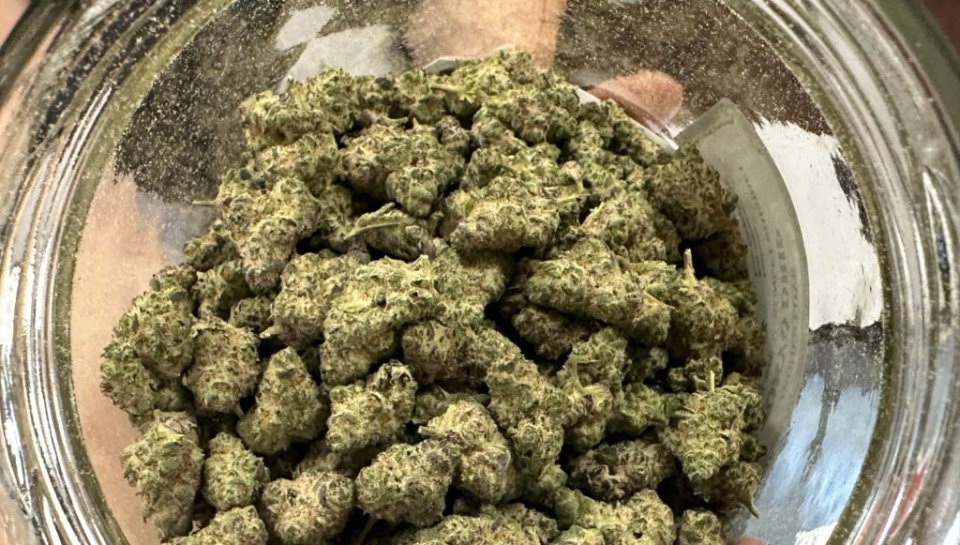
They then went on to explain how the taxes affected everything a dispensary sells. They used to sell shake and trim, the parts of the plant that are still usable but have a lower potency than bud, for an overall profit, but the taxes force them to either take the hit entirely by themselves or by forcing the customers to pay more.
“We have to keep a specific margin in order to stay profitable,” Price said. “With this tax, we’re going to see a lot of the smaller, family-owned businesses not be able to survive this year.
“A lot of businesses have already gone out of business in Mt. Pleasant. It’s really hard to survive if you’re not a store with corporate backing.”
Porter made the comparison of smaller grocery stores competing with a larger store, like Walmart. He said that, because they’re a multi-state operator, they have a much higher purchasing power than smaller mom-and-pop stores. Because they can buy as much as they want, they can also sell it for as low as they want. So, when the tax was first announced, larger marijuana companies like Lume and Jars could feasibly buy millions of dollars worth of inventory before they became taxed on it.
In fact, other dispensaries around Michigan have done exactly that. In Walled Lake, one of the dispensaries called “The Greenhouse,” owned by a man named Jerry Millen, spent over $500,000 before the new tax took place. He said that his store would keep the same price through the end of January, and that stores who have inventory and raise prices regardless is “price gouging.”
Millen also predicts 30% of Michigan’s marijuana retailers will be forced to close in the next year due to price increases, lower profit margins and the glut of cannabis products. According to him, many of them are already failing and will continue to do so. Millen calls it “a race to the bottom…a bloodbath.” Porter and Price have similar feelings to Millen.
“The landscape is completely different than six, seven years ago when we started. This is not the printing press that it used to be,” Porter said. “I think a lot of people built their businesses on the original price of bud, which was around $3,000-$4,000 a pound. That corrected itself quickly.
“It was fun back then, but now it’s just like any other business — you have to watch your margins and not spend excessively unless you have to. Especially with how much competition there is.”
Despite the changing landscape for Michigan’s marijuana sales, Porter, Price and their crew are pushing onwards. There’s currently plans to open a new Hempire Collective by Soaring Eagle Casino. However, Porter still mentioned that it’s a risk to do so, because of the amount of dispensaries already in Mt. Pleasant. However, they find it’s a risk worth taking because of the location.
Both Price and Porter urge those who use cannabis to start shopping at smaller, family-owned businesses. While other stores may have cheaper prices, they say that they’re trying their hardest to work with their customers to get the best product to them for as cheap as possible.
“Just be patient with us,” Price said. “We’re trying to figure this out. There are many small mom-and-pop shops that are just not going to survive.
“It’s a really scary time. There’s a lot of people’s jobs on the line, and this is a really hard time for this industry.”
Overall, The Hempire Collective employs around 50 to 60 people company-wide. Porter says they offer benefits, PTO, and anything they can to ensure a healthy workplace.
“This puts an undue burden on us trying to provide these things for our employees who deserve it and so much more,” Porter said. “But, we can only do so much. Especially in a business where we’re getting squeezed. It’s just going to be felt top to bottom.”
Copyright 2026 The Morning Sun. All rights reserved. The use of any content on this website for the purpose of training artificial intelligence systems, algorithms, machine learning models, text and data mining, or similar use is strictly prohibited without explicit written consent.