
Marijuana Budtenders Could Qualify For ‘No Tax On Tips,’ IRS Says, But Only After Federal Legalization
Idaho Medical Marijuana Campaign Has More Than 100,000 Signatures For Legalization Ballot Measure As Deadline Nears
Virginia Marijuana Bill Sponsors Push Back Against Governor’s Proposed Changes
Nebraska Officials Approve Medical Marijuana Rules, Sending Them To Attorney General And Governor
Feds Launch Campaign Warning Against Marijuana-Impaired Driving Ahead Of 4/20
Vaporizing Marijuana Reduces Harmful Inhaled Byproducts By 99% Compared To Joint Smoking, New Study Shows
Federally Funded Study Reveals Marijuana Breathalyzer Breakthrough With 3-D Printed Roadside Tool Able To Detect THC
Alcohol And Tobacco Are More Damaging To Users And Society Than Marijuana Is, Government-Funded Study Concludes
High Marijuana Taxes Don’t Effectively Deter Use, Study Shows, Contrary To NYT Editorial Board’s Claim
Legalizing Marijuana For Recreational Or Medical Use Leads To Reductions In Different Types Of Crime, Study Finds
WNBA Offers To End Marijuana Testing For Women’s Basketball Players As Part Of Reported Deal With Union
DEA Promotes Anti-Marijuana PSA Contest Inviting Students To Warn Peers About THC Dangers On 4/20
Largest Entertainment Arena In US Partners With Cannabis Businesses To Sell THC Drinks At Concerts And Live Events
Woody Harrelson Got Kicked Out Of Two Bars For Smoking Marijuana With Matthew McConaughey’s Mom
State Marijuana Regulators Share Tips On How To Stay Safe And Legal Around The Holidays
Target Expands Involvement In Hemp THC Drinks Market With 72 New Licenses In Minnesota
Marijuana Sales Are Rising And Alcohol Is On The Decline As Consumer Preferences Evolve, Government Data In Canada Shows
Feds Deny Snoop Dogg Request To Trademark ‘Smoke Weed Everyday’ Because Marijuana Is Illegal And Song Lyric Is Too Popular
Marijuana Kiosks For Seniors Are Coming To Independent Living Communities Across Arizona
Montana Retailers Have Sold More Than $1 Billion Worth Of Recreational Marijuana Since Legalization Took Effect
Virginia lawmakers push back on governor’s cannabis amendments (Newsletter: April 15, 2026)
Virginia governor wants cannabis bill changes (Newsletter: April 14, 2026)
Texas hemp product ban paused by judge (Newsletter: April 13, 2026)
Trump advisor says someone is “holding up” cannabis rescheduling (Newsletter: April 10, 2026)
Cannabis sales are rising as alcohol declines (Newsletter: April 9, 2026)
Published
on
By
The Internal Revenue Service (IRS) says that while marijuana industry workers are not currently eligible under the “No Tax on Tips” law signed by President Donald Trump last year to write off any gratuities they receive, that could change in the event of federal legalization.
The agency discussed the issue in a final rule for implementing the policy that was published in the Federal Register on Monday.
One person who submitted a public comment in response to an earlier draft rule that was circulated in September “noted that State-legal cannabis industry workers operate in regulated, State-compliant industries and should not be excluded merely because their employers engage in commerce that involves a federally classified controlled substance,” IRS said in the new filing.
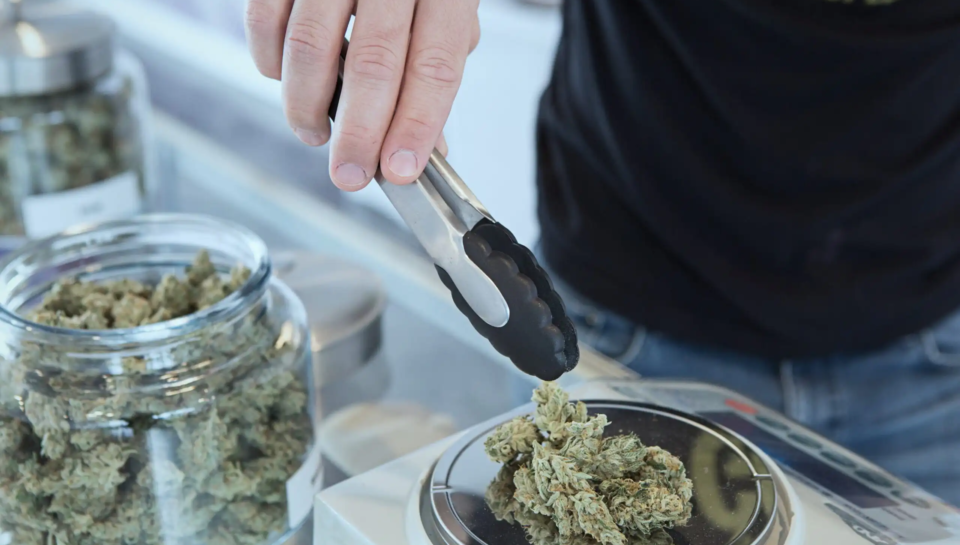
It is not uncommon for so-called budtenders to receive tips from customers at the point of purchase in marijuana dispensaries, similar to bartenders who serve alcohol or baristas who pour coffee.
However, the new IRS rule says that “qualified tips” do not include those “received while performing services that are misdemeanors or felonies under applicable law”—and cannabis remains federally illegal.
“Workers in the cannabis industry must meet statutory and regulatory requirements like any other employee to be eligible for the deduction for qualified tips,” IRS said in response to the public comment. “Tips received by these workers must be received in an occupation that is included on the List of Occupations that Receive Tips and must not be received for a service the performance of which is a felony or misdemeanor under applicable law, including under Federal law, to be qualified tips eligible for the deduction under section 224.”
While current federal law and some state laws consider marijuana to be illegal, “if Federal law changes, making certain marijuana-related transactions legal, and those same transactions are legal under State law, then tip amounts received in such transactions may be qualified tips if all other requirements for qualified tips are met. No change was made in the final regulations in response to this comment,” the agency said.
Meanwhile, IRS told the U.S. Tax Court in a filing that while marijuana may soon be rescheduled under federal law, that doesn’t currently exempt state-legal cannabis businesses from a law known as 280E that bars them from taking federal tax deductions.
In response to a petition to the court filed by the New Mexico marijuana business Ultra Health—which challenged the conventional interpretation of the IRS code, which applies to tax deduction claims connected to the sale of Schedule I and Schedule II drugs under the Controlled Substances Act (CSA)—IRS said the issue has already been soundly settled by Congress and various federal courts.
The Congressional Research Service (CRS) has separately discussed prior attempts to challenge 28oE as it applies to state-legal marijuana businesses. In a report published in February, CRS pointed out that judges in the Tax Court issued a majority opinion upholding 280E and determining that the statute doesn’t violate the U.S. Constitution “because the disallowance of deductions does not constitute a ‘penalty’ for the purposes of the Eighth Amendment.”
Meanwhile, IRS in 2024 warned the marijuana industry that some companies have, without a “reasonable basis,” filled out a supplementary form in an attempt to take federal tax deductions that they’re prohibited from receiving under a provision known as 280E.
The federal tax issue may ultimately be resolved if the Justice Department follows through on an executive order Trump issued in December directing officials to move cannabis to Schedule III “in the most expeditious manner,” but there haven’t been any updates on the status of that process in the months since the president signed the order.
Tom Angell is the editor of Marijuana Moment. A 25-year veteran in the cannabis and drug law reform movement, he covers the policy, politics, science and culture of marijuana, psychedelics and other substances. He previously reported for Forbes, Marijuana.com and MassRoots, and was given the Hunter S. Thompson Media Award by NORML and has been named Journalist of the Year by Americans for Safe Access. As an activist, Tom founded the nonprofit Marijuana Majority and handled media relations, campaigns and lobbying for Law Enforcement Against Prohibition and Students for Sensible Drug Policy.
Add Marijuana Moment as a preferred source on Google.
All the cannabis news you need, all in one place. Copyright © 2017-2026 Marijuana Moment LLC ® and Tom Angell