
11
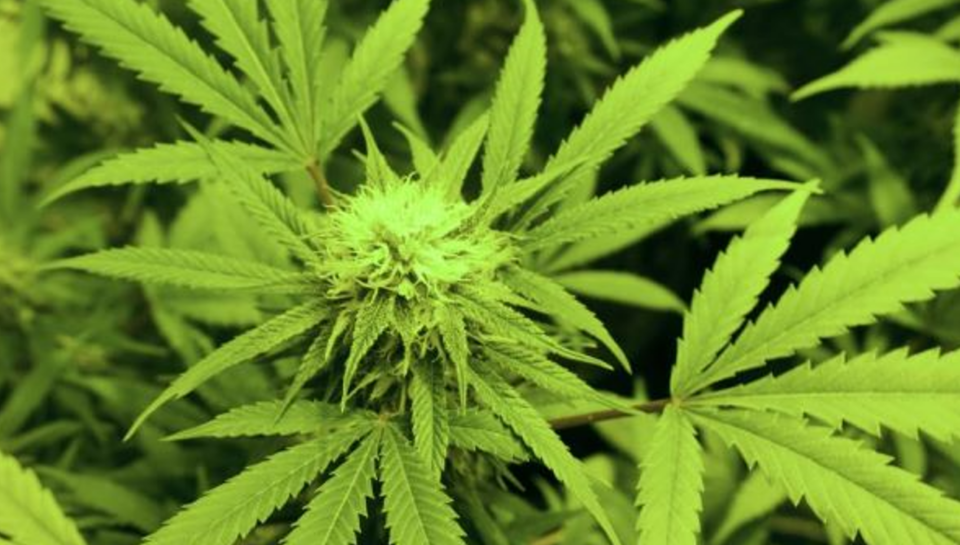
Gov. Abigail Spanberger amended legislation recently passed by the General Assembly to begin legal sales of recreational marijuana in Virginia. The legislation now goes back to lawmakers to review the changes. (BizSense file)
Virginia’s proposed recreational pot market would initially feature fewer retail locations and eventually be subject to higher taxation under the latest version of the legislation that Gov. Abigail Spanberger sent back to the General Assembly this week.
Spanberger on Monday amended the assembly’s legislation that would legalize the sale of marijuana for recreational use in the commonwealth starting in 2027.
Among the governor’s amendments to the proposal is a decrease in the initial number of licenses available to operate retail shops. Under the still-pending legislation, the Cannabis Control Authority (CCA), which would oversee the market and issue permits needed to operate marijuana businesses, would be able to issue up to 200 permits for retailers.
The General Assembly had proposed that there be 350 retail licenses available when the market launches. State regulators would be able to adjust the limit starting Jan. 1, 2029.
Spanberger also recommended a new approach to taxing recreational marijuana. Under the governor’s amended legislation, there would initially be a 6% state sales tax specific to recreational cannabis before July 1, 2029, after which the rate would increase to 8%.
Lawmakers had proposed a 6% state sales tax without a subsequent increase. Retained in the latest version of the legislation is the requirement that municipalities levy a local sales tax of between 1% and 3.5% on marijuana products.
The governor also recommended a delayed launch for the market, suggesting that retail sales be allowed starting July 1, 2027, six months later than the General Assembly proposal.
The idea behind the delayed start is “to allow for additional time to implement a legal market safely and curb the illicit market,” Spanberger said in a prepared statement.
“We are working to set up a marketplace that is controlled, regulated, and responsible — because legal markets only succeed when there are clear guardrails and enforcement to back it up,” the statement read.
The governor’s office didn’t respond to a request for further comment.
The amendments were criticized by Del. Paul Krizek and Sen. Lashrecse Aird, who patroned the companion bills to launch the retail pot market. They released a joint statement that said the governor’s amendments would establish a less accessible market than they envisioned and encourage the growth of the black market for recreational marijuana that has sprung up since possession was legalized several years ago.
“These changes reduce the number of available licenses, delay the launch of retail sales and impose high barriers to entry, resulting in revenue losses, delayed economic opportunity for market participants and the elimination of investment to small businesses. These barriers do not eliminate demand, it simply redirects it back to the illicit market,” Krizek said in the statement.
The lawmakers said the amended proposal featured a weaker business support program than what was included in the legislation. The program was intended to offer resources and support for people negatively affected by marijuana enforcement policies and who have lived in economically disadvantaged communities. Military veterans and farmers who have sought federal aid would also be eligible for the program.
The amended legislation now heads to the General Assembly to review and potentially approve the governor’s recommendations. The CCA would be able to start accepting and processing applications that licensees need to operate in the market starting Sept. 1, 2026.
Wholesalers, manufacturers, growers and testing facilities would have their own licenses, and the CCA would decide how many of those would be available, unlike the retail permits that would be temporarily limited by legislation. Until January 2029, there would be a limit of five cultivation licenses.
Retail shops would be limited to sales floors of no larger than 2,500 square feet. The amended legislation doesn’t include a previously proposed requirement that cannabis stores be at least 1,000 feet away from schools and hospitals.
The amended legislation appears to do away with the General Assembly’s proposed five-tiers approach to growing licenses, which would allow permit holders to cultivate marijuana on set amounts of indoor or outdoor space.
The legislation also establishes microbusiness licenses, which would effectively allow retail, growing and processing operations under one license.
The size of the CCA board of directors would be increased as part of the legislation, going to seven members from the current five. Currently the governor appoints the board’s membership, and that approach would be retained under the latest legislation. The legislation that advanced out of the General Assembly had proposed that four members be governor appointees, two appointed by the speaker of the House and one appointed by the Senate Committee on Rules.
As the legislation – House Bill 642 and Senate Bill 542 – has worked through the lawmaking process earlier this year, there has been criticism of aspects of the proposal, which has included concerns that a new, more restrictive definition of hemp would be a detriment to the existing CBD industry. The pending recreational pot market law would strike out the existing 25:1 CBD-to-THC ratio definition for hemp products and therefore reclassify many hemp products currently on shelves as marijuana.
While consumption, limited cultivation and possession of recreational pot were legalized in 2021, it is currently illegal to sell recreational cannabis in Virginia, and the effort to change that has been years in the making.
Currently only the several state-sanctioned medical marijuana companies are able to sell pot legally. The state’s existing medical marijuana program will continue to operate with the oversight of the CCA. Companies that operate medical cannabis dispensaries and facilities would have to pay a $10 million fee to allow their facilities to operate in the recreational market.
Jack joined BizSense in 2020. He covers local government, retail, healthcare and higher education news. He previously reported for the Virginia Gazette and Tidewater Review after graduating from Christopher Newport University. Reach him at jack@richmondbizsense.com or 804-554-6545.
This is what happens when you elect a cop.
Wolf in sheep’s clothing
I wonder what the GA will do; not enough to override a potential veto and it sounds like the sponsors do not like the changes so what will the administration do if the GA does not except her changes and sends it back….a veto.
I’m a long time supporter of legalization, and none of these amendments sound unreasonable to me. Va has 95 counties & 38 independent cities. There will be enough licenses so no place will be left out. There are 4 medical dispensaries in Richmond & 1 in Col Hgts. I assume the area will get allocated a similar amount of the recreational permits.
Weed is now getting lots of research done on it, and they’re finding out that the use carries lots of risks, while the alleged benefits are getting disproven. It shouldn’t be legal at all. It will only subject general public that wants nothing to do with this degeneracy to more danger and strain the law enforcement.
It seems to be common pattern to ram through legislation for political expediency without researching the unintended consequences.
Apparently giving up arrows to your and Jen’s comments are not allowed or effective.
What good benefits come from drinking alcohol? I don’t drink or smoke but it’s hard to rationalize one and not the other. If folks want to waste time smoking this crap then by all means, tax the snot out of them…
It’s true people can become alcoholics over time but with current pot and THC levels users are subject to psychosis. A population-based retrospective cohort study of 9.8 million people in Ontario, Canada, found that people with an emergency department visit for cannabis use or cannabis-induced psychosis were at a 14.3-fold and 241.6-fold higher risk of developing a schizophrenia-spectrum disorder within 3 years than the general population, respectively.
Why would anyone want to make that legal.
Please provide links to the research that also includes who funded the research.
I believe all these high cost for licensing and then the higher taxes are going to undercut the ability to curb the illegal pot market. It’s only going to make the illegal trade increase. The best way to slow legal sales is to make the legal shops able to have lower prices than the illegal trade can afford to do. If you can’t make any money selling weed, why do it ?
© 2026 Richmond BizSense – All Rights Reserved
Update your browser to view this website correctly. Update my browser now
×