
Bills to launch recreational marijuana market in Virginia advance in House and Senate – Richmond BizSense
5
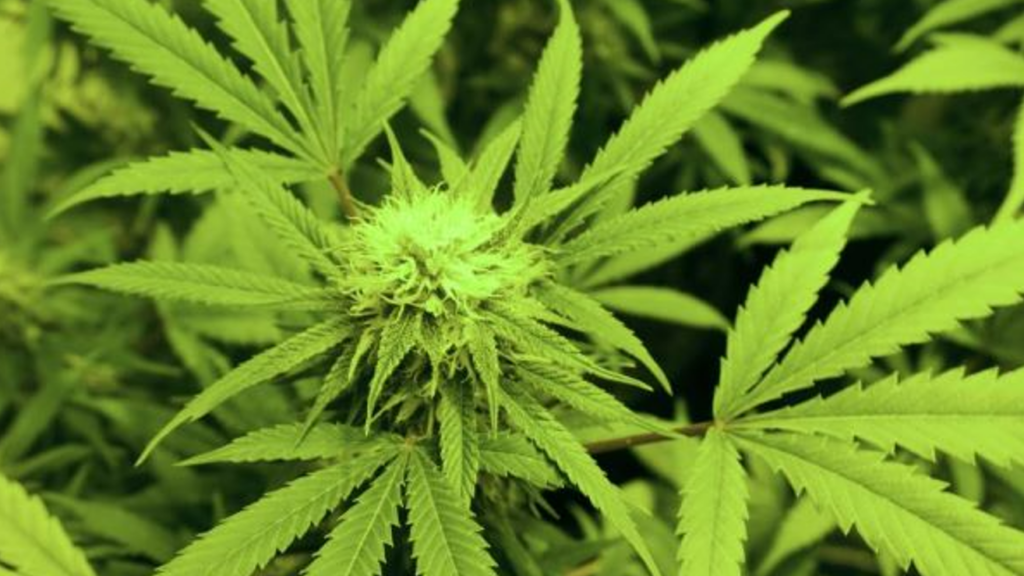
The General Assembly this week approved bills that would launch a recreational cannabis market in Virginia. (BizSense file)
The years-in-the-making effort to launch a legal recreational marijuana market took a step forward in the General Assembly this week.
The Senate and House approved bills in separate votes on Tuesday that would establish a regulatory framework for the industry to take root in Virginia, including licensing regulations and taxation among other things.
While broadly similar and sharing the objective of legalizing recreational pot sales, the latest versions of Senate Bill 542 and House Bill 642 have different proposed start dates. The Senate bill would allow recreational marijuana sales to start Jan. 1, 2027. The House bill would allow sales to start a couple months earlier, on Nov. 1, 2026.
Del. Paul Krizek, sponsor of the House bill, said the legislation would dethrone the illegal cannabis market that has continued to operate in Virginia following the legalization of possession several years ago, and would provide the foundation for a successful and inclusive market.
“This bill will replace that gray market, it’s a $5 billion illegal market out there, with a regulated system,” he told fellow lawmakers ahead of the House vote.
“It also takes a careful, phased approach so that (state regulators have) the time to implement the law responsibly. It allows local control with full zoning authority over where and how retail stores operate responsibly. It creates real opportunities for small businesses and communities, especially those that were disproportionately harmed by past enforcement.”
Both bills propose a statewide limit of 350 licenses for recreational marijuana stores and five licenses for so-called Tier V cultivation facilities, which wouldn’t exceed 35,000 square feet of canopy, that could be issued prior to Jan. 1, 2028. After that, the board of the Cannabis Control Authority, which is the state’s cannabis regulator, could determine how many retail and Tier V licenses will be available.
Retail locations would be limited to sales floors of no larger than 2,500 square feet. The bills would require retail locations to be at least 1,000 feet away from each other, but allow localities to decrease the spacing if desired.
Retail stores would only be able to do in-store sales and offer delivery. They wouldn’t be allowed to have a drive-thru, or offer online sales through third-party websites. The stores couldn’t sell more than 2.5 ounces of pot during a single transaction, according to the bills.
There would also be specific licenses for wholesalers, manufacturers, growers and testing facilities, though the bills don’t set limits on how many of those licenses can be awarded; the CCA board would set those restrictions.
The legislation proposes multiple licenses for indoor cultivation that would limit facilities to between no more than 5,000 square feet to no larger than 35,000 square feet of canopy, which is the area where marijuana plants would be grown.
The bills wouldn’t set any specific geographic constraints regarding how licenses are awarded throughout the state, but would direct the CCA to make sure that, “as possible and practicable, issued evenly” throughout Virginia.
It would be possible for one business owner to hold multiple licenses. The legislation also establishes microbusiness licenses, which would effectively combine the ability to conduct retail, growing and processing operations under one license.
Both bills would allow the CCA to start to accept and issue applications for cannabis business permits starting on July 1, 2026.
The bills would establish a maximum THC level in legal products not to exceed 10 milligrams per serving or 100 milligrams per package.
The Senate bill would levy a 12.9% sales tax on recreational marijuana products, in addition to other taxes, and would direct local governments to charge a further sales tax of 3%. The House bill includes a 6% state sales tax on recreational pot, and would require localities to levy a local sales tax of between 1% and 3.5%.
Local governments wouldn’t be able to prohibit recreational dispensaries in their jurisdictions, a change from unsuccessful legislation proposed in previous years that would have allowed local referendums on the presence of dispensaries in individual localities.
The bills would create a business accelerator program and offer business planning and support aimed at people negatively affected by marijuana enforcement policies and who have lived in economically disadvantaged communities. Military veterans and farmers who have sought federal aid would also be eligible for the resources.
The CCA would be empowered to award and revoke the licenses needed to operate recreational cannabis businesses and oversee the market under the proposed legislation. The Senate bill includes language to make the CCA a division of the Virginia ABC.
Delegates split 65-32 on HB 642 and senators voted 21-19 to pass SB 542, which was introduced by Sen. Lashrecse Aird. Now that the bills have passed in the chambers they originated, they each now head to the other chamber for consideration, and differences between them would be resolved before legislation goes to Gov. Abigail Spanberger to potentially be signed into law.
The bills are the latest attempts to establish a legal retail market after the legalization of recreational use in 2021. While consumption and possession of recreational pot is legal, it is illegal to sell recreational marijuana in Virginia. Currently, only the several state-sanctioned medical marijuana companies are able to sell pot legally. The Richmond-area medical dispensaries were recently sold by Massachusetts-based marijuana company Cannabist to hedge fund Millstreet Capital Management.
Jack joined BizSense in 2020. He covers local government, retail, healthcare and higher education news. He previously reported for the Virginia Gazette and Tidewater Review after graduating from Christopher Newport University. Reach him at jack@richmondbizsense.com or 804-554-6545.
Please, just light up & leave me alone!
“Local governments wouldn’t be able to prohibit recreational dispensaries in their jurisdictions, a change from unsuccessful legislation proposed in previous years that would have allowed local referendums on the presence of dispensaries in individual localities.” – too bad if you don’t want to have a marijuana store in your neighborhood, I guess. There is no place that has been improved by having a dispensary nearby.
Finally, state legislators begin to offer some clear guidance on the legal recreational marijuana market. For context, California has had legal recreational marijuana since 2016 (medical since 1996), Colorado has had legal recreational marijuana since 2012 (medical since 2000).
Missouri issued a referendum and legalized within a month in 2022.
There are many other states that I haven’t listed here that have also legalized.
Virginia is really incredibly behind the curve on this issue, but better late than never I suppose
The idea that this will replace a $5B illegal market shows an embarrassing level of naivete.
So true when you add on regulations costs and the (House side) 15% percent tax rate people will glad keep buying illegal products from unlicensed dealers. And in that most federal banks won’t deal with it and the cost of state led retail is extremely high (no pun intended). PS the small business push is funny too. Like the medical side, watch it be all subsidiaries under a hedge fund in 5 years. Federal decriminalization is needed now. FYI google Colorado sales too; industry in that state saw its 4th straight year of declining sales. Total sales down 50% since… Read more »
© 2026 Richmond BizSense – All Rights Reserved
Update your browser to view this website correctly. Update my browser now
×