Federal Marijuana Rescheduling Would Ease Restrictions On Advertising By The Industry, Congressional Researchers Say
Anti-Marijuana Group Hires Trump’s Former Attorney General For Lawsuit To Block Rescheduling Move Directed By President
4 In 5 Marijuana Consumers Oppose Hemp THC Ban Trump Signed Ahead Of Rescheduling And CBD Access Order, Poll Shows
GOP Committee Chair Wants To ‘Invalidate’ Biden’s Marijuana Pardons Through Autopen Investigation, Democratic Congressman Says
Patients Need More Medically Focused Cannabis Dispensaries (Op-Ed)
Marijuana Users Are Being Unjustly Jailed For Allegedly Driving Under The Influence, Government-Funded Study Shows
California Officials Award $30 Million In Marijuana Revenue To Support Research On THC Drinks, Terpenes And Tribal Cannabis Sales
Medical Marijuana Use Is ‘Prevalent’ Among People With Disabilities—And It Helps Treat Pain, New Federally Funded Study Shows
Teen Marijuana Use ‘Remained Stable’ As Legalization Expands, Federal Health Officials Acknowledge
CBD Provides Pain Relief, Improves Sleep And Aids Relaxation, Study Involving Olympic Athletes Shows
State Marijuana Regulators Share Tips On How To Stay Safe And Legal Around The Holidays
One In Three Americans ‘Pre-Game’ With Marijuana Before Family Holiday Gatherings, Survey Finds
As More Americans Choose Marijuana Over Alcohol, Mainstream Media Notices The ‘Cousin Walk’ Thanksgiving Tradition
Joe Rogan Slams ‘Really Bad’ Federal Hemp Ban Trump Signed, Blaming Alcohol Industry For Influencing Congress
New Netflix Documentary Shows How Psychedelics Help Military Veterans Heal Trauma
Marijuana Consumers Are More Likely To Shop At Target Following Decision To Sell Cannabis-Infused Drinks, Poll Shows
Marijuana Company Sues DoorDash, Total Wine And Others Over Alleged Illegal Sales Of Hemp THC Products
Whiskey Company Scales Back Operations, Citing ‘Consumer Shifts’ Toward Marijuana As Alcohol Alternative
Target Begins Selling THC-Infused Cannabis Drinks As Congress Debates Possible Hemp Law Reversal
No, Carrier Pigeons Will Not Be Delivering Marijuana In New York, Retailer Confirms After Marketing Stunt Fools Media Outlets
Congressional dispute over Biden’s cannabis pardons (Newsletter: January 2, 2026)
Pennsylvania should legalize cannabis, top lawmaker says (Newsletter: January 1, 2026)
Ohio petition could put cannabis back on the ballot (Newsletter: December 31, 2025)
Could DOJ ignore Trump’s cannabis rescheduling order? (Newsletter: December 30, 2025)
Details on feds’ CBD Medicare coverage program (Newsletter: December 29, 2025)
Published
on
By
If marijuana is rescheduled—as President Donald Trump directed in a recent executive order—congressional researchers say the move could ease current restrictions on advertising for cannabis products.
Moving marijuana from Schedule I to Schedule III of the Controlled Substances Act (CSA) wouldn’t federally legalize the plant. But while it’s commonly understood that the reclassification would have tax policy and research implications, a lesser known effect concerns federal advertising laws.
In a report from the Congressional Research Service (CRS) that was published on Tuesday, analysts reiterated that many penalties associated with marijuana would remain in effect if it’s rescheduled. That’s because the CSA distinguishes cannabis from other Schedule III drugs with respect to most criminal penalties.
“If marijuana moves to Schedule III, this does not mean that all marijuana products would be lawful to manufacture, distribute, or possess,” CRS said, noting that the only exceptions that could apply would require Food and Drug Administration (FDA) approval of cannabis products in order for them to be lawfully sold. Experts generally agree that the chances of such approval for botanical marijuana that’s available in state-legal markets are slim.
But rescheduling would mean that advertising restrictions applied to Schedule I drugs would be lifted for marijuana, the report says.
“Some CSA penalties for marijuana are specific to its Schedule I classification. For example, CSA advertising offenses are written specifically for Schedule I,” it says.
“It is unlawful knowingly ‘to place in any newspaper, magazine, handbill, or other publications, any written advertisement [that] has the purpose of seeking or offering illegally to receive, buy, or distribute a Schedule I controlled substance,’” CRS said. “The penalties for doing so are up to four years in prison and/or a criminal fine. These penalties would no longer apply if marijuana moves to Schedule III.”
The report also addresses the tax policy implications of reclassifying cannabis under the CSA. If marijuana is moved to Schedule III, it would make an Internal Revenue Service (IRS) code known as 280E “inapplicable to marijuana businesses,” meaning they could take federal tax deductions available to other traditional industries.
CRS also described the collateral consequences of past or current marijuana use, regardless of rescheduling. That includes potential adverse employment actions, a ban on gun possession, loss of federal housing opportunities, immigration-related penalties and ineligibility for federal benefits such as grants, loans, contracts and licenses.
“Most of the consequences for marijuana use or for marijuana-related convictions would remain the same if it is moved to Schedule III,” it said. “While the use of marijuana by prescription for medical purposes would become lawful, marijuana products that are available in dispensaries in many states across the country are not currently available via lawful prescription.”
CRS also laid out considerations for Congress, which it said may take actions to “affect the classification of marijuana and the consequences of its use in any number of ways.”
“It could alter the schedule, declassify it as a controlled substance, or even create a new schedule classification,” the report says. “Further, Congress could seek to ease the criminal and collateral consequences of marijuana use and marijuana-related convictions, leave them as they are, or make them more severe.”
—
Marijuana Moment is tracking hundreds of cannabis, psychedelics and drug policy bills in state legislatures and Congress this year. Patreon supporters pledging at least $25/month get access to our interactive maps, charts and hearing calendar so they don’t miss any developments.
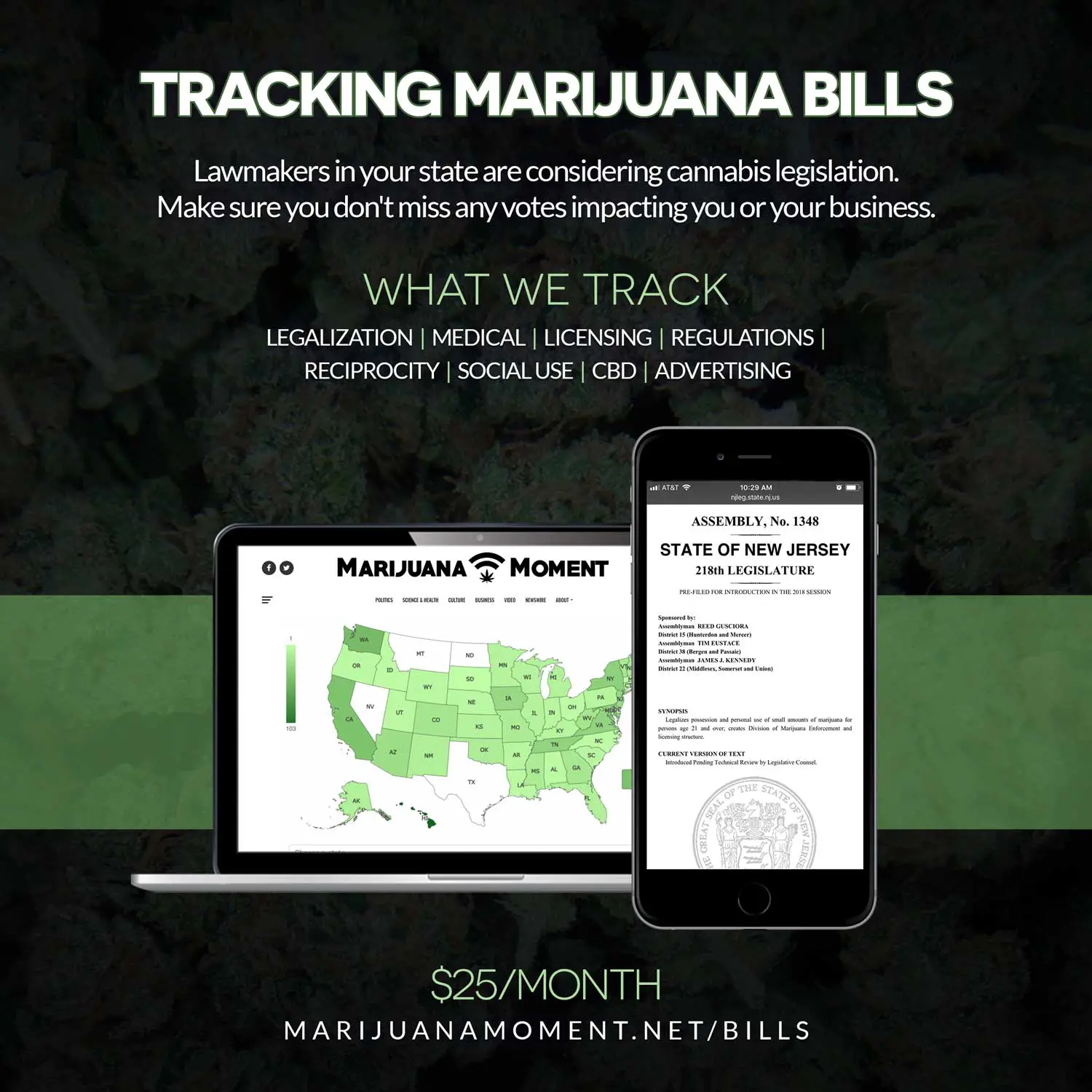
Learn more about our marijuana bill tracker and become a supporter on Patreon to get access.
—
Also last month, CRS put out a separate report clarifying that president simply directed the reclassification of marijuana—but it must still be finalized by the attorney general. And there’s a chance the Justice Department could opt to start the process all over again, or even not complete it at all.
Meanwhile, a coalition of Republican state attorneys general are criticizing Trump’s decision to federally reschedule marijuana, saying cannabis is “properly” classified as a Schedule I drug with no accepted medical use and a high potential for abuse.
Last month, groups of House and Senate Republican lawmakers also sent letters urging Trump not to reschedule cannabis. Trump, however, dismissed those concerns—pointing out that an overwhelming majority of Americans support the reform and that cannabis can help people who are suffering from serious health issues, including his personal friends.
Photo courtesy of Martin Alonso.
Kyle Jaeger is Marijuana Moment’s Sacramento-based managing editor. He’s covered drug policy for more than a decade—specializing in state and federal marijuana and psychedelics issues at publications that also include High Times, VICE and attn. In 2022, Jaeger was named Benzinga’s Cannabis Policy Reporter of the Year.
Add Marijuana Moment as a preferred source on Google.
All the cannabis news you need, all in one place. Copyright © 2017-2025 Marijuana Moment LLC ® and Tom Angell