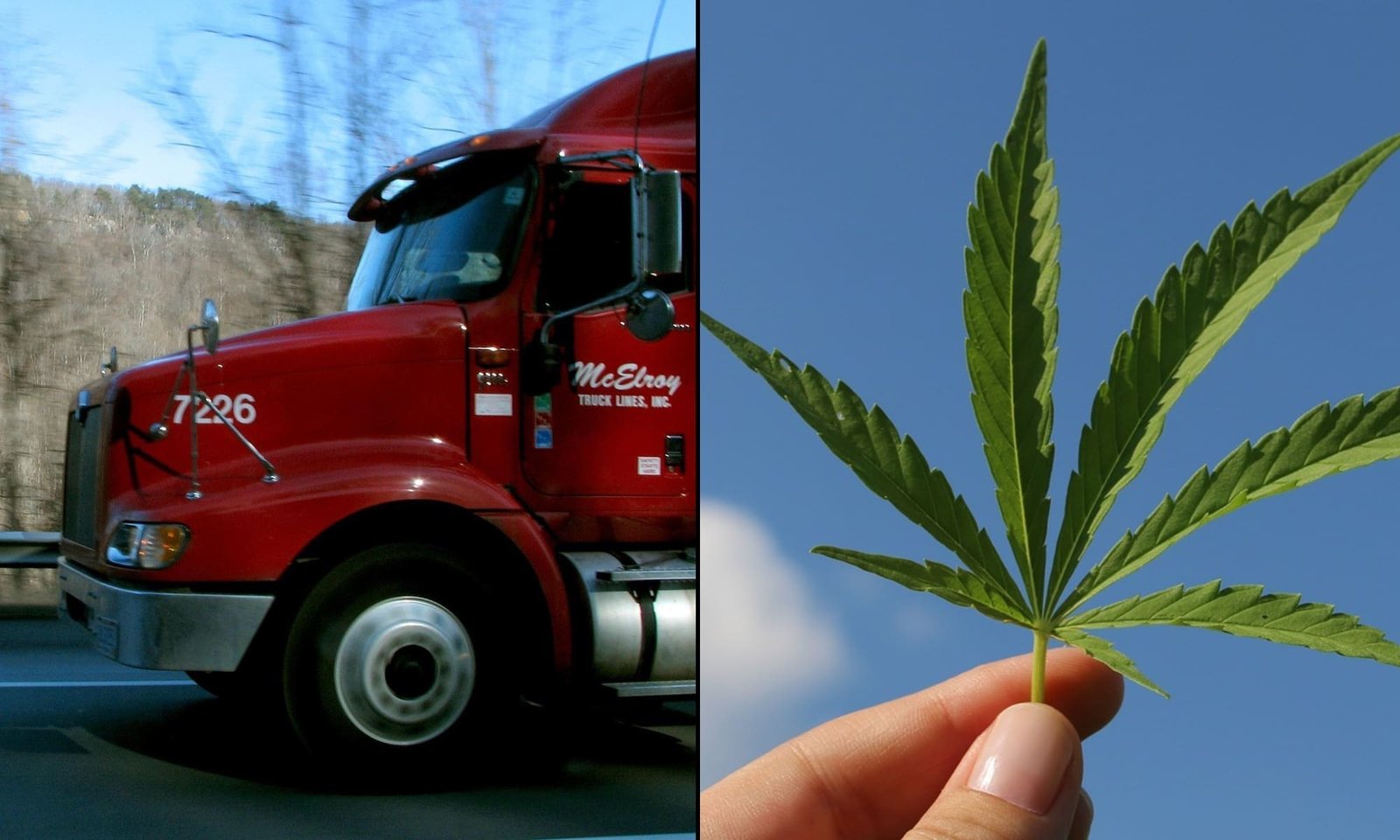
Feds Should Consider ‘Relaxing’ Marijuana Drug Testing Rules For Transportation Workers, Congresswoman Says
Missouri Marijuana Businesses Fined For Bringing Clones Across State Lines In Violation Of Rules
South Dakota Senate Rejects Debate On Banning Intoxicating Hemp And Kratom
Ohio Cities Begin Receiving Marijuana Revenue To Support Local Programs And Services
Bipartisan Lawmakers Warn That Even One Mistake In Push For Psychedelics Access Could Derail Progress
10 Million US Adults Microdosed Psychedelics Last Year, New Report Shows
Marijuana’s Restrictive Federal Classification Isn’t Supported By Science, New Study Concludes
USDA Study Shows Untapped Potential Of Hemp Roots In Pediatric Cancer Treatment
More Than A Third Of Rap And Hip Hop Music Videos Feature Marijuana, Government-Funded Study Shows
CBD Has ‘Substantial Promise’ To Combat Tumors From Cancer, Scientific Review Shows
Woody Harrelson Got Kicked Out Of Two Bars For Smoking Marijuana With Matthew McConaughey’s Mom
State Marijuana Regulators Share Tips On How To Stay Safe And Legal Around The Holidays
One In Three Americans ‘Pre-Game’ With Marijuana Before Family Holiday Gatherings, Survey Finds
As More Americans Choose Marijuana Over Alcohol, Mainstream Media Notices The ‘Cousin Walk’ Thanksgiving Tradition
Joe Rogan Slams ‘Really Bad’ Federal Hemp Ban Trump Signed, Blaming Alcohol Industry For Influencing Congress
Montana Retailers Have Sold More Than $1 Billion Worth Of Recreational Marijuana Since Legalization Took Effect
Pre-Rolls Are A Key Driver Of The Cannabis Retail Market’s Success (Op-Ed)
Massachusetts Hits $10 Billion Marijuana Sales Milestone, With Top Official Saying Consumption Lounges Will Bolster Industry In 2026
Ohio Dispensaries Sold More Than $1 Billion Worth Of Legal Marijuana In 2025
Marijuana Consumers Are More Likely To Shop At Target Following Decision To Sell Cannabis-Infused Drinks, Poll Shows
Virginia cannabis sales legalization bills advance (Newsletter: January 26, 2026)
MA voters regret signing anti-cannabis ballot petition, poll shows (Newsletter: January 23, 2026)
ATF revises gun ban for marijuana & other drug consumers (Newsletter: January 22, 2026)
AG misses cannabis & psychedelics research rule deadline (Newsletter: January 21, 2026)
Feds tout hemp roots’ potential in kids’ cancer treatment (Newsletter: January 20, 2026)
Published
on
By
A Democratic congresswoman is pushing the federal government to consider “relaxing” strict drug testing rules for transportation workers that punish people for marijuana use outside of work hours that doesn’t actually lead to being high on the job.
Rep. Emily Randall (D-WA) told colleagues at a hearing this month that current policy is impeding efforts to ensure there’s a “robust workforce” to staff ferries that are a popular form of transportation in her home state of Washington.
The congresswoman, who is a co-chair of the Congressional Ferry Caucus, said lawmakers need to be open to “creative solutions” to the problem.
“Federal regulations require drug testing for some maritime employees in safety-sensitive positions, including ferry workers,” she said. We could consider relaxing the rules around recreational marijuana use in states where it’s legal, as long as it’s not used on the job and outside a certain window before their shift.”
“Right now, you could drug test positive for a month or longer after using legal recreational marijuana in Washington and be unable to work as a ferry operator,” Randall said at the the “member day” hearing before the House Transportation and Infrastructure Committee.

Randall is cosponsoring legislation to federally legalize marijuana, promote equity and address the collateral consequences of prohibition. The Marijuana Opportunity, Reinvestment and Expungement (MORE) Act passed the House twice under Democratic control but has not advanced in the current Congress.
While that bill would deschedule marijuana by removing it from the Controlled Substances Act (CSA) altogether, the Trump administration is actively considering a proposal to move cannabis from Schedule I of the CSA to Schedule III.
Last month, the U.S. Department of Transportation (DOT) published a bulletin advising that all safety-sensitive workers must still comply with federal drug testing requirements, even as the president is directing the attorney general to complete a cannabis rescheduling process.
While the department didn’t quite specify what would change if the reform is ultimately enacted, it in effect said that nothing has changed for now.
DOT clarified that, until Attorney General Pam Bondi finalizes the rescheduling action, marijuana remains a Schedule I drug. Therefore, it “remains unacceptable for any safety‐sensitive employee subject to drug testing under the Department of Transportation’s drug testing regulations to use marijuana.”
Additionally, “Until the rescheduling process is complete, the Department of Transportation’s drug testing process and regulations will not change,” the notice says.
“Transportation employees in safety-sensitive positions will still be subject to testing for marijuana,” DOT said. “Furthermore, the Department’s guidance on medical and recreational marijuana and CBD are still in effect.”
Laboratories, medical review officers and substance misuse professionals must still comply with existing drug testing rules, so there are “no changes to your roles and responsibilities as they relate to marijuana.”
“We will continue to monitor the rescheduling process and update the transportation industry as appropriate,” the department said. “We want to assure the traveling public that our transportation system is the safest it can possibly be.”
While it seemed as if DOT was leaving room open for a possible internal policy change if marijuana rescheduling is ultimately finalized, former Transportation Secretary Pete Buttigieig said in 2024 that placing cannabis in Schedule III wouldn’t affect drug testing policies for commercial truckers, noting that the department specifically lists marijuana as substance to screen.
“Our understanding of the rescheduling of marijuana from Schedule I to schedule III is that it would not alter DOT’s marijuana testing requirements with respect to the regulated community,” the former Biden administration official said. “For private individuals who are performing safety-sensitive functions subject to drug testing, marijuana is identified by name, not by reference to one of those classes. So even if it moves in its classification, we do not believe that that would have a direct impact on that authority.”
The reason rescheduling on its own wouldn’t change DOT policy is based on an interpretation of the 1991 Omnibus Transportation Employee Testing Act, which grants the transportation secretary with discretion to test for any controlled substances that they’ve “determined has a risk to transportation safety.”
Buttigieg was responding to a question from Rep. Rick Crawford (R-AR) during a House Transportation and Infrastructure Committee hearing. The congressman had referenced concerns from the American Trucking Associations (ATA) “about the broad public health and safety consequences of reclassification on the national highway system and its users.”
The latest notice comes about three months after DOT proposed a separate rule to update its drug testing guidelines, revising terminology around cannabis in a way that provides more specificity related to THC.
While it’s widely understood that driving under the influence of cannabis is dangerous, the relationship between consumption and impairment is a messy one.
In 2024, for example, a scientific review of available evidence on the relationship between cannabis and driving found that most research “reported no significant linear correlations between blood THC and measures of driving,” although there was an observed relationship between levels of the cannabinoid and reduced performance in some more complex driving situations.
“The consensus is that there is no linear relationship of blood THC to driving,” the paper concluded. “This is surprising given that blood THC is used to detect cannabis-impaired driving.”
In a separate 2024 report, NHTSA said there’s “relatively little research” backing the idea that THC concentration in the blood can be used to determine impairment, again calling into question laws in several states that set “per se” limits for cannabinoid metabolites.
“Several states have determined legal per se definitions of cannabis impairment, but relatively little research supports their relationship to crash risk,” that report says. “Unlike the research consensus that establishes a clear correlation between [blood alcohol content] and crash risk, drug concentration in blood does not correlate to driving impairment.”
Similarly, a Department of Justice (DOJ) researcher said last February that states may need to “get away from that idea” that marijuana impairment can be tested based on the concentration of THC in a person’s system.
“If you have chronic users versus infrequent users, they have very different concentrations correlated to different effects,” Frances Scott, a physical scientist at the National Institute of Justice (NIJ) Office of Investigative and Forensic Sciences under DOJ, said.
Tom Angell is the editor of Marijuana Moment. A 25-year veteran in the cannabis and drug law reform movement, he covers the policy and politics of marijuana, psychedelics and other substances. He previously reported for Forbes, Marijuana.com and MassRoots, and was given the Hunter S. Thompson Media Award by NORML and has been named Journalist of the Year by Americans for Safe Access. As an activist, Tom founded the nonprofit Marijuana Majority and handled media relations, campaigns and lobbying for Law Enforcement Against Prohibition and Students for Sensible Drug Policy.
Add Marijuana Moment as a preferred source on Google.
All the cannabis news you need, all in one place. Copyright © 2017-2026 Marijuana Moment LLC ® and Tom Angell