- February 17, 2026
Report shows strong use of Hawaii medical cannabis program – The Garden Island Newspaper
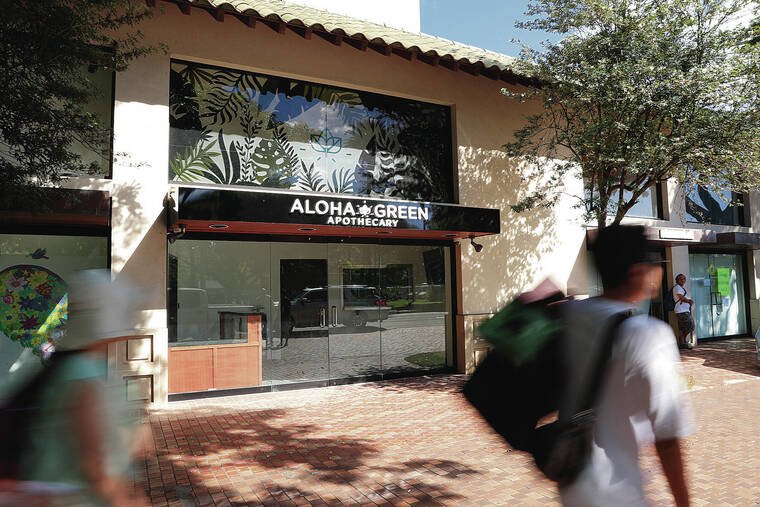
JAMM AQUINO / AUG. 22, 2019
ThevAloha Green medical marijuana dispensary in Waikiki
A new independent economic analysis commissioned by the state Department of Health’s Office of Medical Cannabis Control and Regulation finds that the state’s medical cannabis program captures the vast majority of patient spending and is effectively serving registered users, while also outlining how a future adult-use cannabis market could reshape demand, regulation and public health risks.
A new independent economic analysis commissioned by the state Department of Health’s Office of Medical Cannabis Control and Regulation finds that the state’s medical cannabis program captures the vast majority of patient spending and is effectively serving registered users, while also outlining how a future adult-use cannabis market could reshape demand, regulation and public health risks.
The report, prepared by Cannabis Public Policy Consulting and published Dec. 19, 2025, evaluates Hawaii’s medical cannabis system and models the size, infrastructure needs and policy impacts of potential adult-use — or recreational — legalization. Researchers drew on statewide surveys of adults, tourists, medical patients and legacy farmers, along with dispensary sales and seed-to-sale tracking data.
According to the analysis, Hawaii’s regulated medical cannabis program generates about $5.3 million in monthly sales and captures roughly 86% to 87% of all cannabis spending by registered patients. Survey-based estimates of patient spending closely matched BioTrack seed-to-sale system data, which recorded $5,336,700 in monthly dispensary sales.
Researchers estimate the total cannabis market in Hawaii — including medical, gray and illicit sources — ranges from about $16.5 million to $32 million per month. Medical dispensaries account for roughly one-third of that total, a higher share than in many other states. About one-quarter of all past-month cannabis consumers in Hawaii are registered medical patients.
OMCCR Program Manager Andrew Goff said the findings show the medical program is performing well but cautioned that expansion beyond medical use would bring trade-offs.
“We are pleased with the report’s findings highlighting the strength and performance of Hawaii’s medical cannabis program,” Goff said in a statement.
He said any adult-use system must account for the costs of protecting public health and maintaining a well-regulated industry, and that cannabis revenue should support treatment, mental health services, public education, workforce development and social equity initiatives.
OMCCR noted that greater availability under adult-use legalization could increase overall cannabis use and may raise rates of cannabis use disorder, drug-impaired driving and youth exposure, requiring sustained investments in prevention and safety programs.
If Hawaii legalizes adult-use cannabis, the report projects that total cannabis sales across all sources could grow to between $59 million and $95 million per month within five years. After adjusting for consumer participation under a modeled 15% total tax rate, projected monthly sales range from $46 million to $90 million.
Tourism is expected to be a major contributor. The analysis estimates visitors could add at least $11.5 million per month in cannabis demand under legalization, with domestic tourists reporting far higher expected per-trip spending than international visitors.
Surveys conducted in Japan and Canada — two key visitor markets — found that most respondents said adult-use legalization in Hawaii would not influence their decision to travel. About 57.5% of Japanese respondents and 64.5% of Canadian respondents said legalization would have no effect on visit plans. Among those deterred, reasons included moral concerns, perceived safety and cannabis odor.
Researchers also analyzed Guam tourism data before and after its 2019 adult-use legalization and found no statistically significant association with declines in visits from Japanese or South Korean travelers, though they cautioned Hawaii’s visitor patterns are unique.
To meet projected adult-use demand from residents, patients and tourists, Hawaii would need at least 65 retail cannabis outlets statewide in the first year, the report estimates, assuming medical and adult-use sales occur at the same stores.
Cultivation would also need to expand substantially, with modeled production needs averaging about 117,500 plants harvested annually. Depending on canopy rules, that could translate into dozens of indoor facilities or a larger number of outdoor sites. The report recommends regulators retain authority to adjust canopy limits, issue or reserve licenses, and impose moratoriums to prevent oversupply and diversion.
Currently, registered caregivers in Hawaii are allowed to grow cannabis for up to five patients. A patient can either grow their own cannabis or designate a caregiver to cultivate it on their behalf.
The state currently has eight licensed medical cannabis operators, all of which are vertically integrated — meaning each company is responsible for growing, processing, and selling its own products. Those licenses are distributed across the counties, with three on Oahu, two on Hawaii island, two on Maui and one on Kauai.
Because cannabis remains illegal under federal law, all production and sales must occur within state borders, so it must be grown, manufactured and sold in Hawaii.
Through bills like House Bill 1625 and Senate Bill 2421, lawmakers are considering an adult-use system that would be more horizontally structured, meaning businesses could specialize in different parts of the supply chain — such as cultivation, processing or retail — rather than being required to handle every step themselves.
On taxation, researchers concluded that a 15% total tax rate would likely maximize revenue, while a 10% rate could better retain consumers in the legal market. A 20% rate could generate more revenue but increase the risk of continued illicit sales.
The report warns that adult-use legalization in other states has often led to sharp declines in medical cannabis enrollment as consumers shift to the less burdensome retail market. Without policy incentives, operators may prioritize higher-volume adult-use products over specialized medical items, potentially narrowing product variety for patients.
“When an adult-use market initiates sales, the existing cannabis supply chain that used to cater to the medical market tends to reorient toward where revenues are highest,” the report stated.
Researchers say medical programs that retain patients typically do so by ensuring access to needed products, offering comparable or better convenience, or providing lower prices than adult-use channels.
Policy options to protect the medical program include tax exemptions or rebates for medical-designated products, reduced licensing fees for operators that reserve inventory for patients, expedited approvals for medical-only products, and higher potency limits or purchase allowances for patient products. Regulators could also recognize dispensaries that adopt patient-friendly practices, such as reserved inventory or patient-only service hours.
The report outlines two main regulatory models: parallel supply chains that keep medical and adult-use cannabis separate from cultivation through sale, as in Michigan; and integrated supply chains that classify products at the point of sale, as in California. Integrated systems may lower costs and improve inventory flexibility but risk deprioritizing specialized medical products unless safeguards are added.
Patient surveys found most respondents reported adequate supply at dispensaries, though about 28% described supply as limited. Average travel time to the nearest dispensary ranged from roughly 23 to 30 minutes on Oahu, Hawaii island, Maui and Kauai, but was far longer on Molokai and Lanai — averaging about 70 to 90 minutes — indicating access challenges in more remote areas.
The report also highlights financial pressures on licensed operators, including annual license renewal fees that can exceed $100,000 and mandatory yearly independent audits. Researchers suggest Hawaii could consider streamlined fee structures or risk-based audits to reduce burdens, while noting that current fees fund OMCCR oversight and reductions would require other funding sources.
The analysis cites national research suggesting that youth cannabis use tends to be lower in jurisdictions without storefront retailers and where retail density is lower, though effect sizes are generally modest. Other studies have found potential associations between retail availability and cannabis-impaired driving.
Researchers said there is no definitive formula for ideal retail density and that Hawaii-specific modeling would require more localized data.
Goff told the Honolulu Star-Advertiser that the goal is to protect young people and educate the broader public through outreach campaigns that explain what the substance is, how it’s used, and the potential risks.
He said the plan also includes funding for substance abuse and prevention programs. Under the new legislation referenced, tax revenue would be directed to grant programs that could support community-building efforts, youth activities that provide positive alternatives, and workforce development — especially to help industry participants adjust to operating in a regulated and taxed market.
“It seems like we could use this as a revenue generator, but it is important to take that tax money and put it to public health programs, to offset the public health harms that could come from expanding adult use and commercializing adult-use,” Goff said.
BY THE NUMBERS
If Hawaii legalizes adult-use cannabis:
$11.5M
The amount per month visitors are expected to generate in cannabis demand
$59M-$95M
Across all sources, the projected total amount of cannabis sales per month within five years
57.5%, 64.5%
Japanese and Canadian residents polled, respectively, who said legalization would not influence their decision to travel to Hawaii
Source: Cannabis Public Policy Consulting
The Monday, Feb. 16, edition of The Garden Island will not be delivered via mail because t…
A number of road-related projects are on tap in the days ahead with grass cutting, tree tr…
A lawsuit the federal government filed against Michigan over fossil fuels has been thrown…
Your email address will not be published.
*
*
By participating in online discussions you acknowledge that you have agreed to the TERMS OF SERVICE. An insightful discussion of ideas and viewpoints is encouraged, but comments must be civil and in good taste, with no personal attacks. If your comments are inappropriate, you may be banned from posting. To report comments that you believe do not follow our guidelines, send us an email.
- Share on:
© 2026 Marijuana Connectz. All Rights Reserved.