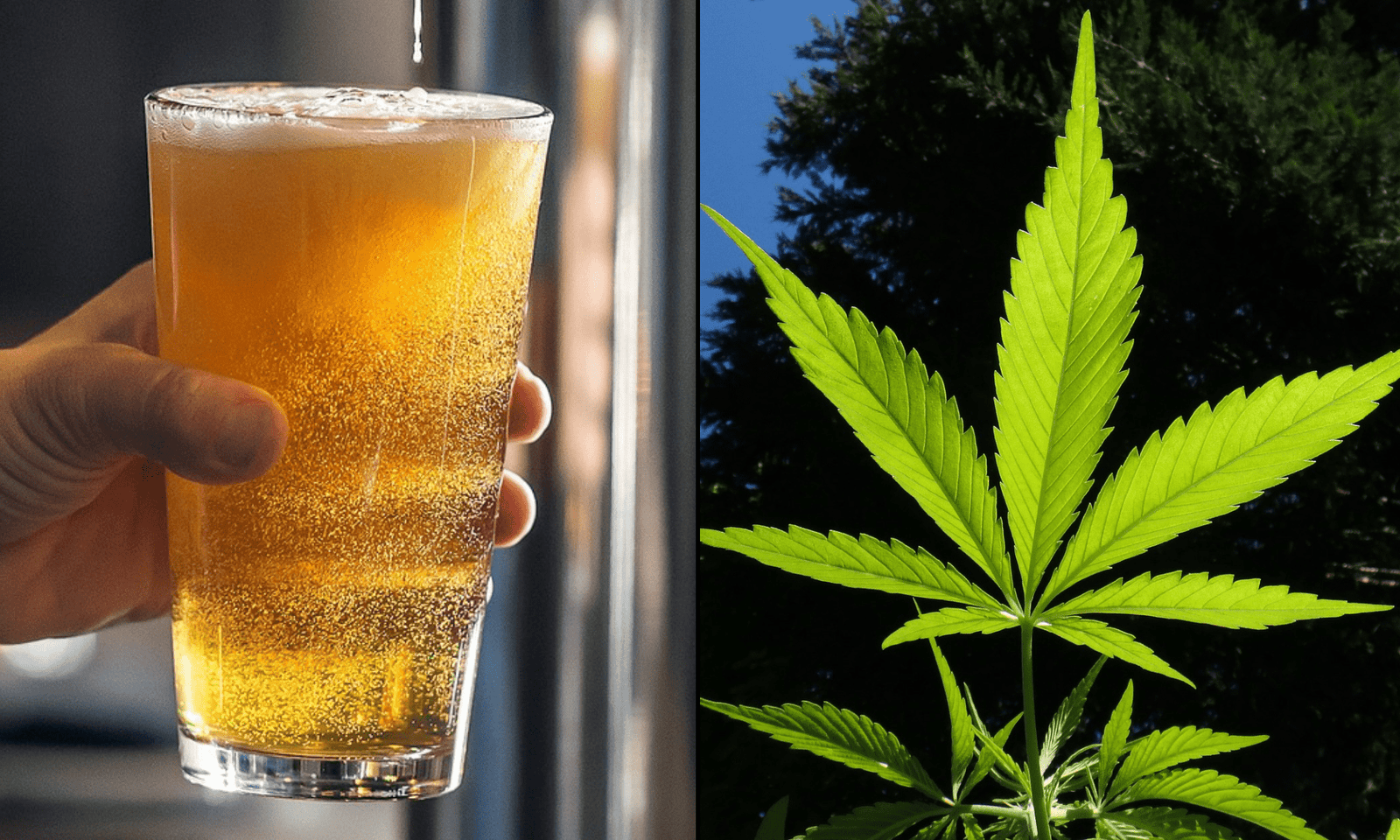
The Promise Of ‘Craft Cannabis’ Has Not Been Realized—Due To Policy Decisions Favoring Big Companies (Op-Ed)
Florida Lawmakers Approve Bill To Slash Medical Marijuana Card Fee For Military Veterans
Bipartisan Congressional Lawmakers File Bill Directing VA To Study Psychedelics As Alternative Therapies For Veterans
Virginia Lawmakers Approve Bill To Provide Marijuana Sentencing Relief To People With Prior Convictions
Alabama Medical Marijuana Regulators Extend Stay On Dispensary Due To Ongoing Litigation
Marijuana Use Isn’t A ‘Red Flag’ In The Dating Scene, Three In Four Americans Say In New Survey
10 Million US Adults Microdosed Psychedelics Last Year, New Report Shows
Marijuana’s Restrictive Federal Classification Isn’t Supported By Science, New Study Concludes
USDA Study Shows Untapped Potential Of Hemp Roots In Pediatric Cancer Treatment
More Than A Third Of Rap And Hip Hop Music Videos Feature Marijuana, Government-Funded Study Shows
Largest Entertainment Arena In US Partners With Cannabis Businesses To Sell THC Drinks At Concerts And Live Events
Woody Harrelson Got Kicked Out Of Two Bars For Smoking Marijuana With Matthew McConaughey’s Mom
State Marijuana Regulators Share Tips On How To Stay Safe And Legal Around The Holidays
One In Three Americans ‘Pre-Game’ With Marijuana Before Family Holiday Gatherings, Survey Finds
As More Americans Choose Marijuana Over Alcohol, Mainstream Media Notices The ‘Cousin Walk’ Thanksgiving Tradition
Montana Retailers Have Sold More Than $1 Billion Worth Of Recreational Marijuana Since Legalization Took Effect
Pre-Rolls Are A Key Driver Of The Cannabis Retail Market’s Success (Op-Ed)
Massachusetts Hits $10 Billion Marijuana Sales Milestone, With Top Official Saying Consumption Lounges Will Bolster Industry In 2026
Ohio Dispensaries Sold More Than $1 Billion Worth Of Legal Marijuana In 2025
Marijuana Consumers Are More Likely To Shop At Target Following Decision To Sell Cannabis-Infused Drinks, Poll Shows
DEA cannabis rescheduling rule coming “ASAP,” Trump insider says (Newsletter: January 29, 2026)
Government-run cannabis dispensary prepares to open next week (Newsletter: January 28, 2026)
Trump’s cannabis move undermines gun ban for users, Supreme Court brief says (Newsletter: January 27, 2026)
Virginia cannabis sales legalization bills advance (Newsletter: January 26, 2026)
MA voters regret signing anti-cannabis ballot petition, poll shows (Newsletter: January 23, 2026)
Published
on
By
“The central question is no longer whether cannabis will become a major American industry, but what kind of industry it will become.”
By Damian Fagon, Parabola Center for Law & Policy
For more than a decade, U.S. cannabis legalization has been framed as an opportunity for small producers, local brands and craft cultivation. In most adult-use states, that promise has not been realized.
Licensing data may suggest broad participation, but small-scale cannabis producers that survive beyond initial launch remain rare. What is commonly described as “craft cannabis” functions far more as a marketing label than as a stable economic segment.
This outcome is often attributed to market forces. Consolidation is treated as inevitable, scale as efficient and the exit of small operators as a natural feature of competition. That explanation falls short. The erosion of small cannabis producers reflects policy design choices, particularly the way competitive pressure has been introduced.
Across legal markets, states have required licensed producers to absorb full compliance costs and face wholesale price competition from the outset, well before small operators have had the opportunity to achieve basic operating stability. Firms pushed immediately into price competition while carrying high fixed regulatory costs and limited access to capital face structural barriers to survival that are difficult to overcome.
Other regulated industries offer a useful point of contrast. In sectors where small-scale production has remained economically viable, competition has been introduced more deliberately through specific institutional choices.
The craft beer industry illustrates this logic.
Craft breweries did not succeed because consolidation was prohibited or because competition was suspended. They succeeded because regulatory structures explicitly permitted early access to direct-to-consumer sales through taprooms and on-site retail, and in some cases limited self-distribution. These channels provided higher margins and immediate cash flow, allowing experimentation, brand development and operational learning before firms were fully exposed to wholesale price competition. Distribution pressure came later, once businesses had established financial footing.
Scale followed stability, resulting in a market in which large and small producers could coexist.
Cannabis is not beer, and the differences are material. Federal illegality, higher compliance burdens, product perishability and continued competition with illicit markets shape cannabis economics in ways alcohol never faced. These conditions make early stability harder to achieve.
Yet cannabis policy has largely moved in the opposite direction. Small operators are licensed into markets where full regulatory compliance applies immediately and wholesale competition begins before brands or products meaningfully differentiate.
Under these conditions, participation is measured at licensure, while survivability is left to market dynamics that favor well-capitalized firms. Wholesale prices often fall faster than operating costs, and access to capital determines which businesses can withstand prolonged losses. Many small producers operate near breakeven from inception or exit quietly.
These patterns recur across states with different political cultures and regulatory intentions and reflect the structural consequences of early exposure to full-scale competition.
Debates about craft cannabis often obscure this reality by treating craft as an aesthetic or cultural designation rather than an economic one. Craft cannabis depends on structural conditions that allow small producers to function as businesses rather than speculative ventures. At minimum, those conditions include temporary access to higher-margin sales channels, compliance requirements scaled to operational size and sufficient time to build demand before price competition eliminates margin.
Microbusiness licenses are frequently cited as evidence that states have made room for craft operators. In practice, many such licenses do the opposite.
By requiring firms to operate across multiple parts of the supply chain while meeting regulatory standards designed for much larger entities, these frameworks concentrate cost, risk and complexity at the earliest stage of operation. Rather than sequencing growth, they front-load exposure to the very pressures that craft-oriented policies in other industries were designed to delay.
Experience from craft beer and other speciality industries shows that competition functions best when it is sequenced through concrete policy levers. Introducing full price competition before firms have achieved basic operating stability carries predictable distributional effects.
As federal reform moves closer, the window for shaping what comes next is narrowing. Banking access, rescheduling and the prospect of interstate commerce will not democratize cannabis markets on their own. By lowering capital constraints and amplifying scale advantages, these changes are likely to reinforce existing market structures unless states intervene early.
Once consolidation is embedded through distribution networks, contract relationships and interstate competition, policymakers are left managing outcomes on terms they no longer control.
The central question is no longer whether cannabis will become a major American industry, but what kind of industry it will become.
Market design determines more than which firms survive. It shapes what producers are rewarded for, how products are differentiated and how closely businesses remain tied to local communities. Markets organized around early price competition tend to reward volume and capital over quality and consumer accountability by design.
Where stability precedes competition, differentiation becomes possible. Where it does not, consolidation becomes structural rather than incidental.
Damian Fagon is a former New York State cannabis regulator and currently a director at the Bronx Cannabis Hub and Parabola Center for Law and Policy.
Add Marijuana Moment as a preferred source on Google.
All the cannabis news you need, all in one place. Copyright © 2017-2026 Marijuana Moment LLC ® and Tom Angell