Investigative Journalism in the Public Interest
Regulation
Creative Commons License (CC BY-NC-ND 3.0)
Thank you for your interest in republishing this story. You are free to republish it so long as you do the following:
Leaders in the Colorado marijuana industry have complained in recent years that intoxicating products derived from hemp are endangering consumers and creating unfair competition, threatening to upend the first regulated recreational marijuana market in the United States.
While labs have developed the technology to distinguish between hemp and marijuana, the state has been slow to implement a random testing program to check the quality of products on dispensary shelves.
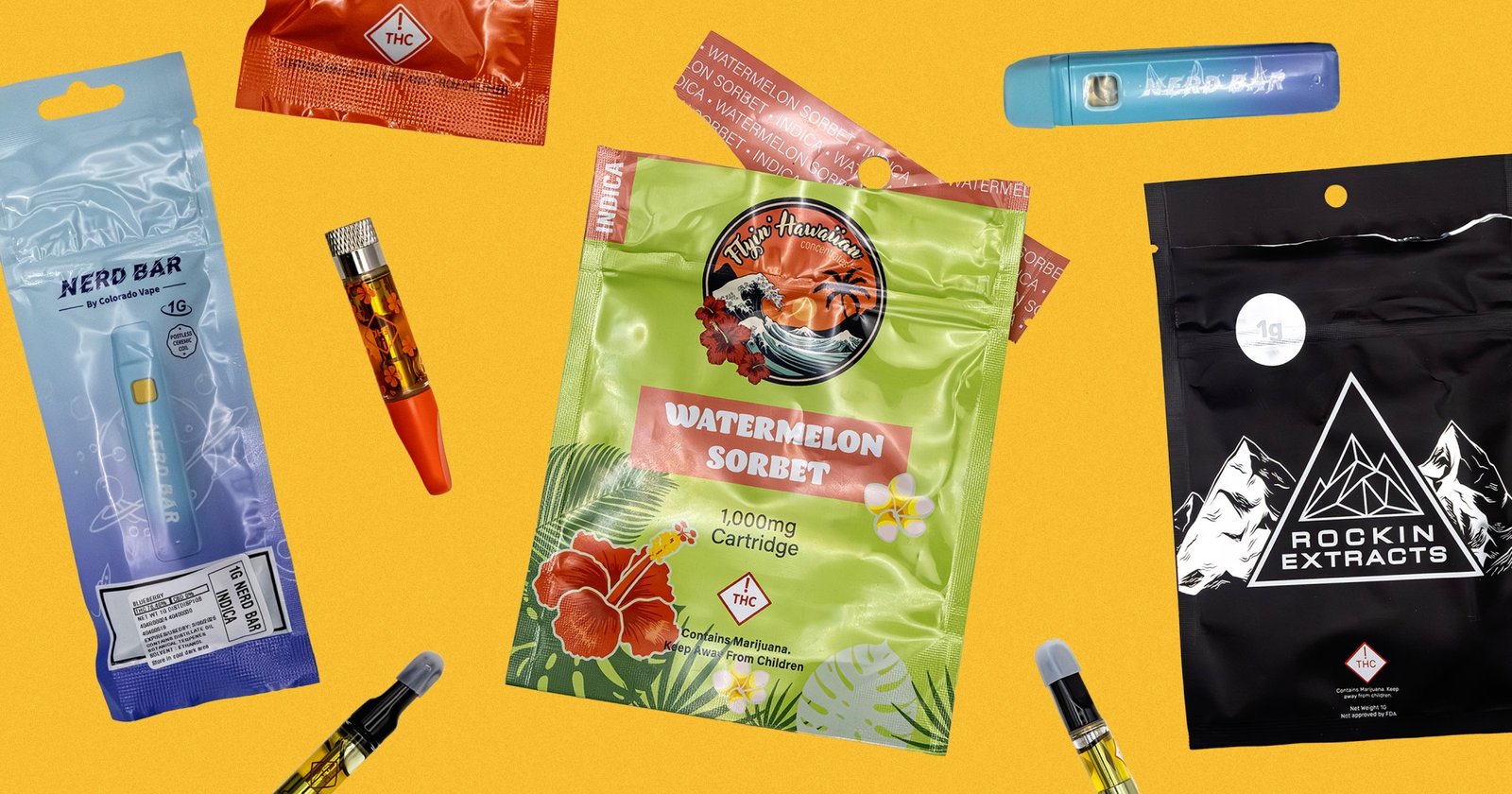
In the absence of official testing, The Denver Gazette and ProPublica set out to test whether the claims of widespread hemp substitution were accurate, purchasing 14 vapes at dispensaries across the Denver area.
Hemp naturally has high levels of the nonintoxicating compound CBD but only trace amounts of THC, the chemical in marijuana that gets people high. But some manufacturers have been caught by Colorado’s Marijuana Enforcement Division converting CBD from hemp into THC using solvents — a process banned in the state.
Labs can detect indicators of this process by looking for versions of THC known as delta-8 and delta-10, which often emerge when CBD from hemp is chemically converted to THC. They can also identify residues of solvents that are typically used in that process but not in marijuana production.
Three of the news organizations’ samples had levels of delta-8 or delta-10 THC between 1.1% and 3.3%, which experts said was significant because they rarely show up at those levels naturally.
“Anything beyond trace amounts is suspicious,” said Monica Pittiglio, the analytical director for Colorado Chromatography Labs, which has done research into hemp-derived THC. “Anything over 1% is insane,” she noted after reviewing the news outlets’ test results.
Experts consulted by the news organizations, however, weren’t unanimous that the results amounted to conclusive evidence of hemp-derived THC. Some noted that compounds extracted from plant material can degrade into those rarer compounds with age or imprecise processing.
The samples included products from:
Experts said findings like these could warrant further investigations into the processes used to make the products. They also said the ambiguity around determining conclusively whether a product was derived or partially derived from hemp highlights a need for more effective regulations.
The Marijuana Enforcement Division declined to comment on The Gazette and ProPublica’s test results.
Last fall, Colorado launched a pilot off-the-shelf testing program to buy products from dispensaries and double-check the work of labs. State regulators planned to collect up to 150 samples from October to December, a small fraction of the more than $1 billion in marijuana products sold in the state annually. But the new program has already run into delays.
Heather Draper, the division’s spokesperson, said the off-the-shelf testing program remains in “initial steps.” Permanently establishing it, she said, will require “increased resources with appropriate funding.”
Co-published with The Denver Gazette
This article was produced for ProPublica’s Local Reporting Network in partnership with The Denver Gazette. Sign up for Dispatches to get our stories in your inbox every week.
Leaders in the Colorado marijuana industry have complained in recent years that intoxicating products derived from hemp are endangering consumers and creating unfair competition, threatening to upend the first regulated recreational marijuana market in the United States.
While labs have developed the technology to distinguish between hemp and marijuana, the state has been slow to implement a random testing program to check the quality of products on dispensary shelves.
In the absence of official testing, The Denver Gazette and ProPublica set out to test whether the claims of widespread hemp substitution were accurate, purchasing 14 vapes at dispensaries across the Denver area.
Hemp naturally has high levels of the nonintoxicating compound CBD but only trace amounts of THC, the chemical in marijuana that gets people high. But some manufacturers have been caught by Colorado’s Marijuana Enforcement Division converting CBD from hemp into THC using solvents — a process banned in the state.
Labs can detect indicators of this process by looking for versions of THC known as delta-8 and delta-10, which often emerge when CBD from hemp is chemically converted to THC. They can also identify residues of solvents that are typically used in that process but not in marijuana production.
Three of the news organizations’ samples had levels of delta-8 or delta-10 THC between 1.1% and 3.3%, which experts said was significant because they rarely show up at those levels naturally.
“Anything beyond trace amounts is suspicious,” said Monica Pittiglio, the analytical director for Colorado Chromatography Labs, which has done research into hemp-derived THC. “Anything over 1% is insane,” she noted after reviewing the news outlets’ test results.
Experts consulted by the news organizations, however, weren’t unanimous that the results amounted to conclusive evidence of hemp-derived THC. Some noted that compounds extracted from plant material can degrade into those rarer compounds with age or imprecise processing.
The samples included products from:
Experts said findings like these could warrant further investigations into the processes used to make the products. They also said the ambiguity around determining conclusively whether a product was derived or partially derived from hemp highlights a need for more effective regulations.
The Marijuana Enforcement Division declined to comment on The Gazette and ProPublica’s test results.
Last fall, Colorado launched a pilot off-the-shelf testing program to buy products from dispensaries and double-check the work of labs. State regulators planned to collect up to 150 samples from October to December, a small fraction of the more than $1 billion in marijuana products sold in the state annually. But the new program has already run into delays.
Heather Draper, the division’s spokesperson, said the off-the-shelf testing program remains in “initial steps.” Permanently establishing it, she said, will require “increased resources with appropriate funding.”
During Donald Trump’s second presidency, ProPublica will focus on the areas most in need of scrutiny. Here are some of the issues our reporters will be watching — and how to get in touch with them securely.
Learn more about our reporting team. We will continue to share our areas of interest as the news develops.
I cover health and the environment and the agencies that govern them, including the Environmental Protection Agency.
I cover justice and the rule of law, including the Justice Department, U.S. attorneys and the courts.
I report on immigration and labor, and I am based in Chicago.
I cover housing and transportation, including the companies working in those fields and the regulators overseeing them.
If you don’t have a specific tip or story in mind, we could still use your help. Sign up to be a member of our federal worker source network to stay in touch.
© Copyright 2026 Pro Publica Inc.
Sign up for ProPublica’s Big Story newsletter and get our latest stories delivered straight to your inbox.