
Virginia Scope
Keeping you informed on state politics
by Brandon Jarvis
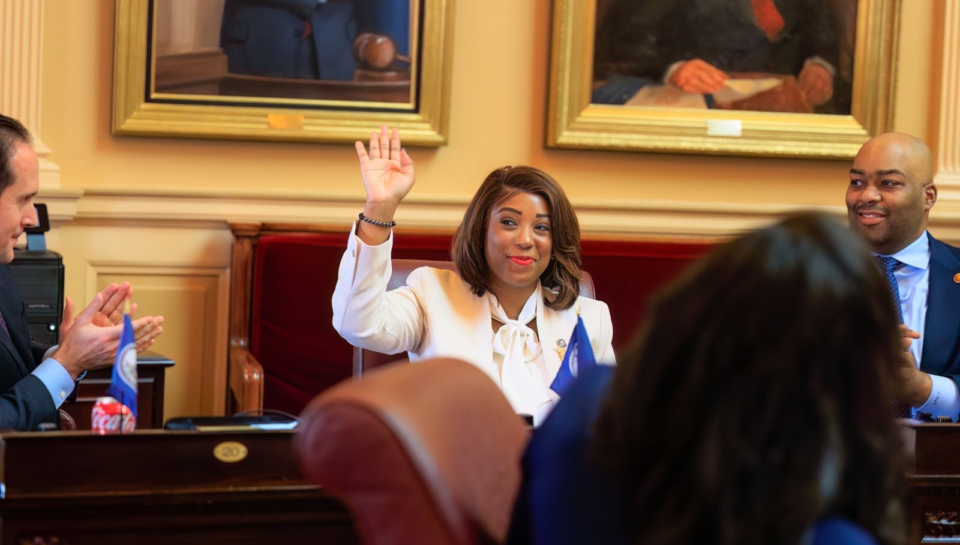
State Sen. Lashresce Aird, D-Henrico, and Del. Paul Krizek, D-Fairfax, responded to Gov. Abigail Spanberger’s proposed amendments to their legislation that would establish a retail marijuana market. Currently, marijuana is not illegal in Virginia, but there is no legal way to make recreational purchases.
“The Governor’s Substitute represents a significant departure from the framework passed by the General Assembly, raising serious concerns about fairness, access, and public safety,” Aird said in a statement.
And Krizek added, “The proposal creates a less accessible legal marketplace.”
Spanberger, in an interview with Virginia Scope Tuesday, said her amendments are intended to “clearly define what a legal market is” and ensure Virginia has enough time to build out the regulatory framework.
The governor wants to delay the originally planned start date of Jan. 1 by six months, eventually increase the sales tax, reduce the number of retail stores and impose new criminal penalties.
“By making the legal market harder to access, this proposal allows the illicit market to continue to thrive in every corner store in our Commonwealth,” Aird said. “That undermines the core goals of legalization and increases the likelihood of untested products, inconsistent potency, and lacks consumer protections.”
Spanberger said she spoke with governors in other states that already have retail markets to ask for advice.
“Across the board, the top priority that people continue to put forth is do it methodically — because you have to do it right the first time,” she said.
Spanberger also proposed multiple new criminal charges related to marijuana, including one that will make it a Class 2 felony to transport more than 50 pounds of marijuana across the border into Virginia. A Class 2 felony can result in life in prison.
Her changes would also create a mandatory minimum $500 fine and make it a Class 1 misdemeanor to possess marijuana if you are under 21 years old. The original legislation that passed out of the General Assembly imposed a $25 civil fine and a substance abuse education requirement.
In the General Assembly’s version, public consumption of marijuana would have carried a $25 civil fine for a first and second offense. Spanberger’s substitute instead makes the first offense a Class 4 misdemeanor — the same as public intoxication.
“As pleased as we are with moving the start date back, there is a list of concerns regarding the criminal penalties that will undoubtedly be felt by Black, Latino and low income communities,” said Chelsea Higgs Wise, the executive director of Marijuana Justice.
Spanberger said the changes are intended to better align the retail market with how the law is enforced.
“It’s about making very clear that while we have a legal recreational marijuana market, or we are moving towards a retail recreational marijuana market, that it’s still clear that there are certain things that continue to be illegal,” she said.
Spanberger also wants to increase the sales tax from 6% to 8% on July 1, 2029, and reduce the number of stores in the commonwealth to 200, compared to 350 in the original bill.
The governor proposed an amendment to another piece of legislation that would automatically trigger the court system to reconsider past sentencing decisions once legalization is in place.
Spanberger’s amendment changed the review from automatically triggering to one that requires a petition to be filed first.
Del. Rozia Henson, D-Prince William, who sponsored the legislation, released a statement in response.
“I share the governor’s commitment to ensuring that violent offenders are not eligible for this relief,” he said, pointing out that the original legislation excluded individuals convicted of violent crimes.
“What I continue to believe, however, is that this amendment changes something else entirely: whether the people who do qualify will have to find their own way to the courthouse door.”
Henson said he will accept Spanberger’s amendment proposal, while also stating that “acceptance is not the same as agreement.”
Senate Majority Leader Scott Surovell, D-Fairfax, spoke with reporters Tuesday morning about what he called “sweeping changes” to legislation from the governor in the final hours before her 11:59 p.m. deadline to take action on Monday.
“I would say, in a normal legislative process, if there are changes in this magnitude that a governor wants, they’re normally communicated during the legislative process so they can be taken into account and vetted in public hearings, where the public has an opportunity to speak and stakeholders can make their position known,” Surovell said. “I think she seems to have a different point of view about how much power the governor should have to define policy.”
Spanberger responded to a question about these general complaints during a press call Tuesday afternoon.
“There was a little bit of pent-up desire to see a variety of bills get signed into law,” she said. “Many priorities I did sign into law, but it also means that for the big things, I did take a line-by-line approach to make sure that the bills that I am implementing, ultimately the laws that I am signing, are something that I can set up for success.”
Your email address will not be published.
Virginia Scope
Keeping you informed on state politics
Proudly powered by WordPress | Theme: Newsup by Themeansar.