
Now
67°
Wed
79°
Thu
81°
President Trump delivers the State of the Union to Congress.
by Tiffany Lane
Las Vegas (KSNV) — Schools across Nevada are having to lose staff amid budget challenges next school year.
Districts are citing lower enrollment and increased employee costs as some of the main reasons behind the reduced budgets starting in the Fall.
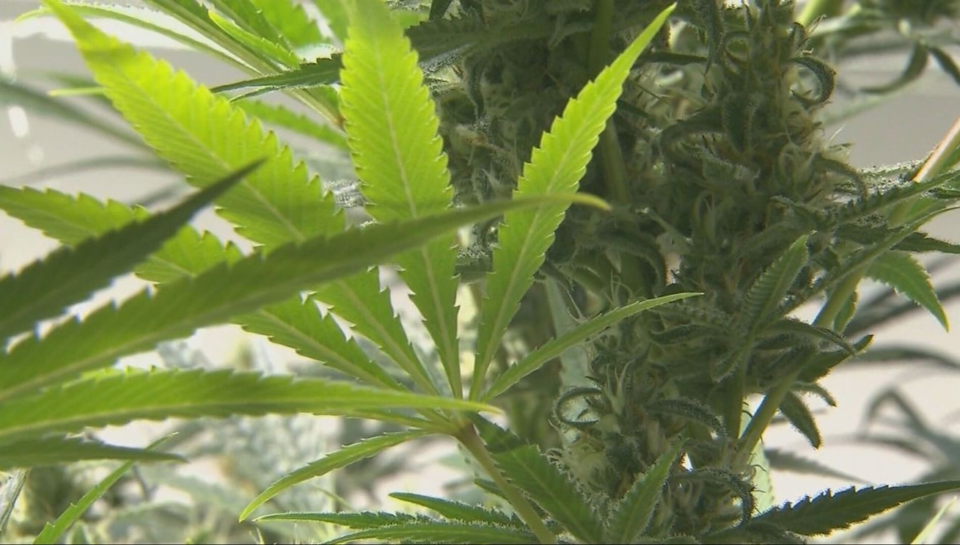
While they're working to make up for the difference, we've been hearing the same question from many of our viewers: Where is the marijuana money that is allocated by the state towards K-12 education?
The money is going towards K-12 education.
But it's not enough to create a major impact.
Since 2018, Nevada schools have received nearly $812 million from Nevada's marijuana tax, according to the Guinn Center and the Cannabis Compliance Board.
It sounds like a lot of money to the average person.
But when it comes to education funding, where the budget is in the billions, it's a small percentage.
Another challenge is that marijuana tax revenue has seen a decrease over the last few years.
"That's concerning, because one of the things that we know about the cost of education is that continues to rise on a year to year basis, increases in cost of labor, increases in costs of supplies, everything becomes more expensive. That's what inflation is all about," said Guy Hobbs.
Hobbs is the chairperson for the Nevada Commission on School Funding, the group created to come up with the per student funding plan that also came up with a 10-year plan to achieve optimal school funding levels in the Silver State.
Hobbs says the funding discussion is an important one.
Right now, Nevada is about $4,000 below the national average.
It's the money that goes towards schools based on student enrollment and is used for things like employee salaries, supplies, and operating expenses.
"You oftentimes hear discussions about sufficiency of teacher salaries and other professionals that work in the school districts, and you know this is directly related to that as well," said Hobbs. "Your ability to attract and retain educators is something that's hugely important."
It also leaves parents concerned.
"I would love for my children to benefit from consistent, stable funding that adequately funds the entire public education system," said Anna Marie Binder, a parent and community advocate.
Another way to look at the numbers is using CCSD's student enrollment this year of about 277,083 students.
If per-student funding were increased by $4,000, which is how much below the national average Nevada is, CCSD alone would have received about $1.1 billion more this school year.
The Commission on School Funding says there needs to be significant increases to Nevada K-12 funding over the next few years to get funding where it needs to be.
"I think the best way of describing that is you need $250 million in new revenue each year for 10 years," said Hobbs. "So, it's additive to each prior year. So by the time you get to that 10th year, you have roughly two and a half to 2.6 billion more appropriated.
So getting on average about $100 million in marijuana tax revenue a year isn't sufficient.
It's just one of several revenue streams going into K-12 schools right now, including the major ones- sales and property taxes.
The Commission on School Funding is recommending looking at options moving forward, including modernizing sales tax to include digital items.
"You used to go to a bookstore, Barnes and Noble or borders or wherever, and buy a book, and you paid sales tax when you bought the book. Now, you download the book, you don't pay any sales tax to get the book," said Hobbs.
Hobbs, as well as Amanda Morgan with Educate Nevada Now, say reviewing property taxes is another option.
"We have some pretty archaic and unique property tax laws in our state that could be addressed," said Morgan, the executive director of Educate Nevada Now. "So let's say if someone moves into Nevada from California, they're not benefiting from depreciation and value of a home and things like that. So there's a lot of great solutions."
Like every session, many expect education funding to be a major conversation in the 2027 legislative session.
2026 Sinclair, Inc.