
Home » Politics
UPDATE, 8:45 AM ET, April 23, 2026: Acting Attorney General Todd Blanche has officially signed an order rescheduling FDA-approved marijuana products and state-licensed medical marijuana from Schedule I to Schedule III. Story updated below with full details.
Acting Attorney General Todd Blanche has signed an order rescheduling FDA-approved marijuana products and state-licensed medical marijuana from Schedule I to Schedule III of the Controlled Substances Act. This is the most significant federal cannabis policy shift in decades. It is not legalization — and it does not cover recreational cannabis. Here’s what actually changed.
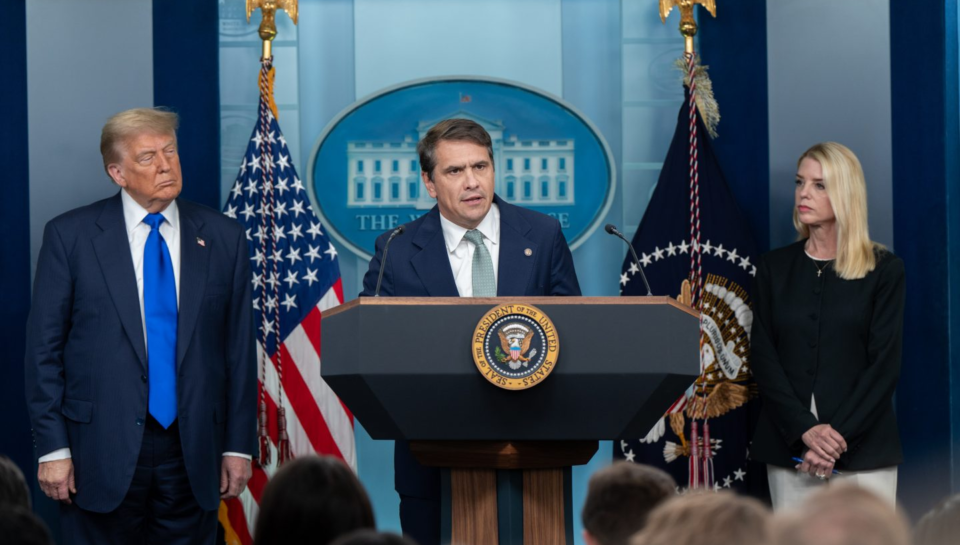
The Trump administration officially moved Thursday to reclassify marijuana under federal law. Acting Attorney General Todd Blanche signed an order moving FDA-approved marijuana products and state-licensed medical marijuana from Schedule I to Schedule III of the Controlled Substances Act, confirming the action in an official statement and posting directly on X. The announcement was reported by the Associated Press. Blanche outlined a two-track approach: immediate rescheduling of FDA-approved marijuana products and state-licensed medical marijuana to Schedule III, and a new expedited hearing process — with set deadlines beginning June 29 — to consider the full rescheduling of all marijuana.
“Under the decisive leadership of President Trump, this Department of Justice is delivering on his promise to improve American healthcare,” Blanche wrote. “These actions will enable more targeted, rigorous research into marijuana’s safety and efficacy, expanding patients’ access to treatments and empowering doctors to make better-informed healthcare decisions.”
Under the decisive leadership of @POTUS, this Department of Justice is delivering on his promise to improve American healthcare. This includes:
• Immediately rescheduling FDA-approved marijuana and state-licensed marijuana from Schedule I to Schedule IIl
• Ordering a new,… pic.twitter.com/DUtqKQgavl
The move follows a December 18 executive order in which President Trump directed the attorney general to complete the rescheduling process “in the most expeditious manner possible.” Trump himself complained just days ago, during a Saturday signing ceremony for a separate psychedelics order, that federal agencies were “slow-walking” him on cannabis. “You’re going to get the rescheduling done, right, please?” he said, apparently addressing a DOJ or White House official in the Oval Office. Blanche ultimately sidestepped the existing DEA review process by relying on a provision of federal law that allows the attorney general to determine classification for drugs the U.S. must regulate pursuant to an international treaty.
The rescheduling process has a longer history. The Biden administration launched a formal review in 2022. In 2023, Health and Human Services concluded cannabis has accepted medical use and recommended Schedule III. The DEA process stalled. Hearings were delayed. Nothing was finalized before Trump took office for his second term.
Ricardo Baca, founder and CEO of public affairs firm Grasslands and former cannabis editor of The Denver Post, called the moment historic while cautioning against overcelebration. “While most Americans still don’t understand what this reclassification means — because it’s not full legalization or even the descheduling of cannabis so that it’s treated like alcohol — that doesn’t mean today’s move isn’t still historic,” Baca said. “Once cannabis is moved to Schedule III, we will have witnessed the single-biggest U.S. drug policy shift of our lifetimes.”
This is the most important detail to understand: the rescheduling applies specifically to FDA-approved marijuana products and state-licensed medical marijuana. Marijuana outside those systems — including recreational cannabis in adult-use states — remains classified as Schedule I. A new administrative hearing process launching June 29 will consider the broader rescheduling of all marijuana.
✅ What it does
Formally acknowledges accepted medical use for FDA-approved marijuana products and state-licensed medical marijuana
Gives state-licensed medical marijuana operators access to federal tax deductions previously blocked by 280E
Eases barriers to federal research
Creates expedited DEA registration for licensed medical operators
Launches June 29 hearing process for full rescheduling of all marijuana
❌ What it doesn’t do
Does not legalize cannabis federally
Does not reschedule recreational cannabis — it stays Schedule I
Does not affect sentences of people incarcerated for cannabis
Does not automatically change workplace drug testing policies
Does not permit interstate commerce
Does not create home grow rights
Does not decriminalize cannabis or expunge records
Cannabis has been classified as Schedule I since the early 1970s — the same category as heroin and LSD, defined as having no accepted medical use. Schedule III substances are recognized as having medical value with moderate to low potential for dependence. The reclassification moves FDA-approved marijuana products and state-licensed medical marijuana into that category. Forty states operate medical cannabis programs that are now effectively legitimized at the federal level. Only Idaho and Kansas maintain full prohibition. Recreational cannabis in adult-use states remains federally illegal under Schedule I pending the June 29 hearing process.
The most immediate financial impact is on IRS code 280E. Under Schedule I or II, plant-touching businesses have been unable to deduct ordinary business expenses — rent, payroll, utilities — from their federal taxes. State-licensed medical marijuana operators now have access to those deductions. Recreational-only operators in adult-use states are in a less certain position until the June 29 hearing process clarifies their status.
Cannabis companies including Canopy Growth, Tilray Brands and Trulieve Cannabis have been cited by Reuters as likely beneficiaries of rescheduling. Trulieve CEO Kim Rivers was present at the Oval Office for Trump’s December executive order signing.
But operators shouldn’t expect overnight change, according to Mark Lewis, President of Specialty Payments at cannabis payments platform Lüt. “The biggest misconception is that rescheduling suddenly normalizes the business of cannabis,” Lewis said. “The financial system doesn’t move at the speed of a headline. Banks, card networks and regulators are still reacting to risk, and when risk is unclear, their default is to pull back, not lean in.” Lewis noted that until legislation like the SAFE Banking Act passes, cannabis businesses will continue operating with structural financial disadvantages that rescheduling alone does not fix.
For many advocates, the financial relief for businesses is real but incomplete without addressing what the war on drugs cost the communities it targeted most aggressively. Sasha Nutgent, VP of Cannabis Retail at Housing Works Cannabis Co — one of the country’s most prominent social equity operators — welcomed the shift but was direct about its limits.
“Rescheduling doesn’t undo the deeper harm caused by decades of the War on Drugs. The same communities hit hardest are still working to gain fair access to this industry, and that can’t be overlooked and won’t change overnight. Cannabis should never have been classified the way it was in the first place. This is a step forward, but there’s still a lot of work to do to get it right.”
Today’s action is the first step in a two-track process. The immediate rescheduling covers FDA-approved marijuana products and state-licensed medical marijuana. The broader question — whether recreational cannabis and unlicensed products also move to Schedule III — will be addressed in a new administrative hearing process launching June 29, with set deadlines. Cannabis analyst Pablo Zuanic had outlined two possible scenarios ahead of the announcement: a fast path where a final order drops directly into the Federal Register with a 30-day challenge window, and a slower path involving two to three months of hearings. The June 29 timeline confirms the administration is taking the more deliberate route for the broader rescheduling question.
Legal challenges from opponents of cannabis reform are still expected. More than 20 Republican senators signed a letter last year urging Trump to maintain current restrictions. The DEA and reform proponents also have a pending interlocutory appeal concerning allegations of agency bias during the earlier review process — that proceeding remains unresolved.
It was also unclear Thursday how the order might affect operations in states where licensed recreational shops also serve registered medical patients. In Washington state, 302 of 460 licensed stores have endorsements allowing them to sell tax-free cannabis to registered patients — the implications for those operators remain to be clarified.
Rescheduling is movement. It is not freedom.
High Times has covered the rescheduling debate extensively since Trump’s December executive order — and our publisher shares that measured view. “Rescheduling cannabis would be a meaningful acknowledgment that this plant has real medical value, but let’s not pretend it is the finish line,” said Josh Kesselman, publisher of High Times and founder of RAW Rolling Papers. “It is not legalization, it is not descheduling, and it does not automatically fix the deeper problems in federal cannabis policy. My concern is simple: if Washington gets this wrong, reform could end up favoring the biggest, best-connected players while leaving small farmers, independent operators and the people who built this movement behind.”
Kesselman added: “This plant should not be handed over to a handful of corporate gatekeepers. Any real reform has to protect access, protect small businesses, support research and move us closer to full normalization — not create a system where the culture gets pushed aside and the benefits flow only to insiders. Rescheduling may be progress, but only if it leads to something broader, fairer and more honest than what we have now.”
For deeper context, read our full coverage: Cannabis Rescheduling Questions Answered | What the Executive Order Doesn’t Do | Why Schedule III Could Be a Trap | Rescheduling Is Just the Opening Move
This story was originally published April 22, 2026 and updated April 23, 2026. Sources: Axios, MJBizDaily, Reuters, Marijuana Moment, Associated Press, IgniteIt, Todd Blanche / X.
Get notified of our the latest cannabis news, exclusive brand deals, events updates and more!