
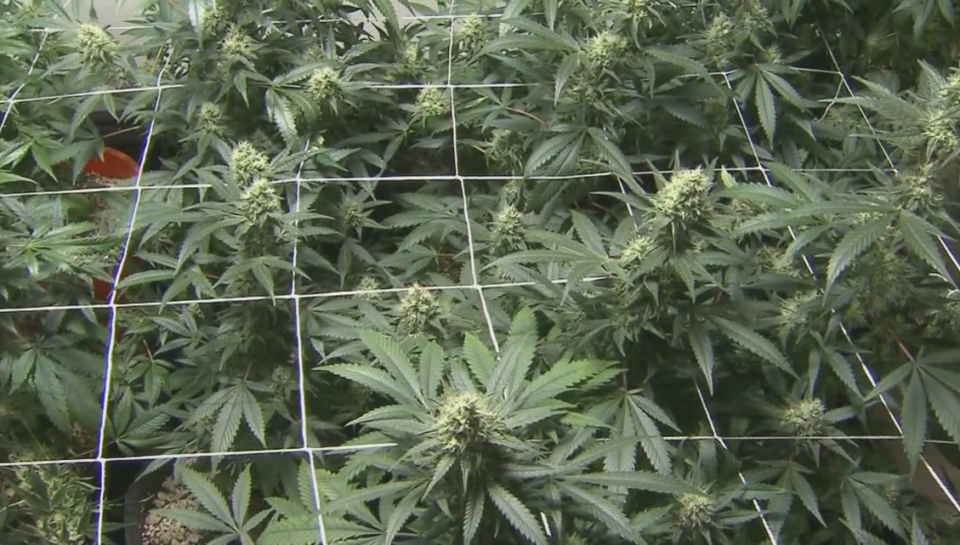
DENVER — The Trump administration’s reclassification of medical marijuana as a Schedule III controlled substance is poised to significantly expand research opportunities for scientists in Colorado, a state that has had legal medical marijuana since 2001 but whose researchers say federal policy has long lagged behind.
The rescheduling, which applies exclusively to Food and Drug Administration-approved medical marijuana products and state-licensed medical marijuana businesses, marks a shift in how the federal government regulates cannabis. Recreational marijuana is not included in the order.
Shannon Donnelly, a cannabis professor at Metropolitan State University of Denver, said the research community has been anticipating the move for years.
“We have been waiting for the federal government to catch up,” Donnelly said.
The reclassification changes not only who can be studied, but also how and where research can be conducted. Under the previous scheduling, researchers were limited to a single federally licensed source for cannabis used in studies. The new rules could allow Colorado’s own state-licensed medical marijuana cultivators to supply research-grade cannabis directly to scientists.
“So with this Schedule III, we are actually going to see, possibly even cultivators here in Colorado who are medical marijuana cultivators, be able to provide research-grade cannabis to our researchers,” Donnelly said.
Donnelly said that expanded access could allow scientists to investigate highly specific questions about the plant’s medical applications.
“It could be looking into what terpenes are better for people who deal with anxiety, what cannabinoids are going to be the best for insomnia, and where they can’t stay asleep,” she said.
The reclassification also aligns federal policy more closely with what many medical marijuana consumers already report experiencing. Donnelly said the move effectively signals federal acknowledgment of those claims.
“So a consumer may say, ‘Hey, I know cannabis helps for my headaches or helps me with my insomnia.’ Now the federal government says, ‘Let’s research it,'” Donnelly said.
Among the populations expected to receive particular research attention are senior citizens and cancer patients.
“What we are going to see now with this rescheduling is probably a focus on how medical marijuana can help this population, also a focus on how maybe medical marijuana can help people who are dealing with cancer,” Donnelly said.
Colorado is home to the Institute of Cannabis Research, a state-funded organization that Donnelly said had previously operated under significant constraints.
“We have an institute here in Colorado, the Institute of Cannabis Research, that is state-funded and actually really focuses on researching cannabis, and until this order, it had been limited on what that scope would be,” she said. “And now we are actually going to see way more research pathways with this schedule change.”
Donnelly noted that while President Trump’s December executive order focused broadly on cannabis, the final rescheduling is narrower in scope.
“The only things that are rescheduled are FDA-approved medical marijuana products and state-licensed medical marijuana businesses,” she said.
Researchers at MSU Denver say they are already looking ahead to what studies may now be possible.
“So those questions have been asked, and now I think we are even closer to being able to do that research,” Donnelly said.
To stream 9NEWS on your phone, you need the 9NEWS app.
Next up in 5
Example video title will go here for this video
Next up in 5
Example video title will go here for this video
In Other News