
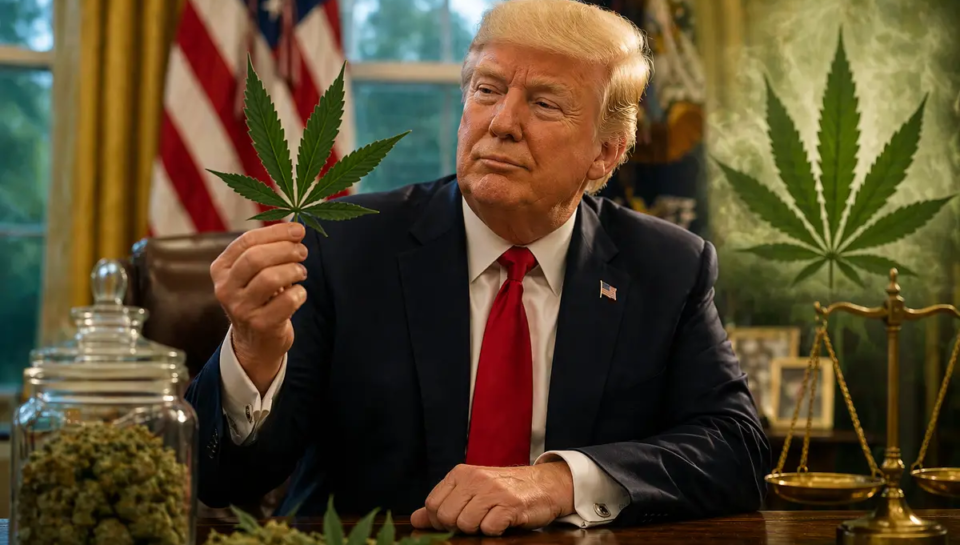
As per reports, the Donald Trump administration may reclassify marijuana to Schedule III, easing research rules but not legalising it or changing criminal sentences
The Trump administration is reportedly preparing to reclassify marijuana as early as Wednesday (April 22), according to an administration official familiar with the plan. The proposed move would not legalise cannabis federally, but it would significantly ease restrictions on research and medical studies by reducing barriers imposed by the US Drug Enforcement Administration.
Currently, marijuana is listed as a Schedule I drug, alongside substances such as heroin and LSD, defined as having no accepted medical use and a high potential for abuse. Under the proposed change, it would be moved to Schedule III, a category that includes drugs like ketamine and anabolic steroids. This shift would make it easier for scientists to study marijuana’s potential medical applications, especially for conditions such as chronic pain, epilepsy, cancer-related symptoms, and neurological disorders.
Also Read: Who is Julia Varvaro? DHS counterterrorism official faces ‘sugar daddy’ allegations, ex-boyfriend claims spark watchdog probe
It would also provide financial relief to cannabis companies, which currently cannot deduct standard business expenses under federal tax law due to marijuana’s Schedule I status, resulting in unusually high effective tax rates.
The move follows a previous executive order signed by President Donald Trump directing officials to review federal marijuana classification, continuing broader bipartisan interest in cannabis reform. Officials emphasized that the change would not legalize marijuana nationwide or affect criminal sentences for past possession.
Reclassifying marijuana to Schedule III would remove major regulatory barriers that currently limit scientific study. Researchers would gain easier access to approvals and materials needed to study cannabis more freely under federal oversight. Supporters of the move argue it could accelerate understanding of marijuana’s therapeutic potential, particularly for patients with severe or treatment-resistant conditions. However, it would still remain a controlled substance under federal law.
While the policy shift could ease financial pressure on cannabis companies by allowing standard tax deductions, it would not change the overall legal status of marijuana as a controlled substance. Federal legalisation would still require congressional action, and enforcement laws around possession and distribution would largely remain unchanged under this reclassification.
With over 12 years of experience in journalism, Jatin is currently working as Senior Sub-Editor at WION. He brings a dynamic and insightful voice to both the sports and the world o…Read More