
Bipartisan Lawmakers Press Trump For Marijuana Rescheduling Guidance—Including Whether Medicare Will Cover Medical Cannabis
Federal Judge Lifts Block On Rhode Island Marijuana Business Licensing Process
The Cannabis Industry Should Join Us In Supporting Hemp Drink Regulation Over Prohibition, Alcohol Industry Lobbyist Says (Op-Ed)
South Dakota Sees Surge In Patients Growing Medical Marijuana At Home
DEA And Anti-Marijuana Groups File Final Briefs In Hearing On Trump Administration Rescheduling Proposal
Medical Marijuana Improves Sleep Satisfaction And Boosts Quality Of Life, Study Shows
Marijuana Legalization Boosts Agriculture Jobs In States That Enact It, New Study Shows
Medical Marijuana Improves Pain, Sleep And Anxiety In Women With Endometriosis While Also Reducing Opioid Use, Study Shows
VA Launches New Study Using Psilocybin To Treat Veterans With Depression And PTSD
CBD Has ‘Potentially Performance-Enhancing Properties’ In Sports And May Help Athletes Recover After Exercise, Study Shows
Boxing And Combat Sports Officials Consider Marijuana Breathalyzer Device For Fighters
Sports Leagues Should Reduce Anti-Marijuana Stigma And Provide Honest Education For Athletes, New NFL-Funded Study Concludes
State Marijuana Officials Educate World Cup Fans About How To Celebrate Legally And Responsibly While Visiting
WNBA Removes Marijuana From Banned Substances List And Sets Rules For Player Endorsements Of Hemp CBD Products
Americans Say Marijuana Is Less Cool Than Math And Country Music—But Is Cooler Than Guns Or Cryptocurrency, Survey Shows
Marijuana Could Generate $111 Billion In Tax Revenue Over A Decade If Legalized Federally And In All 50 States, Yale Report Shows
Illinois Recreational Marijuana Dispensaries Can Apply To Sell Medical Cannabis With New Form Posted By State Officials
Alcohol Retailers And Wholesalers Support Bill To Keep Hemp THC Drinks Federally Legal
Square Tells Businesses To Stop Selling Hemp And CBD Products In Light Of Upcoming Federal Ban
Marijuana Business Sues New Jersey Officials In Federal Court Over Labor Union Requirements
Final briefs filed in cannabis rescheduling hearing (Newsletter: August 19, 2026)
USPS could deliver medical cannabis under rescheduling, state officials say (Newsletter: August 18, 2026)
Senate candidates clash on cannabis (Newsletter: August 17, 2026)
DEA defends synthetic cannabinoid ban (Newsletter: August 14, 2026)
Trump “misinformed” on hemp issue, Republican senator says (Newsletter: August 13, 2026)
Published
on
By
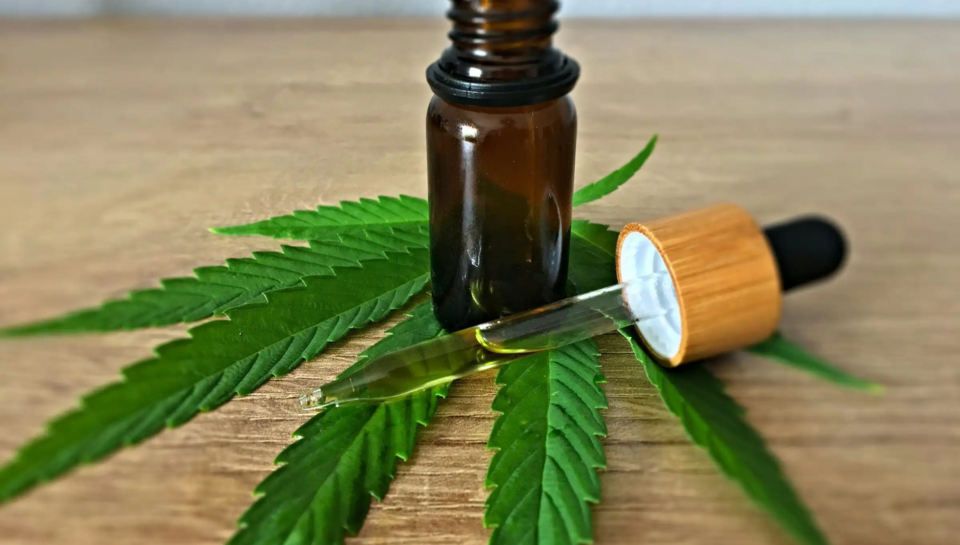
Full-spectrum cannabis oil is associated with “favorable perceived quality of life and sleep satisfaction,” according to a new study of medical marijuana patients. Higher concentrations and longer treatments also seemed to produce “higher odds of better outcomes.”
Researchers at State University of Montes Claros conducted a cross-sectional observational survey involving 71 medical patients enrolled in Brazil’s medical marijuana program. Respondents included people who use marijuana for psychological conditions (37 percent), neurological disorders (21 percent) and chronic musculoskeletal pain (11 percent) that can contribute to sleep issues.
The study, published in the journal Frontiers in Pharmacology, found that the use of cannabis oil with a 3:1 THC-to-CBD ratio was linked to “positive correlations” between the “psychological domains of quality of life and sleep satisfaction.”
About half of patients reported using marijuana-derived preparations with concentrations of 6 percent, followed by 9 percent (20 percent of patients) and 3 percent (14 percent of patients). The participants were monitored by medical professionals throughout the treatment, with laboratory reviews and assessments of “medication concentration adequacy,” for example.
Notably, the researchers determined that higher cannabis oil concentrations and longer treatment durations were associated with “higher odds of better outcomes.”
“In a real-world clinical context, supervised use of full-spectrum medical Cannabis oil was associated with favorable patient-reported perceptions of quality of life and sleep, consistent with perceived effectiveness,” the study said. “These findings highlight the need for longitudinal studies with pre-treatment baseline assessment.”
To analyze the impact of medical marijuana, patients completed a version of the World Health Organization Quality of Life questionnaire that asked about “physical, psychological, social relations and environment domains,” as well as an equivalent to the Pittsburgh Sleep Quality Index to determine “subjective and objective sleep components” over four weeks before the test was administered.
“A key finding was the relationship between sleep and wellbeing as an integrating axis, evidenced by the positive correlation between psychological domains [of the life quality survey] and sleep satisfaction,” the study authors said. “Consistent with prior evidence, systematic reviews and scoping reviews on cannabinoids and sleep indicate that subjective improvements are frequent but inconsistent, varying substantially according to population, metabolite, dose, ratio of cannabinoids, and route of administration.”
The study findings are “consistent with the hypothesis that cannabinoid interventions may influence wellbeing through direct and indirect pathways (sleep, relaxation, anxiety reduction, and symptom modulation), beyond the primary control of a target symptom,” they wrote.
“In summary, the results suggest that, in supervised clinical practice, patients using full-spectrum THC and CBD rich oil reported favorable perceived quality of life and sleep satisfaction. However, given the cross-sectional design and the absence of pre-treatment assessment, these findings reflect self-reported perceptions rather than evidence of treatment efficacy, and causal interpretation is not warranted. Future longitudinal studies, with pre-treatment assessment, systematic follow-up, and more detailed product characterization, are needed to clarify mechanisms, responding subgroups, and the risk-benefit balance of prolonged use, especially in products with higher THC content.”
The study reaffirms some of the best-studied health impacts of cannabis. That is, it has been shown to hels people sleep and feel physical and psychological symptom relief.
For example, research published earlier this summer found that a cup of tea infused with marijuana before going to bed can lead to a better night’s sleep and an overall improved sense of happiness in life.
“The results demonstrated a statistically significant increase in happiness levels between pre-experimental and post-experimental groups, indicating that cannabis-infused tea had a positive effect on participants’ well-being,” the study, published in the Journal of Health Science and Medical Research, found.
A study of adults who drink cannabis-infused beverages that was published earlier this year, for example, found evidence of a “substitution effect,” with a significant majority of participants reporting reduced alcohol use after incorporating cannabinoid drinks into their routines. It also identified improvements in overall wellbeing and sleep, as well as reductions in pain, stress, depression and anxiety.
A survey from the American Academy of Sleep Medicine found that about 2 in 3 Americans who use marijuana say it improves their sleep.
Separate research involving more than 3,500 patients showed that using medical marijuana appears to help people reduce the use of medications, including sleeping aids. They also experience far fewer negative side effects after switching to cannabis from prescription drugs.
A 2025 study on the use of medical marijuana by older patients—age 50 and above—concluded that “cannabis seemed to be a safe and effective treatment” for sleep disorders, pain and other conditions.
About 16 percent of Americans aged 21 and older say they use cannabis as a sleep aid, according to a separate industry-backed survey from last year. That makes marijuana more popular for sleep than prescription sleep aids (12 percent) or alcohol (11 percent), but still not quite as common as using supplements (26 percent) or over-the-counter sleep aids (19 percent).
A pair of 2024 studies found that both older medical marijuana patients as well as people with fibromyalgia reported that cannabis improved their sleep.
A different study that year from the retirement group AARP found that marijuana use by older people in the U.S. has nearly doubled, with better sleep as among the most frequently cited reasons.
Another industry-backed survey last year found that an oral CBD solution effectively treated mild to moderate anxiety, as well as associated depression and poor sleep quality, with no serious adverse events observed.
A study published in 2024, meanwhile, found that using marijuana before sleep has minimal if any effect on a range of performance measures the next day, including simulated driving, cognitive and psychomotor function tasks, subjective effects and mood.
In 2023, a federally funded study found that people with anxiety experienced better quality sleep on days when they used marijuana compared to days when they used alcohol or nothing at all.
Separate studies in 2019, meanwhile, found that fewer people purchased over-the-counter (OTC) sleep medications when they had legal access to cannabis and that many adult-use consumers at the time said they used marijuana for the same reasons medical cannabis patients did: to help with pain and sleep.
Tom Angell is the editor of Marijuana Moment. A 25-year veteran in the cannabis and drug law reform movement, he covers the policy, politics, science and culture of marijuana, psychedelics and other substances. He previously reported for Forbes, Marijuana.com and MassRoots, and was given the Hunter S. Thompson Media Award by NORML and has been named Journalist of the Year by Americans for Safe Access. As an activist, Tom founded the nonprofit Marijuana Majority and handled media relations, campaigns and lobbying for Law Enforcement Against Prohibition and Students for Sensible Drug Policy.
Add Marijuana Moment as a preferred source on Google.
All the cannabis news you need, all in one place. Copyright © 2017-2026 Marijuana Moment LLC ® and Tom Angell