
Marijuana Industry Banking Access Is A ‘Quandary’ That Needs To Be Solved With Legalization, Key GOP Senator Says
Pennsylvania Senate Panel Approves Bill To Regulate Marijuana And Hemp, With New Amendments
North Carolina Voters Could Decide To Legalize Marijuana At The Ballot In November Under New Senate Bill
‘Medical Marijuana Is Now Legal In South Carolina,’ GOP Senator Declares As Republican Governor Candidate Calls It A ‘Gateway Drug’
Marijuana Groups Urge Virginia Governor Not To Veto Sales Legalization Bill, Even After Lawmakers Rejected Her Amendments
Medical Marijuana Can Be A ‘Profoundly Helpful Tool’ For Seniors Dealing With Pain And Other Maladies (Op-Ed)
There’s ‘Strong Public Demand’ For Bigger Marijuana Reform Than Trump’s Rescheduling Move, Federally Funded Study Shows
Chinese Researchers Reveal Ancient Use Of Cannabis As ‘Indispensable’ Crop That Was ‘Deeply Integrated’ Into Daily Life
Teen Marijuana Use Is Lower Now Than Before Legalization, Government Study From Minnesota Officials Shows
Medical Marijuana Helps People Stop Using Opioids, Sleeping Aids And Other Prescription Drugs, Study Shows
Politicians And Major Brands Celebrate Cannabis Culture On 4/20
Woody Harrelson And Bill Maher Complain That Marijuana Taxes Are Too High While Smoking Joints At The Dispensary They Own Together
WNBA Offers To End Marijuana Testing For Women’s Basketball Players As Part Of Reported Deal With Union
DEA Promotes Anti-Marijuana PSA Contest Inviting Students To Warn Peers About THC Dangers On 4/20
Largest Entertainment Arena In US Partners With Cannabis Businesses To Sell THC Drinks At Concerts And Live Events
Target Expands Involvement In Hemp THC Drinks Market With 72 New Licenses In Minnesota
Marijuana Sales Are Rising And Alcohol Is On The Decline As Consumer Preferences Evolve, Government Data In Canada Shows
Feds Deny Snoop Dogg Request To Trademark ‘Smoke Weed Everyday’ Because Marijuana Is Illegal And Song Lyric Is Too Popular
Marijuana Kiosks For Seniors Are Coming To Independent Living Communities Across Arizona
Montana Retailers Have Sold More Than $1 Billion Worth Of Recreational Marijuana Since Legalization Took Effect
White House voices concerns about cannabis’s health impact & marketing (Newsletter: May 5, 2026)
DEA clarifies synthetic cannabis component is illegal (Newsletter: May 4, 2026)
DOJ rethinks cannabis & gun prosecutions (Newsletter: May 1, 2026)
GOP lawmakers still trying to block cannabis rescheduling despite Trump (Newsletter: April 30, 2026)
Hemp amendments stall in Congress, for now (Newsletter: April 29, 2026)
Published
on
By
North Carolina senators have filed a new bill that, if enacted, would allow voters to decide whether to legalize marijuana for personal or medical use at the ballot box this November.
The legislation, filed by Sens. Kandie Smith (D), Caleb Theodros (D), Paul Lowe Jr. (D) and Joyce Waddell (D), seeks to place two separate cannabis questions before voters.
The first, if approved, would add this new section to the state Constitution:
“Section 39. Right to possession of limited amounts of cannabis for personal use. The possession of limited amounts of cannabis for personal use shall not be a criminal offense in this State. The General Assembly shall enact general laws governing the possession of limited amounts of cannabis for personal use consistent with this section.”
The second would read:
“Section 39. Right to medical use of cannabis. The possession of limited amounts of cannabis for medical use by patients with qualifying conditions shall not be a criminal offense in this State. The General Assembly shall enact general laws governing the possession of cannabis for medical use consistent with this section.”
“We wanted to put it up to the voters,” Theodros told WNCN-TV. “I think for over a decade now, the General Assembly has failed to act on this question. The only folks who are willing to act are voters.”
“When we talk about even the potential to legalize medical marijuana or even recreational marijuana use, we also need to go back and start to take a look at what has marijuana or the disproportionate application of the law, if you will, of marijuana laws have done to people,” Theodros separately told The Charlotte Post.
“What has it done to their ability to get jobs after they’re removed from jail or whatever the case may be. It’s not my personal belief when it comes to the legalization of marijuana. It’s not simply needing to just legalize it,” he said. “It’s to rectify some of those negative policies that we pushed in North Carolina and the United States in general.”
Lowe said legal medical cannabis could provide North Carolinians with a safer alternative to prescription drugs.
“When it comes to medicine, we use opiates a lot. Opiates are extremely dangerous on so many different levels,” he said. “To get people off of opiates, cannabis has proven to be a pathway to help moving people away.”
If SB 1027 is approved, voters would see the marijuana questions on the November 3 ballot.
—
Marijuana Moment is tracking hundreds of cannabis, psychedelics and drug policy bills in state legislatures and Congress this year. Patreon supporters pledging at least $25/month get access to our interactive maps, charts and hearing calendar so they don’t miss any developments.
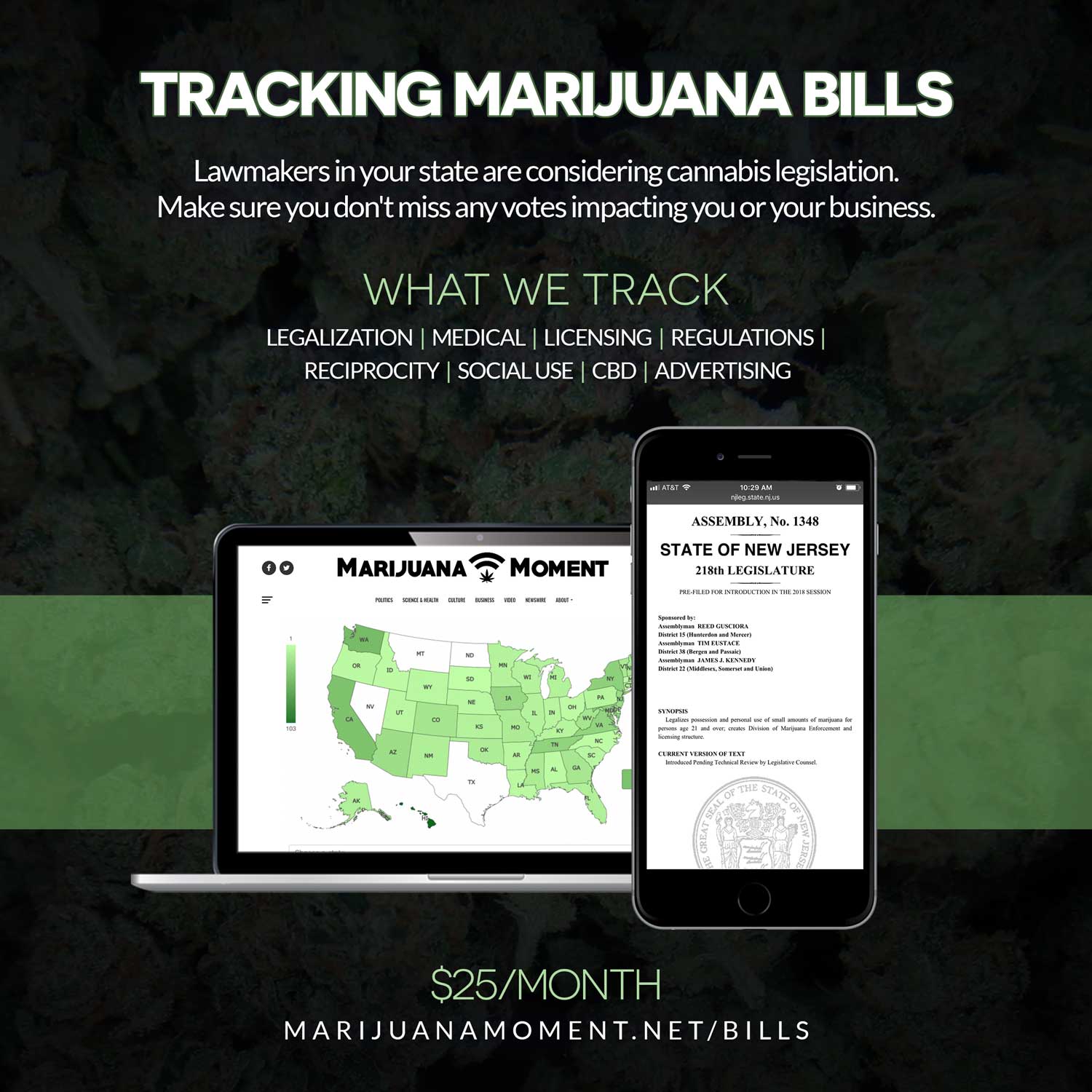
Learn more about our marijuana bill tracker and become a supporter on Patreon to get access.
—
Meanwhile, North Carolina’s Senate president pro tempore recently said that lawmakers will take a more serious look at legalizing medical marijuana following the Trump administration’s move to reschedule cannabis at the federal level.
The North Carolina Senate has passed medical cannabis bills in a number of past sessions that have later stalled out in the House of Representatives.
“We’ll have a conversation within our caucus as to whether or not we do something, if they’re interested in continuing to pursue that,” Senate President Pro Tempore Phil Berger (R) said.
If the Senate does pass a medical cannabis bill again, it’s not yet clear how House leadership would react this time.
The Senate leader’s comments and the bill constitutional amendment bill come weeks after a governor-appointed cannabis commission in North Carolina issued a report recommending that the state move away from a criminalization-based approach to the plant and toward a system of “robust” regulations that provide for adults’ legal access to THC products.
The North Carolina Advisory Council on Cannabis, which Gov. Josh Stein (D) convened last year, says in the new document approved in April that the current “absence of regulation for North Carolina’s intoxicating cannabis market raises numerous concerns,” noting that hemp products are readily available yet largely unregulated and that marijuana remains prohibited altogether in the state, even for medical use.
“Compared to regulated marijuana frameworks in other states, this environment presents identifiable risks,” the interim report says. “While some operators voluntarily implement consumer protection protocols, these safeguards are not required under state law.”
Stein, for his part, thanked the group for its “expertise, hard work, and thoughtful deliberation” in a press release and reiterated his support for legalizing marijuana.
“Last year, I charged this group with developing a comprehensive solution to the unregulated sale of cannabis that is grounded in public health and public safety, with a special focus on keeping young people safe,” the governor said. “This report provides the General Assembly with guidance and makes clear that a well-regulated market, including both oversight and enforcement authority, is a safer market for our state.”
“Our state’s unregulated cannabis market today is the Wild West and is crying for order,” he said. “Let’s get this right. Let’s protect our kids and create a safe, legal, and well-regulated market for adults.”
The interim report recommends that rather than construct separate frameworks for hemp and marijuana, the state should enact molecule-based regulation focused on THC itself, saying that “the plant source is irrelevant and should not drive different treatment when the intoxicating compound is the same.”
It also suggests that when choosing how to regulate THC and cannabis, North Carolina should enact “an adult access market with protections for medical consumers.”
The panel, however, “does not view a medical-only program as an effective interim step or compromise solution,” and the state should proceed to adult-use access immediately while considering the “availability of medical-consumer protections” as “an important component of a broader regulatory structure.”
The group’s report notes that “ultimately, the authority to bring order to the unregulated, unsafe cannabis market rests with the General Assembly.”
The advisory council was formed after Stein issued an executive order last year, and is comprised of legislators, law enforcement officials, agriculture industry stakeholders, health experts, tribal representatives, advocates and others charged with exploring possible regulatory models for adult-use marijuana and hemp.
The governor’s order said there’s a need for reform because the “current lack of regulation, including age, potency, and purity limitations, poses a threat to all North Carolinians, particularly our youth.” And “rather than allowing this unsafe and unregulated market to continue, smart and balanced regulation presents an opportunity not only to protect the health and well-being of our people, but also to generate revenue that can benefit our state.”
Members are tasked with developing and submitting initial recommendations on a “comprehensive cannabis policy, including any proposed legislation,” with a final report due by December 31 of this year.
During his time as the state’s attorney general, Stein led a separate task force under then-Gov. Roy Cooper (D) that examined racial injustice issues and ultimately recommended decriminalizing marijuana and studying broader legalization in response to racially disparate enforcement trends.
Meanwhile, a tribe in North Carolina, the Eastern Band of Cherokee Indians, launched the state’s first marijuana dispensary in 2024—despite the protests of certain Republican congressional lawmakers.
Tom Angell is the editor of Marijuana Moment. A 25-year veteran in the cannabis and drug law reform movement, he covers the policy, politics, science and culture of marijuana, psychedelics and other substances. He previously reported for Forbes, Marijuana.com and MassRoots, and was given the Hunter S. Thompson Media Award by NORML and has been named Journalist of the Year by Americans for Safe Access. As an activist, Tom founded the nonprofit Marijuana Majority and handled media relations, campaigns and lobbying for Law Enforcement Against Prohibition and Students for Sensible Drug Policy.
Add Marijuana Moment as a preferred source on Google.
All the cannabis news you need, all in one place. Copyright © 2017-2026 Marijuana Moment LLC ® and Tom Angell