
Pennsylvania Lawmakers Approve Bill To Allow Medical Marijuana Use In Hospitals For Terminally Ill Patients
Maryland Firefighters And Rescue Workers Could Use Medical Marijuana Off Duty Under Bill Heading To Governor’s Desk
Virginia Governor Wants Amendments To Marijuana Sales Legalization Bill, Including Delayed Market Launch
Virginia Governor Signs Bills To Protect Marijuana Users’ Parental Rights And Allow Medical Use In Hospitals
Marijuana Reform Group Polls Consumers About Freedoms Where They Live Ahead Of 4/20
Vaporizing Marijuana Reduces Harmful Inhaled Byproducts By 99% Compared To Joint Smoking, New Study Shows
Federally Funded Study Reveals Marijuana Breathalyzer Breakthrough With 3-D Printed Roadside Tool Able To Detect THC
Alcohol And Tobacco Are More Damaging To Users And Society Than Marijuana Is, Government-Funded Study Concludes
High Marijuana Taxes Don’t Effectively Deter Use, Study Shows, Contrary To NYT Editorial Board’s Claim
Legalizing Marijuana For Recreational Or Medical Use Leads To Reductions In Different Types Of Crime, Study Finds
WNBA Offers To End Marijuana Testing For Women’s Basketball Players As Part Of Reported Deal With Union
DEA Promotes Anti-Marijuana PSA Contest Inviting Students To Warn Peers About THC Dangers On 4/20
Largest Entertainment Arena In US Partners With Cannabis Businesses To Sell THC Drinks At Concerts And Live Events
Woody Harrelson Got Kicked Out Of Two Bars For Smoking Marijuana With Matthew McConaughey’s Mom
State Marijuana Regulators Share Tips On How To Stay Safe And Legal Around The Holidays
Target Expands Involvement In Hemp THC Drinks Market With 72 New Licenses In Minnesota
Marijuana Sales Are Rising And Alcohol Is On The Decline As Consumer Preferences Evolve, Government Data In Canada Shows
Feds Deny Snoop Dogg Request To Trademark ‘Smoke Weed Everyday’ Because Marijuana Is Illegal And Song Lyric Is Too Popular
Marijuana Kiosks For Seniors Are Coming To Independent Living Communities Across Arizona
Montana Retailers Have Sold More Than $1 Billion Worth Of Recreational Marijuana Since Legalization Took Effect
Virginia governor wants cannabis bill changes (Newsletter: April 14, 2026)
Texas hemp product ban paused by judge (Newsletter: April 13, 2026)
Trump advisor says someone is “holding up” cannabis rescheduling (Newsletter: April 10, 2026)
Cannabis sales are rising as alcohol declines (Newsletter: April 9, 2026)
Pennsylvania governor steps up cannabis legalization push (Newsletter: April 8, 2026)
Published
on
By
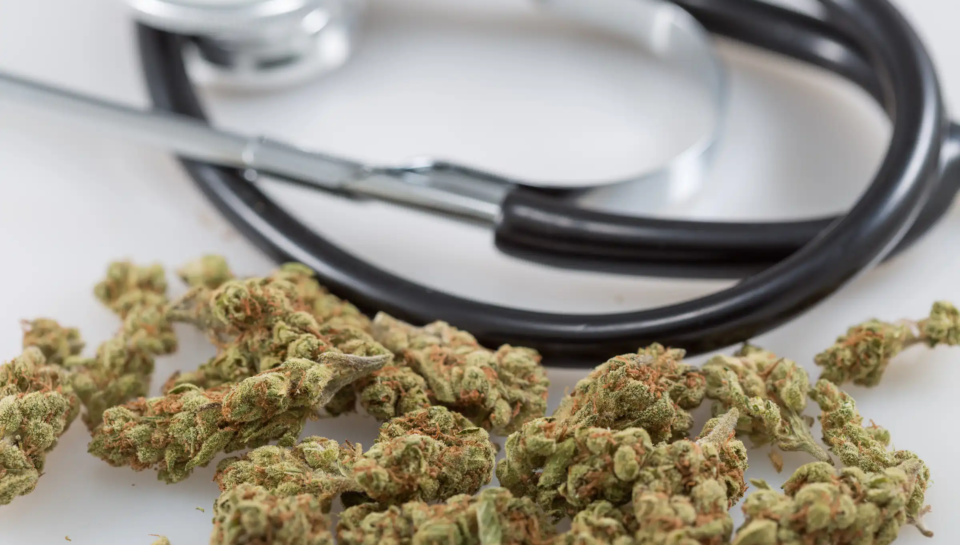
As Pennsylvania lawmakers consider the governor’s proposal to legalize recreational marijuana, separate legislation to allow terminally ill patients to use medical cannabis in hospitals and other healthcare facilities is advancing.
The House Health Committee approved the bill from Rep. Dan Frankel (D), who chairs the panel, in a 23-3 vote on Tuesday.
If enacted into law, HB 2254 would require hospitals, long-term care nursing facilities, assisted living residences and personal care homes to allow terminally ill patients to use medical cannabis on the premises, provided that doing so does not interfere with their broader treatment plan and that marijuana isn’t vaporized in a way that “could impact care to other patients.”
Smoking cannabis is not allowed under Pennsylvania’s broader medical marijuana law.
Within 180 days of the bill being enacted, covered healthcare facilities would have to “develop and disseminate written guidelines for the use or administration of medical marijuana.” That would need to include requirements that cannabis be stored in locked containers, safety measures to protect other patients and staff, specificity on the forms of marijuana that are allowed and procedures for documenting use.
The legislation says that facilities are not required to administer medical cannabis to patients to to allow its use in emergency departments, but it also says that those that facilities violate the broader policy on allowing use can be assessed a civil penalty of up to $500 for each violation for each day a violation continues.
The measure also provides that if the Department of Justice, Centers for Medicare and Medicaid Services or another federal agency takes action against a healthcare facility over the use of medical cannabis, facilities should suspend compliance with the law.
Finally, the bill would require the state Department of Human Services to prepare a sample medical marijuana plan for healthcare facilities and to host at least five educational sessions about the issue.
“The needs of terminally ill patients were a key consideration when Pennsylvania enacted the Medical Marijuana Act. The law includes provisions allowing patients in care facilities to access medical marijuana by designating a caregiver to administer and even permits facility staff to serve in that role,” Frankel wrote in a cosponsorship memo for the legislation. “While some facilities in Pennsylvania have chosen to permit the use of medical marijuana, adoption remains inconsistent across the state. As a result, many terminally ill patients continue to face barriers to accessing medical cannabis during inpatient or end-of-life care.”
“This measure will ensure patients have access to effective symptom relief while maintaining safety and compliance within care settings,” he said.
Prior to approving the bill, the panel on Tuesday adopted an amendment that Frankel said “makes explicit the liability protections for facilities that are required to allow medical marijuana use” and “clarifies timeliness so that the requirement to allow use only begins once guidelines are in place.”
The amendment also “exempts psychiatric facilities in settings where people may be dealing with cannabis use disorder,” he said.
The medical cannabis bill’s advancement comes as a new poll shows that seven out of ten Pennsylvania likely voters support legalizing adult-use marijuana—including majority backing for the reform across party lines.
When asked whether they “support or oppose the regulation and taxation of legal cannabis for use by adults 21 and older in Pennsylvania,” 69 percent of respondents said yes. Support was strongest from Democrats, at 72 percent, but also includes 67 percent of Republicans and 64 percent of independents.
Meanwhile, Pennsylvania’s governor is increasing pressure on lawmakers to send him a bill to legalize marijuana in the state, saying that doing so would generate new revenue that could be invested in key programs.
“While some in Harrisburg claim we can’t afford to make bigger investments in our kids, public safety, and our economy, know this: If we legalized and regulated adult-use cannabis, we’d bring in $1.3 BILLION in revenue for our Commonwealth over the first five years,” Gov. Josh Shapiro (D) said in a social media post last week.
“Those are dollars that can be invested back into our people and our communities,” he said. “Stop with the excuses. Let’s get this done.”
Earlier this year, the governor again included marijuana legalization in his budget request to lawmakers, but so far the legislature has not enacted the reform.
The Democratic-controlled House of Representatives last year passed a bill to legalize marijuana and put sales in state-owned dispensaries, but the Republican Senate majority has criticized that plan while also not advancing a cannabis legalization model of its own.
The state’s Independent Fiscal Office (IFO) reported in February that legalizing cannabis in Pennsylvania would generate nearly half a billion dollars in annual revenue by 2028, an estimate that is a significantly larger cash windfall compared to projections from Shapiro’s own office.
With a proposed 20 percent wholesale cannabis excise tax, 6 percent state sales tax for retail and licensing fees, IFO said the governor’s legalization plan would generate $140 million in tax revenue in the first year of implementation from 2027-2028 and increase to $432 million by 2030-2031.
That’s a much higher revenue estimate than what the governor’s office put forward in the latest executive budget. According to his office’s analysis, legalization would generate about $36.9 million in tax dollars in its first year from a 20 percent wholesale tax on marijuana—rising gradually to $223.8 million by 2030-2031.
In February, a coalition of drug policy and civil liberties organizations urged Shapiro to play a leadership role in convening legislative leaders to get the job done on cannabis legalization this session.
Last month, the Senate Law and Justice Committee amended and approved a bill to create a Cannabis Control Board (CCB) to oversee the state’s medical marijuana program and intoxicating hemp products and that could eventually regulate adult-use cannabis if it is legalized in the state.
Tom Angell is the editor of Marijuana Moment. A 25-year veteran in the cannabis and drug law reform movement, he covers the policy, politics, science and culture of marijuana, psychedelics and other substances. He previously reported for Forbes, Marijuana.com and MassRoots, and was given the Hunter S. Thompson Media Award by NORML and has been named Journalist of the Year by Americans for Safe Access. As an activist, Tom founded the nonprofit Marijuana Majority and handled media relations, campaigns and lobbying for Law Enforcement Against Prohibition and Students for Sensible Drug Policy.
Add Marijuana Moment as a preferred source on Google.
All the cannabis news you need, all in one place. Copyright © 2017-2026 Marijuana Moment LLC ® and Tom Angell