
Congressional Committee Votes To Block Medical Marijuana From Being Covered Under Workers’ Comp For Federal Employees
White House Pushes Congress To Keep Hemp CBD Products Legal By Amending Broad Ban That’s Set To Take Effect Later This Year
Connecticut Governor Signs Bill To Expand Psychedelics Pilot Program In Preparation For Federal FDA Approval
Congressional Committee Directs Feds To Keep Testing Truck Drivers For Marijuana, Regardless Of Trump’s Rescheduling Move
Louisiana Will Let Terminally Ill Patients Use Medical Marijuana In Hospitals After Governor Allows Bill To Take Effect Without His Signature
2 In 3 Americans Who Use Marijuana Say It Helps Them Sleep Better, New Survey Shows
Hemp-Based Plastic Shows Promise As Environmentally Friendly Alternative To Traditional Packaging Materials, Study Finds
Marijuana Components Have ‘Consistent’ Anti-Tumor Effects In Glioblastoma And Other Cancers, Scientific Review Shows
Another Study Debunks Lazy Stoner Stereotype, Linking Marijuana Use To An Increase In Some Kinds Of Exercise
VA Launches New Study On MDMA To Treat Veterans With PTSD And Alcohol Use Disorder
WNBA Removes Marijuana From Banned Substances List And Sets Rules For Player Endorsements Of Hemp CBD Products
Americans Say Marijuana Is Less Cool Than Math And Country Music—But Is Cooler Than Guns Or Cryptocurrency, Survey Shows
Politicians And Major Brands Celebrate Cannabis Culture On 4/20
Woody Harrelson And Bill Maher Complain That Marijuana Taxes Are Too High While Smoking Joints At The Dispensary They Own Together
WNBA Offers To End Marijuana Testing For Women’s Basketball Players As Part Of Reported Deal With Union
Federal Labor Decision Inspires More Missouri Marijuana Workers To Seek Unionization
Missouri Marijuana Workers Win Union Vote After Federal Officials Reject Company’s Argument On Blocking Ballots
Target Is Launching Hemp THC Drink Sales In Three Of The U.S.’s Most Populous States
Target Expands Involvement In Hemp THC Drinks Market With 72 New Licenses In Minnesota
Marijuana Sales Are Rising And Alcohol Is On The Decline As Consumer Preferences Evolve, Government Data In Canada Shows
WNBA takes cannabis off banned list & sets player endorsement rules (Newsletter: June 5, 2026)
Wisconsin governor candidates pledge cannabis action if elected (Newsletter: June 4, 2026)
Amendments to save hemp THC from ban are blocked in Congress (Newsletter: June 3, 2026)
Trump sued over cannabis rescheduling (Newsletter: June 2, 2026)
GOP lawmakers push to save hemp from impending federal ban (Newsletter: June 1, 2026)
Published
on
By
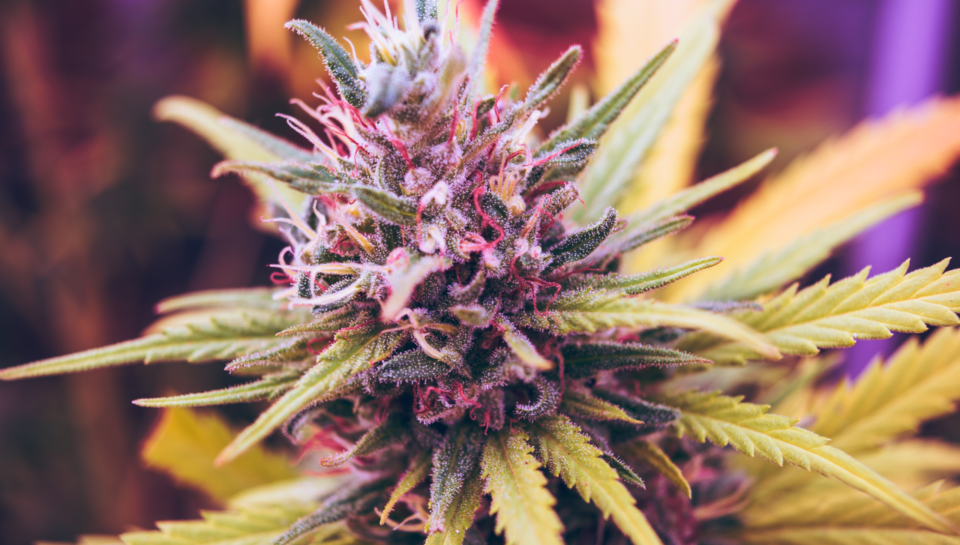
While many marijuana enthusiasts believe that components called terpenes are responsible for strains’ distinctive smells, a new study published by the American Chemical Society has identified “previously undiscovered cannabis compounds” that challenge that conventional wisdom of what really gives each variety its unique olfactory profile.
The research, conducted by a team of scientists from marijuana extraction and testing companies and published this month in the journal ACS Omega, says that “while aroma is a key property in differentiating cannabis varieties and user preferences, the importance of terpenes appears to be overstated.”
Terpenes, which make up about 1 percent to 4 percent of the total mass of cured cannabis flower, certainly do contribute to marijuana’s smell, the authors wrote, but they “in general provide minimal information regarding the unique aromatic attributes of many cannabis varieties.” Even among clusters of strains with similar terpene contents, for example, odors can vary widely from one to the next.
“Varieties across both sweet and savory exotic classes often have very similar terpene profiles, indicating that they are not the driving force behind the unique aromatic differences.”
The report attributes much of those in-group differences in aroma instead to what are called flavorants, a class of chemicals that includes esters, alcohols and other compounds. Like terpenes, flavorants are categorized as volatiles, and they typically spread easily through the air. Flavorants can also create similar aromas between marijuana varietals that have different dominant terpenes, the researchers found.
Analyzing the volatile chemical profiles of 31 ice hash rosin extracts, they wrote, “we identified a myriad of nonterpenoid compounds that strongly influence the unique aromatic properties of cannabis.”
“In particular,” they continued, “we identified a new class of tropical volatile sulfur compounds (VSCs) that are major contributors to certain varieties with a strong citrus or tropical fruit aroma, while skatole (3-methylindole), a highly pungent compound, was identified as a key aroma compound in savory/chemical varieties.”
TJ Martin, vice president of research and development at the extraction company Abstrax, said in a company release that the team “found clear correlations between key minor compounds never before seen in cannabis that produce some of the most desirable aromas.”
“After analysis by our sensory panel, in tandem with our analytical data, it became evident that terpenes, while essential in producing many of the typical aromas in cannabis, do not necessarily differentiate many varieties with distinct scents,” he said.
Martin was a member of the 14-author research team, which also represented the companies 710 Labs, SepSolve Analytical and Markes International.
We've all known that terpenes are responsible for classic flavors like earth, pine, and spice. But why do cultivars with the same terps smell so different from each other?
Read the Peer Review on ACS Omega at https://t.co/uMOl93UN5e pic.twitter.com/A0RKCrPdvf
— Abstrax Tech (@abstraxtech) October 14, 2023
In addition to providing a better understanding of what goes into a cannabis variety’s unique aroma, the paper says cataloguing new categories of compounds “provides a new opportunity to classify varietals using key desirable aroma attributes.”
“The discovery of these compounds will play a crucial role in validating cannabis’ authenticity and accurately classifying cannabis varieties in the future,” said Abstrax co-founder and CEO Max Koby, adding that the findings are important “for consumers, researchers, brands, cultivators, labs, regulators, and everyone in between.”
As the paper notes, terpenes have become an increasingly common way to differentiate between cannabis varieties, “partially in response to the commonly used, but inaccurate, classification of cannabis as either indica, sativa, or a hybrid of the two major species.”
“To overcome the inaccuracies of the indica/sativa binary classification and better categorize cannabis varieties based on their psychoactive and aroma characteristics,” it says, “terpenes have emerged as a prominent focus of research.” But according to the new findings, terpenes nevertheless fail to tell the full story. They also limit how much control breeders, growers and processors can have over their final products.
For example, citrus flavors are currently “a very important trend in flavor science, with many brands working to engineer citrus alternatives,” the Abstrax release says. “With the discovery of the compounds responsible for the iconic Tangie flavor and aroma, known as ‘tropicannasulfurs,’ other industries can leverage these unique compounds to create extremely unique and desirable flavor aromas.”
“A broad variety of flavorants in cannabis including esters, alcohols, ketones, and more that contribute to the berry, tropical, candy, fruity, strawberry, pineapple, and other sweet notes were identified,” it continues. “These flavorants play a major role in exotic varieties like Apple Fritter, Zkittlez, Gelato, and Runtz. While found in small amounts, these compounds combine to create many of the diverse sweet or fruity notes in modern cannabis.”
Authors are also hopeful their findings help fuel innovation in therapeutic marijuana.
“Cannabis is used medically for many health ailments, but there are so many questions remaining as to how it works and if we can enhance those properties by creating new varieties with specific chemistries,” said Iain Oswald, a co-author and principal research scientist for Abstrax. “We hope our work will open new avenues of research for others to better understand this unique plant and harness its full therapeutic potential.”
In addition to patients and consumers, the findings may also have implications for breeders and growers trying to home in on a specific profile or produce consistent products, and they may even be useful to packaging experts working to increase product shelf life.
“The discovery that terpenes have less influence on the differentiating characteristics of the aroma of cannabis than traditionally thought may have important ramifications for the legal cannabis industry related to product labeling and marketing, laboratory testing, and quality indicators for end consumers and producers alike,” the paper concludes.
Brad Melshenker, a study co-author and co-CEO of 710 Labs, said the research “helps us better understand flavor in the cannabis experience, allowing us to better educate our customers and select phenos for our genetic library.”
Abstrax says the study will eventually lead to four white papers that will boil the findings down to more accessible conclusions. They’ll include papers on exploring exotic flavor compounds, the tropical VSC found in Tangie, a deep dive into the chemical constituents of the varietal GMO and an exploration into the sweeter compounds in marijuana.
“This groundbreaking research not only answers pressing questions but also ignites a renewed passion and curiosity for what’s next,” the company said. “With every revelation, we’re one step closer to fully unlocking the vast potential and mysteries of this remarkable plant.”
Despite obstacles to research that remain in place as the result of federal restrictions on marijuana, legalization at the state level and in other countries has spurred inquiry into the cannabis plant and how it works.
A recent study, for example, buttressed the idea that an “entourage effect,” where multiple cannabinoids are consumed together, produces a stronger, longer-lasting high than THC alone.
And last month, the U.S. Department of Agriculture said that genetically modified hemp—altered to adjust the type and amount of cannabinoids produced—”may be safely grown and bred in the United States.”
The department has been attempting to work more closely with hemp growers and breeders since the crop was legalized through the 2018 Farm Bill. Earlier this year, the agency released updated guidance on how to identify, describe and evaluate different varieties of the plant.
Groups of researchers also recently published findings tracing cannabis’s millennias-old history alongside humans as well as exploring the idea that cannabis may help provide some degree COVID protection.
Psilocybin Eases Psychological Distress In People Who Experienced Childhood Trauma, Study Suggests
Ben Adlin, a senior editor at Marijuana Moment, has been covering cannabis and other drug policy issues professionally since 2011, specializing in politics, state legislation, litigation, science and health. He was previously the senior news editor at Leafly, where he co-led news coverage and co-hosted a critically acclaimed weekly podcast; an associate editor at The Los Angeles Daily Journal, where he covered federal courts and municipal law; and a Coro Fellow in Public Affairs. He’s a graduate of Occidental College in Los Angeles and currently lives in Washington State.
Add Marijuana Moment as a preferred source on Google.
All the cannabis news you need, all in one place. Copyright © 2017-2026 Marijuana Moment LLC ® and Tom Angell