Congressional Committee Votes To Block Medical Marijuana From Being Covered Under Workers’ Comp For Federal Workers
White House Pushes Congress To Keep Hemp CBD Products Legal By Amending Broad Ban That’s Set To Take Effect Later This Year
Connecticut Governor Signs Bill To Expand Psychedelics Pilot Program In Preparation For Federal FDA Approval
Congressional Committee Directs Feds To Keep Testing Truck Drivers For Marijuana, Regardless Of Trump’s Rescheduling Move
Louisiana Will Let Terminally Ill Patients Use Medical Marijuana In Hospitals After Governor Allows Bill To Take Effect Without His Signature
2 In 3 Americans Who Use Marijuana Say It Helps Them Sleep Better, New Survey Shows
Hemp-Based Plastic Shows Promise As Environmentally Friendly Alternative To Traditional Packaging Materials, Study Finds
Marijuana Components Have ‘Consistent’ Anti-Tumor Effects In Glioblastoma And Other Cancers, Scientific Review Shows
Another Study Debunks Lazy Stoner Stereotype, Linking Marijuana Use To An Increase In Some Kinds Of Exercise
VA Launches New Study On MDMA To Treat Veterans With PTSD And Alcohol Use Disorder
WNBA Removes Marijuana From Banned Substances List And Sets Rules For Player Endorsements Of Hemp CBD Products
Americans Say Marijuana Is Less Cool Than Math And Country Music—But Is Cooler Than Guns Or Cryptocurrency, Survey Shows
Politicians And Major Brands Celebrate Cannabis Culture On 4/20
Woody Harrelson And Bill Maher Complain That Marijuana Taxes Are Too High While Smoking Joints At The Dispensary They Own Together
WNBA Offers To End Marijuana Testing For Women’s Basketball Players As Part Of Reported Deal With Union
Federal Labor Decision Inspires More Missouri Marijuana Workers To Seek Unionization
Missouri Marijuana Workers Win Union Vote After Federal Officials Reject Company’s Argument On Blocking Ballots
Target Is Launching Hemp THC Drink Sales In Three Of The U.S.’s Most Populous States
Target Expands Involvement In Hemp THC Drinks Market With 72 New Licenses In Minnesota
Marijuana Sales Are Rising And Alcohol Is On The Decline As Consumer Preferences Evolve, Government Data In Canada Shows
WNBA takes cannabis off banned list & sets player endorsement rules (Newsletter: June 5, 2026)
Wisconsin governor candidates pledge cannabis action if elected (Newsletter: June 4, 2026)
Amendments to save hemp THC from ban are blocked in Congress (Newsletter: June 3, 2026)
Trump sued over cannabis rescheduling (Newsletter: June 2, 2026)
GOP lawmakers push to save hemp from impending federal ban (Newsletter: June 1, 2026)
Published
on
By
Researchers have developed a new glossary to describe cannabis aromas, debunking certain theories about what gives marijuana strains their unique smell profiles and creating a lexicon to better classify varieties for consumers and businesses. Notably, they found that— contrary to popular belief—terpene content is a poor predictor of cannabis’s scent profile.
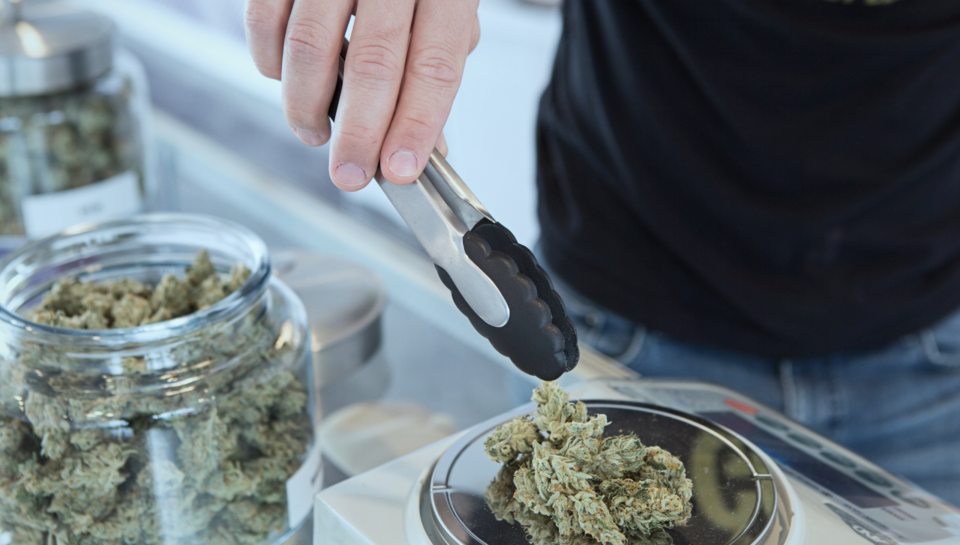
For the study, published in the journal PLOS One this month, researchers at Oregon State University recruited a 21-judge panel to assess 91 samples of unburnt marijuana flower. The panel was tasked with smelling the varieties and checking off aroma descriptors that they felt applied.
“The primary goal of this study was to develop and systematically evaluate a reproducible aroma lexicon for Cannabis inflorescence, which is a foundational step toward a standardized, evidence-based framework for describing Cannabis aroma,” the study says.
“While this study does not generate or validate a lexicon in a definitive sense, it represents an important phase in the continued evolution of a comprehensive descriptive system for Cannabis,” it says. “It organizes and refines existing sensory terminology into a coherent, data-driven structure suitable for both research and applied contexts.”
“In this way, the lexicon contributes to an ongoing process of refinement and expansion, and its demonstrated ability to consistently differentiate samples underscores its value as a tool for both scientific inquiry and industry communication,” the authors said.
“This study generated and evaluated a descriptive aroma lexicon for intact Cannabis inflorescence consisting of 25 terms with defined reference standards.”
Of the total 8,075 descriptors that were selected across the study, three stood out as the most common, accounting for 26 percent of the marketed descriptors: “herbal,” “citrus” and “woody.”
Interestingly, while it’s commonly believed that terpenes in the cannabis plant are primarily responsible for giving each strain its aroma profile, the researchers said that doesn’t appear to be entirely the case.
“Terpene profiling revealed clear chemical clusters, but terpene profiles alone poorly predicted sensory character,” it says. “Terpinolene was the only compound consistently associated with sensory descriptors, specifically ‘citrus’ and ‘chemical.’”
“Total terpene concentration was also not correlated with the frequency of use of each attribute per sample, suggesting that intensity of aroma…cannot be directly inferred from total terpene content… [Q]uantitative chemical differences do not translate to perceptual sensory differences.”
“Despite the chemical groupings, sensory and terpene clustering did not correlate well which underscores a key point: terpene chemistry alone does not predict a sample’s sensory profile,” the researchers wrote. “This is crucial given the overreliance on terpene content in current Cannabis industry marketing and labeling practices.”
“Neither terpene nor volatile sulfur compound profiles strongly predicted sensory perception. These results emphasize the limitations of chemical composition as a proxy for aroma quality.”
The study also revealed that varieties with high THC and low CBD were “more frequently described as ‘skunky,’ ‘musty,’ and ‘animalic,” whereas low THC and high CBD strains were commonly associated with the descriptors “citrus,” “fruity,” and “candy-like.”
“These findings are especially relevant considering the current Cannabis market, which is saturated with inaccurate potency claims, misleading ‘effect’ descriptions, and persistent safety concerns, including pesticide contamination,” the authors said. “As the industry transitions from unregulated to legal frameworks, it’s critical to offer consumers tools for assessing product quality beyond THC content, which has been shown to correlate weakly or negatively with enjoyment, and does not impact aroma.”
“In fact, aroma is the only known predictor of subjective enjoyment,” they said. “However, as this study and others show, terpene profiles do not map cleanly onto sensory attributes, and traditional classifications such as ‘indica’ and ‘sativa’ have been shown to be unreliable predictors of Cannabis attributes.”
Given the relatively loose associations between terpene content and sensory quality, the study posits that “key perceptual drivers may lie in other, unmeasured compound classes, such as esters, aldehydes, or other volatiles that behave in complex synergistic manners creating characteristic impacts beyond individual terpene contributions.”
“In summary, this study developed and systematically evaluated a 25-term lexicon for the aroma of Cannabis inflorescence. This work lays a foundation for future work to build upon with an initial list of descriptors and an associated sensory method,” the study concludes. “Future work requires a larger inflorescence sample size, particularly for defining associations between volatile aromatics and aroma descriptors, and should explore expansion of the lexicon as more terms can be evaluated and validated. The inclusion of consumer hedonic data would deepen our understanding of aroma-driven quality perceptions and consumer liking.”
“Additionally, agronomic and post-harvest variables, including farm origin, harvest maturity, drying methods, storage, and trimming style warrant exploration through both sensory and chemical lenses,” it says. “Finally, as the lexicon presented here is further expanded and built upon with a more globally representative sample set the attributes present can become more expansive and representative of the wide array of Cannabis aromas. Such insights will help guide breeding efforts and optimize production methods aimed at enhancing the aromatic and experiential quality of Cannabis products.”
This comes about a month after another team of researchers published a related, comprehensive sensory-guided study of the odor-active compounds in dried cannabis flowers, uncovering dozens of previously unknown chemicals that shape the the plant’s distinct fragrance. Combined, the findings expand scientific knowledge of marijuana beyond the common understanding of terpenes, CBD and THC.
The studies build on research related to standardization of cannabis strain identification. In 2022, researchers found that the commonly used marijuana strain labeling system can be highly misleading for consumers. The study analyzed the chemical composition of almost 90,000 cannabis samples across six states.
Research earlier this year on cannabis genetics suggested that incentives in the legal marijuana market—such as the desire for plants to mature faster and produce more cannabinoids for extraction—may be leading to a decline in biodiversity of the plant worldwide.
This paper also builds on a July 2025 scientific review in the journal Molecules that took a deep dive into the flavors and aromas of marijuana, examining how the plant’s genetic makeup, cultivation methods and post-harvest processing affect the various compounds that give cannabis products their distinctive palate.
Kyle Jaeger is Marijuana Moment’s Sacramento-based managing editor. He’s covered drug policy for more than a decade—specializing in state and federal marijuana and psychedelics issues at publications that also include High Times, VICE and attn. In 2022, Jaeger was named Benzinga’s Cannabis Policy Reporter of the Year.
Add Marijuana Moment as a preferred source on Google.
All the cannabis news you need, all in one place. Copyright © 2017-2026 Marijuana Moment LLC ® and Tom Angell