Pennsylvania Governor Pushes Lawmakers To Legalize Marijuana On 4/20
Missouri Officials File Rules To Create New Marijuana Research Licenses
Federal Agencies Would Have To Study State Marijuana Laws Under New Directive From Congressional Committee
Delaware Lawmakers Pass Bill To Allow Medical Marijuana Use In Hospitals For Terminally Ill Patients, Sending It To Governor
New Marijuana Report Shows Arrests Are Plummeting As Legalization Spreads, But Criminalized States Still Send Thousands To Jail Each Year
Medical Marijuana Helps People Stop Using Opioids, Sleeping Aids And Other Prescription Drugs, Study Shows
Vaporizing Marijuana Reduces Harmful Inhaled Byproducts By 99% Compared To Joint Smoking, New Study Shows
Federally Funded Study Reveals Marijuana Breathalyzer Breakthrough With 3-D Printed Roadside Tool Able To Detect THC
Alcohol And Tobacco Are More Damaging To Users And Society Than Marijuana Is, Government-Funded Study Concludes
High Marijuana Taxes Don’t Effectively Deter Use, Study Shows, Contrary To NYT Editorial Board’s Claim
Politicians And Major Brands Celebrate Cannabis Culture On 4/20
Woody Harrelson And Bill Maher Complain That Marijuana Taxes Are Too High While Smoking Joints At The Dispensary They Own Together
WNBA Offers To End Marijuana Testing For Women’s Basketball Players As Part Of Reported Deal With Union
DEA Promotes Anti-Marijuana PSA Contest Inviting Students To Warn Peers About THC Dangers On 4/20
Largest Entertainment Arena In US Partners With Cannabis Businesses To Sell THC Drinks At Concerts And Live Events
Target Expands Involvement In Hemp THC Drinks Market With 72 New Licenses In Minnesota
Marijuana Sales Are Rising And Alcohol Is On The Decline As Consumer Preferences Evolve, Government Data In Canada Shows
Feds Deny Snoop Dogg Request To Trademark ‘Smoke Weed Everyday’ Because Marijuana Is Illegal And Song Lyric Is Too Popular
Marijuana Kiosks For Seniors Are Coming To Independent Living Communities Across Arizona
Montana Retailers Have Sold More Than $1 Billion Worth Of Recreational Marijuana Since Legalization Took Effect
Cannabis is safer than McDonald’s, senator says (Newsletter: April 20, 2026)
Trump is planning a psychedelics executive order (Newsletter: April 17, 2026)
IRS addresses cannabis industry worker tips (Newsletter: April 16, 2026)
Virginia lawmakers push back on governor’s cannabis amendments (Newsletter: April 15, 2026)
Virginia governor wants cannabis bill changes (Newsletter: April 14, 2026)
Published
on
By
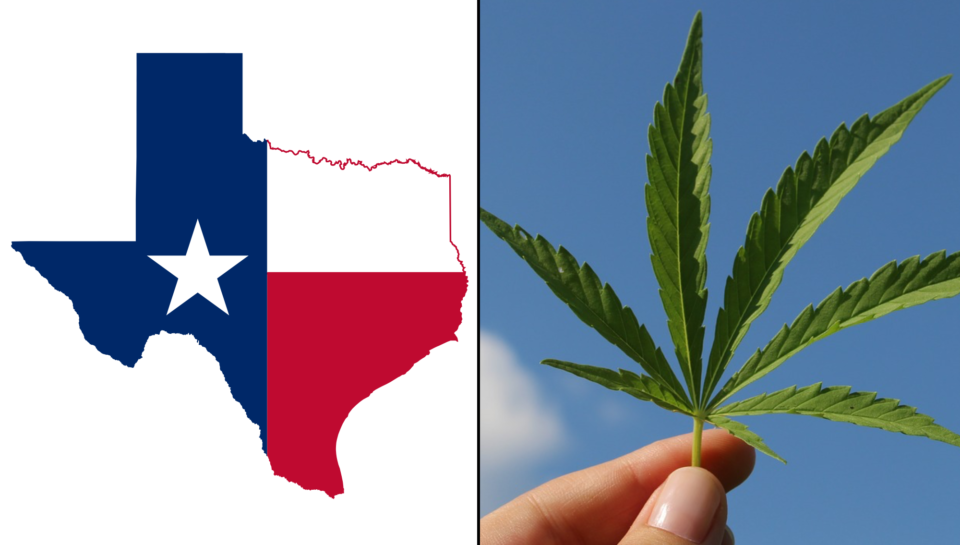
Texas officials have formally adopted new rules to implement a law significantly expanding the state’s medical marijuana program.
About two months after the Department of Public Safety (DPS) posted the proposed rules—after which point a 30-day public comment period was completed—the regulations were finalized and published in the Texas Register on Friday.
This specific set of rules will increase the number of licensed dispensaries, establish security requirements for “satellite” locations and authorize the revocation of licenses for certain violations.
DPS will ultimately be issuing 12 new licenses for dispensaries across the state. Currently there are only three. The additional licensees will go through a competitive process, with officials prioritizing Texas’s public health regions to optimize access.
The first round of licenses will be awarded to nine of 139 applicants who submitted their forms during an earlier application window in 2023. DPS will select those nine licensees on December 1. The 2023 applicants that didn’t receive a license, as well as any new prospective licensees, will have another shot at getting their license during a second round where awardees will be announced on April 1, 2026.
The finalized rules also lay out security parameters for dispensaries with satellite locations approved by the department, including mandates to “designate an enclosed locked area within the satellite location where low-THC cannabis product is stored that provides reasonably adequate security against theft and diversion” as well as “designate an individual, or a limited number of individuals, with responsibility for and with the authority to enter or control entry” into those secure areas.
Additionally, they specify policies allowing regulators to revoke licenses for violations such as not having cannabis products available within 24 months of a license issuance, failing to “promptly and accurately fill prescriptions” and not “continuously” producing cannabis “in a manner consistent with the level of demand for the licensee’s product.”
DPS received two comments on the rules when they were up for public review, but no changes were made based on the feedback.
In addition to increasing the number of dispensaries in the state, the law signed by the governor also expands the state’s list of medical cannabis qualifying conditions to include chronic pain, traumatic brain injury (TBI), Crohn’s disease and other inflammatory bowel diseases, while also allowing end-of-life patients in palliative or hospice care to use marijuana.
That policy change is automatically adopted via the enacted statute, so it took effect on September 1 without further rulemaking.
Also in line with the state’s medical cannabis expansion law that Gov. Greg Abbott (R) signed, the state Health and Human Services Commission (HHSC) proposed rules last month to let physicians recommend new qualifying conditions for cannabis and to create standards for allowable inhalation devices.
—
Marijuana Moment is tracking hundreds of cannabis, psychedelics and drug policy bills in state legislatures and Congress this year. Patreon supporters pledging at least $25/month get access to our interactive maps, charts and hearing calendar so they don’t miss any developments.
Learn more about our marijuana bill tracker and become a supporter on Patreon to get access.
—
Meanwhile, Department of State Health Services (DSHS) recently adopted a set of emergency rules meant to prevent the sale of intoxicating hemp products to people under 21.
After similar restrictions were implemented by the Texas Alcoholic Beverage Commission (TABC) late last month, DSHS announced that they’ve moved forward with the policies changes that comply with the governor’s recent executive order on hemp.
Meanwhile this month, the head of the Texas Department of Agriculture (TDA) pushed back against a GOP senator’s “incorrect assertions” about the state’s regulatory compliance with federal hemp laws. But he also signaled that changes may be coming to measure “total THC” to determine the legality of hemp products in a way that some stakeholders worry could negatively impact the industry.
After the legislature failed to pass a controversial bill to ban hemp products containing THC during two special sessions following the governor’s veto of a similar measure earlier this year, Abbott signed the executive order to impose certain restrictions on the market.
Separately, a recent survey from a GOP pollster affiliated with President Donald Trump found that Texas Democratic and Republican voters are unified in their opposition to the hemp ban proposal.
Image element courtesy of AnonMoos.
Kyle Jaeger is Marijuana Moment’s Sacramento-based managing editor. He’s covered drug policy for more than a decade—specializing in state and federal marijuana and psychedelics issues at publications that also include High Times, VICE and attn. In 2022, Jaeger was named Benzinga’s Cannabis Policy Reporter of the Year.
Add Marijuana Moment as a preferred source on Google.
All the cannabis news you need, all in one place. Copyright © 2017-2026 Marijuana Moment LLC ® and Tom Angell