
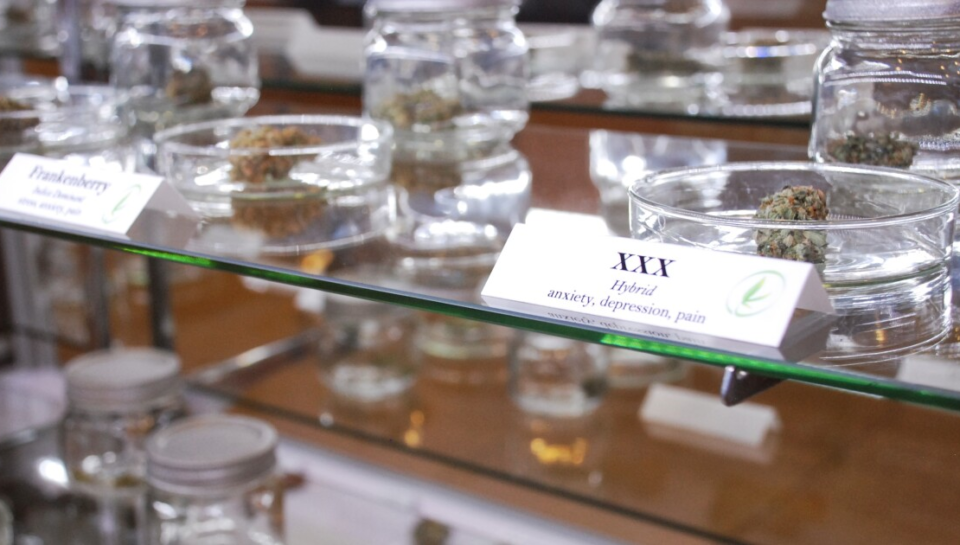
The Trump administration has reclassified medical marijuana — moving it from a Schedule I to a Schedule III drug.
That applies to marijuana that is either regulated under a state medical marijuana program or that is FDA approved. It does not apply to recreational marijuana.
Arizona voters approved medical marijuana in 2010. A decade later, voters approved the measure to allow for recreational marijuana.
Ann Torrez, executive director of the Arizona Dispensaries Association, joined The Show to talk about the potential impacts of the federal change.
MARK BRODIE: Ann, good morning.
ANN TORREZ: Good morning. Busy, busy time.
MARK BRODIE: It sure seems like that for you and your members. So what, like, how big of a deal is this? Or does this have the potential at least to be for your members?
ANN TORREZ: For the marijuana industry? This is a huge deal. This is a federal acknowledgment that marijuana is medicine. So if we just stand in that, that it’s no longer considered in the same realm of heroin, it really opens up a ton of opportunities for the industry and for people who are interested in plant medicine.
It is a phenomenal and momentous time for marijuana across the country.
MARK BRODIE: Now, I know one of the issues that dispensaries have been struggling with for a long time is the issue of banking and whether or not they can essentially use banks and checks and credit cards and not have to do all their transactions in cash. How might this impact that?
ANN TORREZ: The rescheduling does not automatically impact banking. That’ll still need to have some other oversight at the federal level. There is some state banking in Arizona for our program, which is very helpful. There is need for more banking, and I do think we’ll see things unfold at the federal level to support this as well.
There’s a lot of moving pieces to this. If you really think about what the rescheduling does, it touches so many different federal agencies that then will bleed through into the state programs. I would anticipate banking to be one that unfolds quickly but is not automatic with this rescheduling.
MARK BRODIE: OK, so what do you then, and maybe what to the dispensary owners are some of the biggest advantages or benefits of this change from a business perspective?
ANN TORREZ: First of all, the rescheduling for the medical marijuana program allows operators who participate in the medical program, which is most operators in the state of Arizona, to utilize standardized business deductions. Right now, their classification prohibits any of those deductions. And so the net effect of the medical marijuana is resources and tax outlay is 70 to 80 cents on the dollar.
So when that is changed, that it directly impacts how a business can reinvest in what they’re doing, whether it be in research for better products and medicine for patients to, you know, perhaps looking at how to better support the employees in the system. Every dollar that comes back into the traditional marketplace because of this business change will really make a huge impact in the overall viability of medical marijuana in Arizona.
MARK BRODIE: I mean, I wonder though, if this might have had a bigger impact, you know, let’s say seven or eight years ago, before recreational marijuana was legal here. Because we’ve seen that the numbers of residents here using, for example, medical marijuana cards has been declining since recreational marijuana is so readily available.
ANN TORREZ: That is correct. And it tends to be the case across the country. When an adult-use program launches, you’ll see a depletion of the medical program. Arizona has maintained the medical program in a way that it’s preserved the ability to grow it back out. So we think a lot of folks who used to have a medical marijuana card just stopped renewing it because they didn’t necessarily see a full benefit of keeping their card.
This change, I would anticipate we’ll see a lot of those folks going back into the medical program because there may be other opportunities still to be determined. But if you really think about marijuana as a medicine, will they have access to their traditional health insurance for coverage on this? Will doctors start looking at this as a medicine that they can talk about their patients with as opposed to only leaving it in the realm of like the naturopaths’ conversation?
I think that you’re going to see the medical programs here and across the country really skyrocket. So the answer to your question is yes, it would have been great to have this prior to adult use. But I do see that this will be a great benefit where we are right now.
MARK BRODIE: Well, I mean, it sounds like, and please correct me if I’m wrong, that right now the bigger benefit is to the dispensaries if customers are using a medical marijuana card. But that some of those changes that might come down the road might also increase benefits for medical marijuana cardholders to actually use those, as opposed to just getting it under the recreational adult use, correct?
ANN TORREZ: Correct. I think the more that we take the stigma off of marijuana across this country, the higher the likelihood is that people will want to try a plant-based medicine. So for even those who’ve never used marijuana, it might be something that they’d be more open to because it’s not federally illegal anymore.
MARK BRODIE: When you talk about helping out with like, the tax burden for, you know, a typical dispensary in Arizona, how much money could we be talking about?
ANN TORREZ: That is a good question. I don’t even want to guess.
MARK BRODIE: OK.
ANN TORREZ: But, but I think that you’re going to just, you’re, you’re going to see a huge positive impact on their bottom line. The other part that’s sort of unknown at this point is when that happens, everybody’s books look better. So from an investment standpoint, we may see more influx of investment dollars coming in that are not so burdensome to the industry.
So right now, if I wanted to, you know, buy equipment, I can’t get a traditional loan for that equipment, I might be taking high lending rates out in order to build out my business. Now, if now these loans can come in at a more reasonable rate, a more typical rate, you’re going to see folks being able to invest more.
You’re going to see traditional lenders perhaps come into the marketplace in a way that they haven’t been able to.
MARK BRODIE: Interesting. All right, we’ll have to leave it there. That is Ann Torrez, executive director of the Arizona Dispensaries Association. Thanks so much.
ANN TORREZ: Thank you. Have a great day.