President Trump recently complained that the administration is “slowing walking” his order for the rescheduling of cannabis. Advocates say the reform doesn’t go far enough.
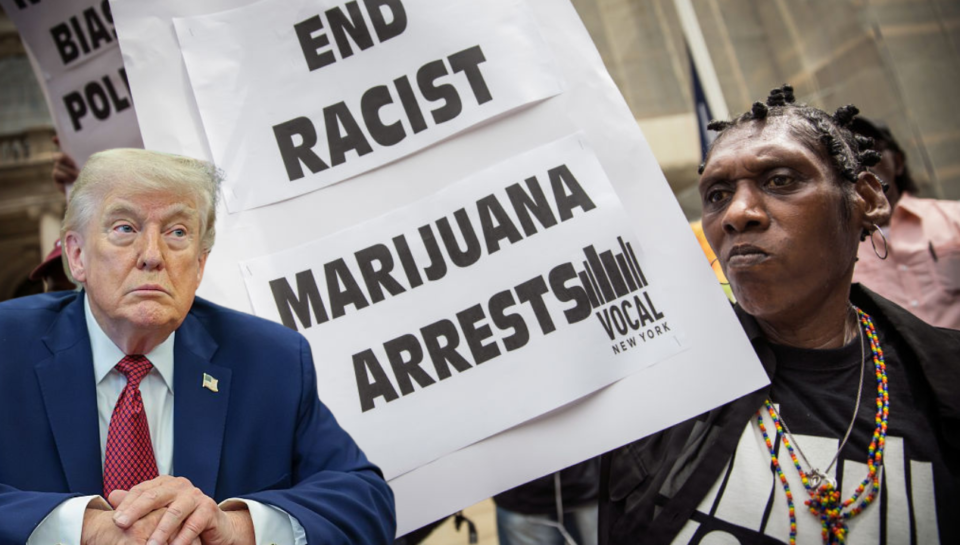
Four months after signing an executive order instructing the rescheduling of cannabis, President Donald Trump accused his administration of “slow-walking” its execution.
“You’re going to get the rescheduling done, right, please?” Trump said to an administration official in the Oval Office on Saturday before signing a separate order on expanding medical research on the use of psychedelics. The president continued, “Will you get the rescheduling done, please? …they’re slow-walking me on rescheduling. OK, you’re going to get it done, right?”
The Trump official, standing to the far right of the president at the Resolute Desk, did not respond but simply smiled. While the brief moment was arguably awkward, it also speaks to the reality of a years-long, complex effort to achieve some level of reform to the nation’s federal marijuana policy.
Despite 64% of Americans supporting the legalization of marijuana, 24 states legalizing cannabis for medical or recreational use, and two U.S. presidents calling for its rescheduling, the bureaucracy of the federal government, including internal opposition at the Drug Enforcement Agency (DEA), continues to delay progress–or, in the words of President Trump, slow walk it.
But even if President Trump’s desire to reschedule cannabis from a Schedule 1 drug under the Controlled Substances Act of 1970 to a Schedule III for medical research purposes is achieved, it will do little to address the criminal justice and economic impacts of federal prohibition on Black and Brown communities. That is why, while drug policy advocates and experts welcome rescheduling, as it would provide fewer restrictions on cannabis, they would much rather see the White House and lawmakers in Congress put efforts into complete descheduling and decriminalization of the drug.
“It’s appropriate to remind folks that this placement [under the CSA] was supported by President [Richard] Nixon, not because it was scientific or evidence-based or public health oriented, but because it would be disruptive to Black and Brown communities, and it’s done just that, and it continues to do just that,” Cat Packer, director of Drug Markets and Legal Regulation at Drug Policy Alliance, tells theGrio.
Advocates like Packer, who has worked in the drug policy space for a decade, point out that cannabis prohibition has not only locked up Black and Brown individuals for a drug that is now legal in two dozen states and generates $30 billion as an industry, but continues to lock them out of essential economic lifelines like employment and housing for past use.
“If we were to address these issues at their core, we would be able to lift up so many different social economic factors for different communities, and in particular Black and Brown communities who have been disproportionately impacted by these laws,” says Packer.
She continued, “Not only can cannabis arrest or convictions, so past use, be reasons that folks are denied access to housing, education, employment, different types of federal benefits, but current use in compliance with state law can continue to be the reason why someone is evicted from their home or is prevented from getting different types of employment opportunities.”
Speaking to the massive economic engine that the cannabis industry has become, Packer adds, “The hypocrisy grows as the industry grows and as state coffers grow. We continue to, in many ways, reap the economic benefits of cannabis legalization, while there remains a whole host of issues that continue to serve as barriers for opportunity and well-being, health for different communities.”
While advocates support the federal government’s efforts to reform marijuana policy, they continue to call for bolder action on a public health and criminal justice issue that they say should be bipartisan.
Packer says stakeholders must “take stock” of how past and existing drug policies have impacted communities, and “do the work to close those gaps and disparities. That is why conversations about rescheduling and reform can become “frustrating,” she admits.
The DPA leader explained, “When so many Americans across country are just actively engaged in states and jurisdictions where [cannabis] is allowed, it creates this, I think, space where folks feel as though the reform is already accomplished, not necessarily recognizing that tens of thousans of people every year continue to experience consequences that go beyond and include criminalization.”
Ultimately, the cannabis rescheduling process remains in no-man’s land, as a result of the DEA showing little support on record, or as Packer describes it, “institutional resistance.” The rulemaking process still has no hearing scheduled, and a previous hearing under the Biden administration was delayed over accusations of the DEA having “unlawful” communication with a prohibitionist group and issues related to witness selection.
Packer advised that the Trump administration to pick up from where things were left during the Biden administration and get a hearing on the books, or utilize a provision under the Controlled Substances Act that would allow the U.S. Attorney General to place a drug in the schedule they deem appropriate to meet international treaty obligations.
While campaigning for a second term, Trump notably said, “We do not need to ruin lives and waste taxpayer dollars arresting adults with personal amounts of [marijuana] on them.” Former President Joe Biden made similar remarks before his 2020 election. If leaders truly believe that, said, Packer, “The way that we make sure that people stop going to jail for marijuana is by decriminalizing it and by the descheduling it, removing it from the Controlled Substances Act entirely.”
As reforming marijuana policy through rescheduling sees yet another snag and plans to deschedule or decrimialize are nowhere in sight, advocates believe it is time for Congress to step in.
“It’s Congress’s responsibility to fix our nation’s cannabis laws, in part, because it’s Congress who decided to pass legislation to put marijuana in the [Controlled Substances Act] in the first place,” said Packer.
More About:Politics
Weekly New Episodes
Stream Now