
When President Trump signed his marijuana executive order on Dec. 18, 2025, the rollout was unmistakable. The president held up the signed document for the cameras and told reporters he had “people begging for me to do this,” singling out veterans with service injuries and older Americans with chronic pain. Four months later, on April 23, 2026, Acting Attorney General Todd Blanche delivered the next chapter: a Justice Department final order that immediately moved certain categories of marijuana from Schedule I to Schedule III of the Controlled Substances Act.
The headlines that followed were sweeping. “Marijuana reclassified.” “Federal cannabis reform.” “End of an era.” Read carefully, the order is much narrower than the framing suggests, and it leaves most of the structural problems facing cannabis policy untouched.
Here is what actually changed, what did not change, and what patients can practically expect.
Acting AG Blanche’s April 23 order rescheduled exactly two categories of marijuana to Schedule III:
First, FDA-approved drug products that contain marijuana. There are very few of these. Epidiolex, the only widely prescribed FDA-approved cannabis-derived medicine, was removed from the Controlled Substances Act entirely in 2020, before this rescheduling.
Second, marijuana that is subject to a “qualifying state-issued license” for medical use. This is the part that drew most of the attention. State medical marijuana programs operating in 40 states are now, on paper, federally rescheduled.
The mechanism Blanche used is worth noting. Rather than completing the full administrative rulemaking process for broad rescheduling, the Justice Department invoked authority under the United Nations Single Convention on Narcotic Drugs to act on the medical category immediately. The broader rescheduling that would cover all marijuana, including recreational state programs, will go through a separate DEA administrative hearing scheduled to begin June 29, 2026, and conclude no later than July 15.
The list of things that did not change is longer than the list of things that did.
Recreational state marijuana programs in 24 states and the District of Columbia remain in Schedule I at the federal level. An adult buying legal cannabis at a Colorado dispensary today is still purchasing a federally controlled Schedule I substance, the same legal status as heroin.
Bulk marijuana, marijuana extracts, and naturally derived delta-9 THC remain in Schedule I unless they are incorporated into an FDA-approved product or covered by a qualifying state medical license. Synthetic THC is also still Schedule I.
Interstate commerce in marijuana remains a federal crime. A medical cardholder in Pennsylvania cannot legally transport her medication across the state line into West Virginia, even if both states had identical medical programs.
Banking access did not change. Most federally regulated banks still refuse to provide accounts, payment processing, or lending to plant-touching cannabis businesses, citing federal money-laundering exposure. The industry continues to operate primarily in cash, with all of the security and compliance costs that come with that.
Criminal records were not addressed. Americans with prior marijuana convictions on their records have the same records they had before the order. There is no automatic expungement provision, and there is no presidential pardon attached to the rescheduling order.
Veterans Affairs doctors still cannot recommend or prescribe cannabis. VA physicians are federal employees, and federal prescribing rules for Schedule III drugs require FDA approval and DEA-registered prescribers. State medical marijuana programs do not satisfy those requirements.
Health insurance coverage did not change. No private insurer or public program covers state-legal medical marijuana, because the products are not FDA-approved prescription drugs. Patients continue to pay out of pocket.
The single most consequential change, and the one driving most of the cannabis industry’s enthusiasm, involves Internal Revenue Code Section 280E. That provision prohibits businesses trafficking in Schedule I or Schedule II controlled substances from deducting ordinary business expenses on their federal tax returns. Effective tax rates for state-licensed cannabis retailers have routinely exceeded 70 percent, and tax practitioners have documented cases reaching 80 percent or higher. Cultivators and vertically integrated operators have somewhat lower effective rates, because production costs can be captured as cost of goods sold.
Schedule III is not on the 280E list. State-licensed medical marijuana operators should now, in principle, be able to deduct their ordinary business expenses going forward. The IRS has not yet issued transitional guidance, and how 280E will apply to dispensaries that sell both medical and recreational cannabis remains unsettled. For the medical-only operators rescheduled by the April order, the tax change is real and significant.
The question it raises is who benefits most. The largest beneficiaries of 280E relief are the multi-state operators with the highest revenue and the most sophisticated tax planning. Smaller operators, especially the social-equity licensees that several states have prioritized, get less of a benefit because their margins are thinner to begin with. The order does nothing to redistribute the licenses already concentrated in fewer hands.
For the roughly 6 million Americans registered as medical marijuana patients across 40 states and the District of Columbia, the practical landscape today looks much like it did before the order.
Patients still need a state-issued medical marijuana card to legally purchase from a state-licensed dispensary. The federal rescheduling does not create a new federal pathway for patient access. State qualifying conditions, state physician certification rules, state possession limits, and state purchase limits all remain in force.
The certification process itself has continued to shift toward telemedicine in most states, which has expanded access for patients in rural areas and for those with mobility limitations. Most states now permit recertification visits by video, and some allow initial certifications by telehealth as well. Networks that focus on cannabis certifications, including telehealth medical cannabis evaluations for patients in dozens of states, have absorbed much of the certification volume that used to require in-person visits.
What has not improved is the cost picture. Patients still pay for the physician visit and for the state ID fee, and they still pay full retail at the dispensary because no insurance covers the product.
Three things are worth watching in the next several months.
The DEA hearing scheduled for June 29 will determine whether the broader rescheduling, covering all marijuana including recreational state programs, moves forward. Smart Approaches to Marijuana, the prohibitionist organization that retained former Attorney General Bill Barr as counsel, has signaled it will challenge the rule in court. A temporary restraining order or preliminary injunction is plausible.
Congress has failed for years to pass either federal banking reform for cannabis businesses (the SAFER Banking Act cleared the Senate Banking Committee in a bipartisan 14-9 vote in 2023 but has never received a Senate floor vote, and has not been reintroduced under the current Republican-controlled Congress) or legislation addressing the hemp-derived cannabinoid market that grew up under the 2018 Farm Bill. Trump’s December order asked Congress to act on hemp and CBD. Whether anything happens depends on whether Republican leadership in both chambers wants to spend political capital on it.
State programs themselves continue to evolve, and the states (not the federal government) remain where the actual access decisions are made. For most patients, the federal headlines matter less than what their state does with qualifying conditions, dispensary licensing, and telehealth rules.
The president signed an order. Acting AG Blanche issued another. The medical marijuana program a patient in Pennsylvania, Arkansas or Illinois actually uses today is the same program they used last week.
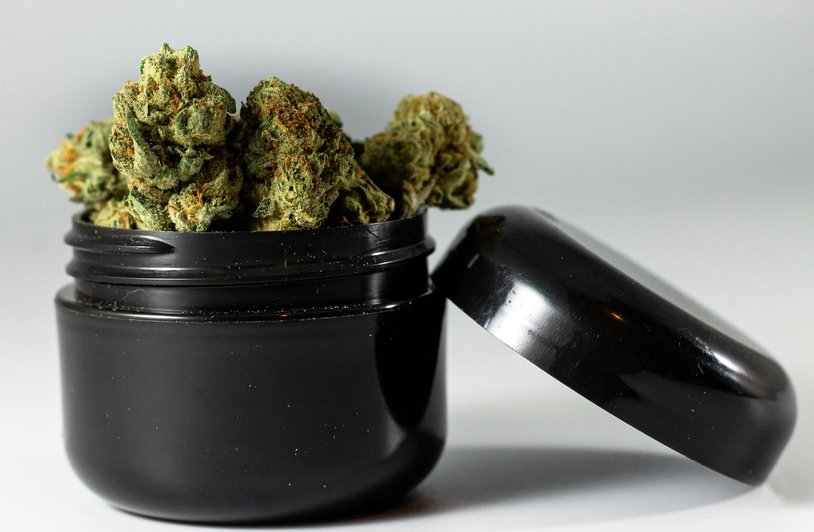
Photo: Terrance Barksdale via Pexels
CLICK HERE TO DONATE IN SUPPORT OF DCREPORT’S NONPROFIT MISSION
Our Friends is the by-line for advertorial content on DCReport. This program is essential to our ability to achieve our mission as a nonprofit organization that seeks to provide fact-based reporting and opinion on US politics and social issues. Although we are predominantly reader supported, we simply could not continue to publish without the generous support of our advertisers. Image by kiquebg from Pixabay.
Comments are closed.
You’ll receive our Week-In-Review every Sunday, plus special notices when big stories hit.
DCReport provides fact-based investigative journalism, and a diverse offering of opinion, to report how government actions affect everyday lives. We are not-for-profit and supported 90% by citizen donations. Visit our sister publication, Cultural Daily.
Type above and press Enter to search. Press Esc to cancel.